
News
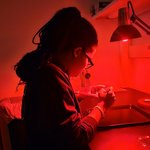
(Oct. 8, 2026)
Fellowship Funds A&S Student’s Study on How Brains Combine SensesCollege of Arts and Sciences senior Taylor Powell explores how brains merge conflicting sensory signals. This research earned her a prestigious McKnight Pecot Fellowship.
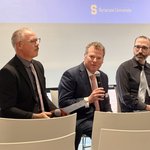
(Sept. 28, 2026)
A&S Faculty Featured in Syracuse.com Coverage of Syracuse University’s Future-Focused SummitCollege of Arts and Sciences researchers highlighted the power of interdisciplinary scholarship, emerging technologies and community impact at Syracuse University's "Into the Future" summit.
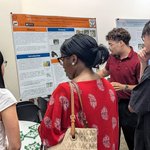
(Sept. 15, 2026)
Syracuse City Students Train as Physicists, One Summer at a TimeFor six weeks, students traded summer break for hands-on research and a chance to discover their future in STEM with physics mentors.
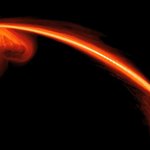
(Aug. 19, 2026)
The Spin Behind Fading Black Hole FlaresStellar spin may solve a long-standing puzzle about repeating encounters between stars and supermassive black holes.
(Aug. 13, 2026)
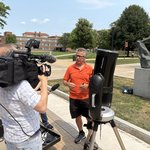
Physics Lab Manager Featured in NewsChannel 9 Story on Partial Solar EclipseThe story highlighted a partial solar eclipse visible across Central New York and encouraged community members to embrace curiosity and engage with rare astronomical events.
(July 28, 2026)
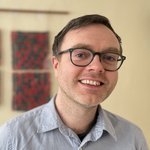
How Physics Could Improve IVF SuccessPhysics professor Colm Kelleher is Syracuse University's first recipient of a grant from the American Society for Reproductive Medicine, supporting his research using imaging to assess egg quality and improve fertility outcomes.
(June 15, 2026)
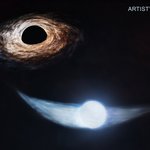
Physics Professor Quoted in BBC Sky at Night MagazineEric Coughlin provides insight into a star’s surprising survival and repeated encounters with a supermassive black hole.
(May 14, 2026)
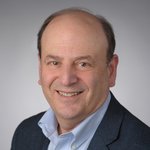
Professor Emeritus of Physics Peter Saulson Elected to the National Academy of SciencesSaulson, who built Syracuse University's gravitational-wave research group and helped lead the quest that produced the first direct detection of gravitational waves, has been elected to one of the highest honors in American science.