
Faculty and Staff Highlights December 2025
New Staff
The following staff members joined the Department of Physics this year.
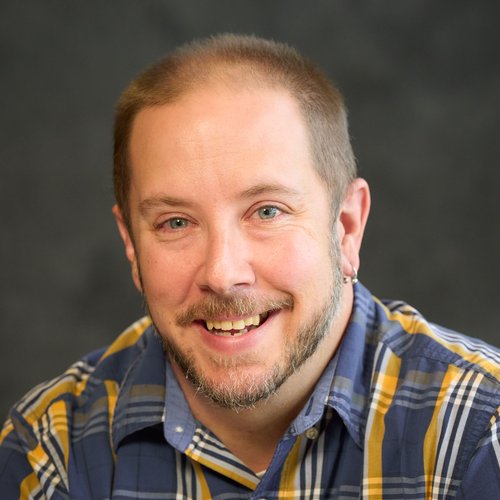
Matt Wojtalewski joined the department this fall as Budget Support Associate, playing a key role in our budgeting processes and financial planning. Matt brings over 14 years of experience in financial operations and data analysis, most recently serving as a Senior Analyst in Revenue & Billing at the Bank of New York Mellon. His expertise in transforming complex data into actionable insights and his collaborative approach will be invaluable in supporting the department's financial operations.
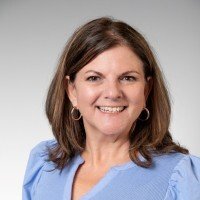
Marilyn Polosky recently joined the Physics Department as Project Manager for the Institute for Quantum Information Science. Marilyn works closely with Professor Alexander Maloney and the Quantum Group, managing the institute's research activities, overseeing grants from private and federal sponsors, and coordinating with postdoctoral scholars and research assistants. She brings 16 years of experience from her previous role as Assistant Director for Business Operations at Syracuse University's CASE, with deep expertise in grants and program management.
New Faculty
This year, the department was thrilled to welcome the following faculty members.
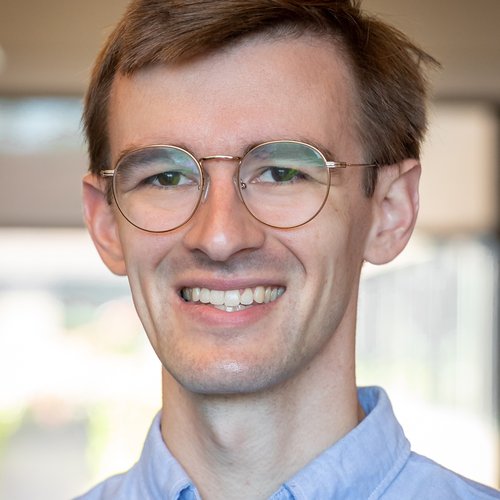
Scott Collier, joined the Physics Department as assistant professor of Physics. Dr. Collier earned a Ph.D. in theoretical physics from Harvard University in 2020 and specializes in quantum gravity, black holes, holographic dualities, and high-energy theoretical physics. His teaching philosophy centers on dialogue and exploratory discussions, favoring close mentorship with students through frequent, open-ended conversations that drive scientific progress.
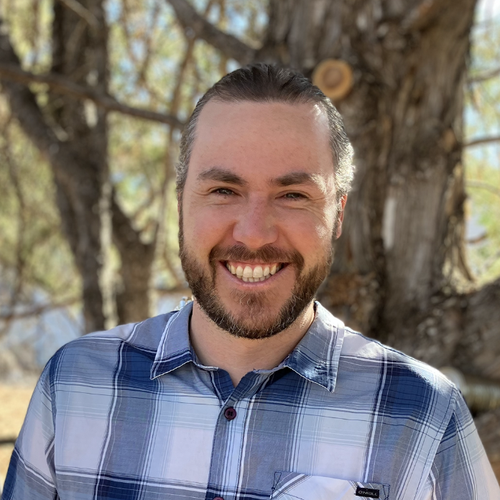
Caleb Fink joined the Physics Department as assistant professor. Dr. Fink earned a Ph.D. in physics from the University of California, Berkeley in 2022 and specializes in quantum sensing and dark matter detection. His teaching philosophy emphasizes curiosity and experimentation, creating an environment where students build physical intuition, develop hands-on skills, and gain confidence working at the frontiers of modern quantum science.
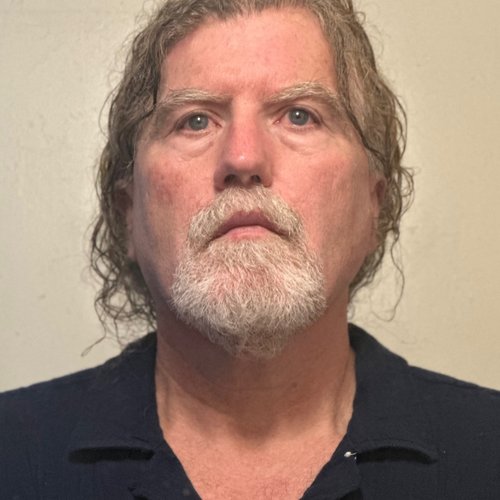
Steven D. Penn, joined the Physics Department as research professor. Dr. Penn earned a Ph.D. in physics from the Massachusetts Institute of Technology in 1993 and specializes in gravitational wave detection, the LIGO Scientific Collaboration, optical coatings, and thermal noise. As an experimental gravitational physicist working on the LIGO gravitational wave observatories.
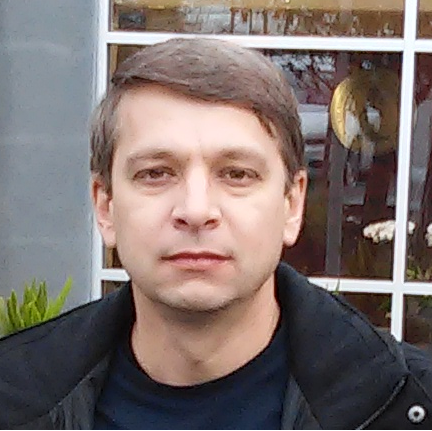
Ruslan Podviianiuk, joined the Physics Department as research professor. Dr. Podviianiuk earned a Ph.D. in nuclear, particle and high-energy physics from the Institute for Nuclear Research, National Academy of Sciences of Ukraine in 2011 and specializes in experimental particle physics and detector development.
Awards and Recognitions
Physics is proud to recognize the following faculty and staff for their recent awards and accomplishments. This is just a snapshot of the great work happening across the department's research groups.
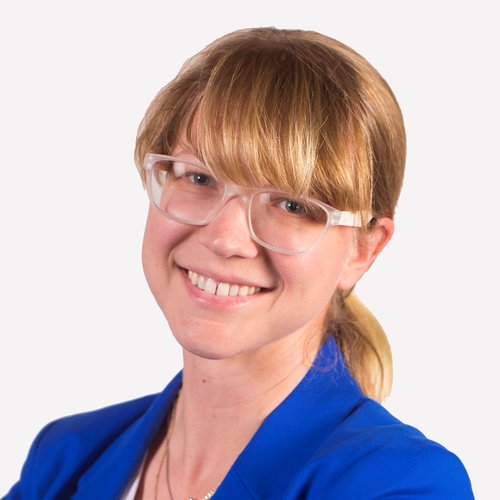
Professor Jennifer Ross was named Interim Dean of the College of Engineering and Computer Science in November 2025. Earlier in the year, she had been appointed Associate Dean for Creativity, Scholarship and Research in the College of Arts & Sciences, demonstrating her continued leadership across the university. Dr. Ross was also honored with the Research Corporation for Science Advancement's 2025 STAR Award, one of only four Cottrell Scholars to receive this recognition.
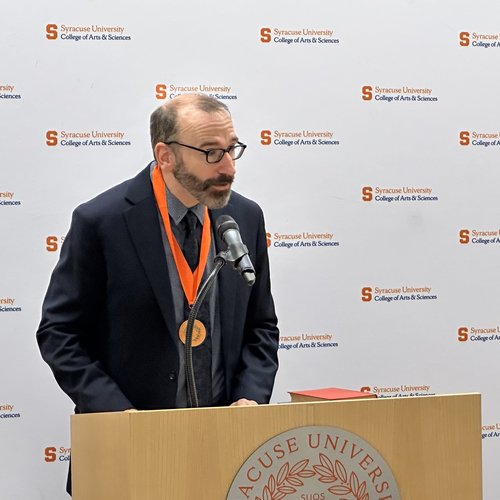
Professor Alexander Maloney, Director, Institute for Quantum and Information Science, was installed as the inaugural Kathy and Stan Walters Endowed Professor of Quantum Science in April during a beautiful ceremony attended by Chancellor Kent Syverud, Dr. Ruth Chen, Vice Chancellor and Provost Lois Agnew and A&S Dean Behzad Mortazavi.
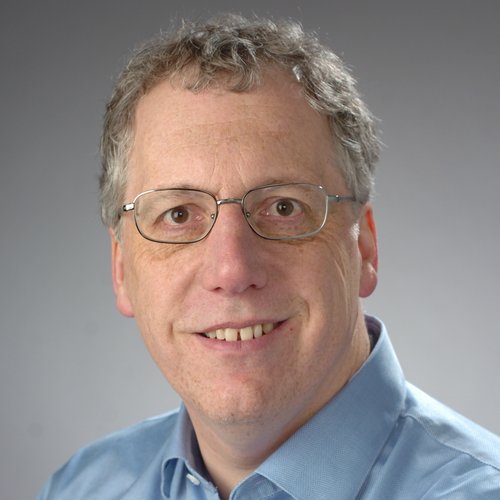
Professor Alan Middleton was named Interim Associate Dean for Creativity, Scholarship and Research. He previously served as the College’s associate dean for research from 2017 to 2023.
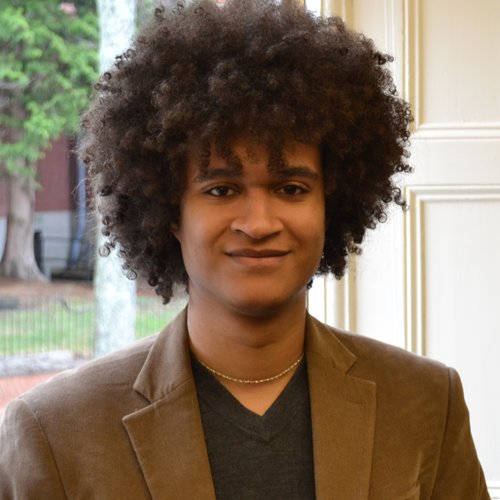
Silverio Johnson, a postdoctoral researcher in Dr. Mirna Mihovilovic Skanata's lab, won an award at the recent BioInspired Symposium for his talk, "Quenching Variability of Drosophila Larval Behavior Using Multi-Sensory Stimulation." Silverio expressed gratitude to his advisor and lab mates, noting, "Investigating the complexity of neural systems on a fundamental, physical level is incredibly important for advancing our understanding of animal behavior."
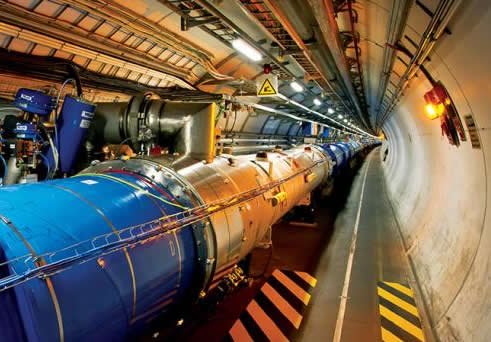
The LHC experiments (ATLAS, CMS, LHCb, and ALICE) were awarded the prestigious Breakthrough Prize in Fundamental Physics for their outstanding physics program during LHC Run II. The Syracuse team, led by Professors Marina Artuso, Steve Blusk, Matthew Rudolph, Rafael Silva Coutinho, Tomasz Skwarnicki and Research Professor Raymond Mountain, was recognized for their participation in the LHCb experiment. The LHCb collaboration explored "minute differences between matter and antimatter, violation of fundamental symmetries, and the complex spectra of composite particles ('hadrons') made of heavy and light quarks. This prize is popularly known as the "Oscars of Science."
2025 Department Community Achievement Awards Recipients
The annual Physics Department Awards Colloquium honors those in our community who go above and beyond. We're grateful for everyone's contributions to making our department thrive. Below are photos of some of our award winners.
The 2025 honorees by categories are listed below:
- Outstanding Staff Award: Sam Sampere for his tireless effort and endless enthusiasm in supporting the department's teaching and outreach missions
- Outstanding Teaching of Undergraduate Physics Majors: Professor Liviu Movileanu (PHY531)
- Outstanding teaching of Large Service Courses: Professors Craig Cahillane and John Hansen (AST101)
- Outstanding Teaching of Graduate Students: Professor Marina Artuso (PHY651 and PHY657)
As is our tradition, the department recognizes members of the department that do outstanding work on outreach, and community building with the Social Justice and Community Building Awards. The staff and faculty recipients of the Social Justice award 2025 were:
- Sam Sampere, in recognition of your outstanding efforts and dedication to supporting our staff.
- SU CU*IP Organizers, for their exceptional work in organizing and executing the CU*IP Conference 2025
The Exceptional Service to the Department of Physics award was given to Professor Christian Santangelo for his extraordinary efforts to improve our PhD program and support our students as Director of Graduate Studies during the past 4 years.
Other News
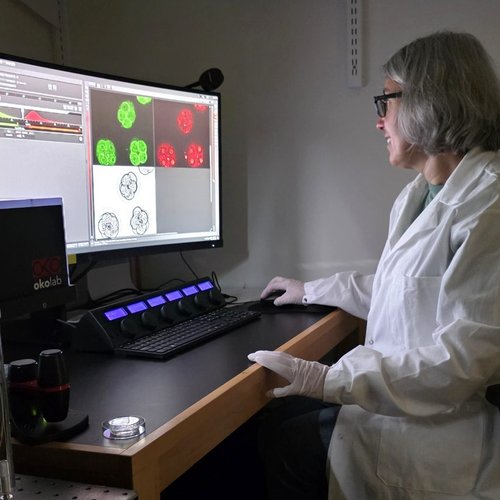
Postdoctoral researcher Ileana Márquez's work was featured in a recent Syracuse University News article. Márquez, who works in Professor Colm Kelleher’s lab, studies the meiotic spindle, a tiny, machine-like structure made of protein fibers that plays a crucial role in correctly sorting chromosomes inside maturing mammalian eggs. Her research examines how errors in this process impact fertility and genetic issues.
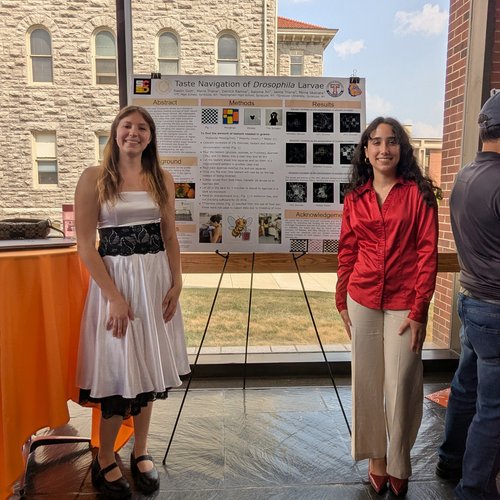
This past summer, the Syracuse University Summer High School Internship Program (SU-SHIP) continued despite ongoing funding challenges. Thanks to the quick action and generosity of Syracuse University's Office of Research and the Syracuse City School District (SCSD), the program provided valuable hands-on research experience and mentorship opportunities to high school students interested in physics. Learn more about the program in this A&S News article.
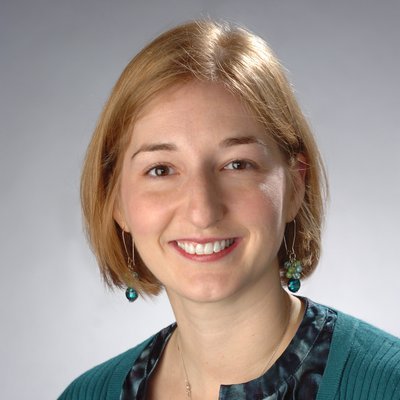
Professor M. Lisa Manning, William R. Kenan, Jr. Professor of Physics and founding director of the BioInspired Institute, was recently featured in A&S News for groundbreaking research on how organs form during embryonic development. Manning, along with members of her team and collaborators, discovered that the slow, steady physical forces of tissues pushing and pulling on developing organs are just as important as genes and biochemistry in shaping organ formation. This research, published in PNAS, could help scientists develop new treatments for birth defects, cancer, and other medical conditions.
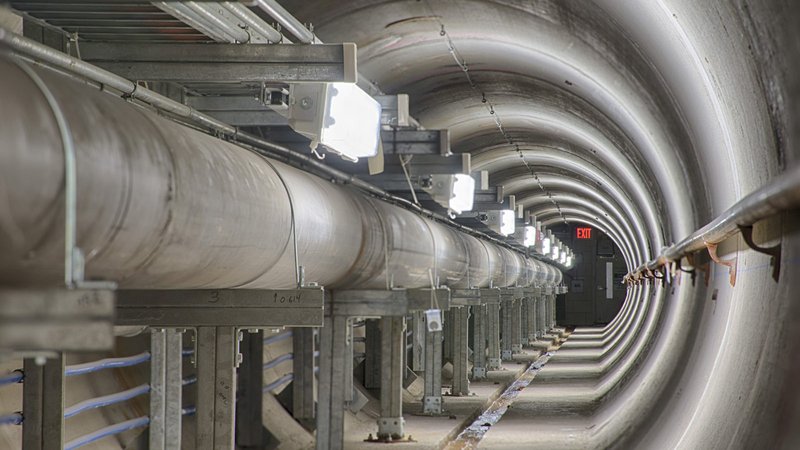
Professor Denver Whittington and graduate student Aklima Lima were featured in an A&S News article about their work studying neutrinos, the elusive "ghost particles" that rarely interact with matter. Their research explores these fundamental particles that could unlock mysteries about the universe's composition and evolution. Dr. Whittington was also quoted in an AP news article about these unusual particles.
The LHCb group had an article published in Physical Review Letters that was selected as an "Editor's Suggestion" and featured in "Viewpoint in Physics," reporting the first evidence for CP violation in b-baryons. Additionally, the LHCb collaboration reached an important milestone towards Upgrade 2, the ambitious next iteration of detector improvements planned for the high luminosity LHC.
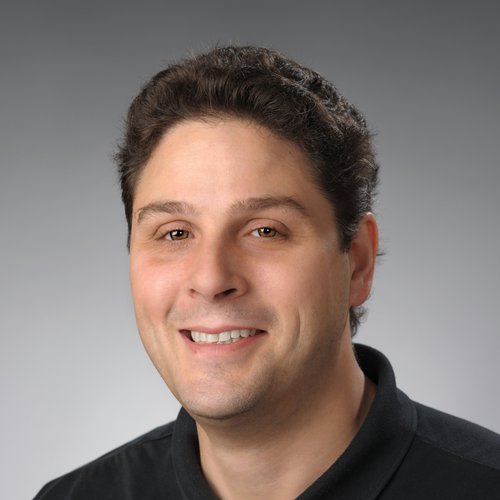
Professor Stefan Ballmer was interviewed for an Arts & Sciences article about research developments over the past 25 years, and what might be in store 25 years in the future. He was also featured in Nature’s LIGO anniversary coverage.
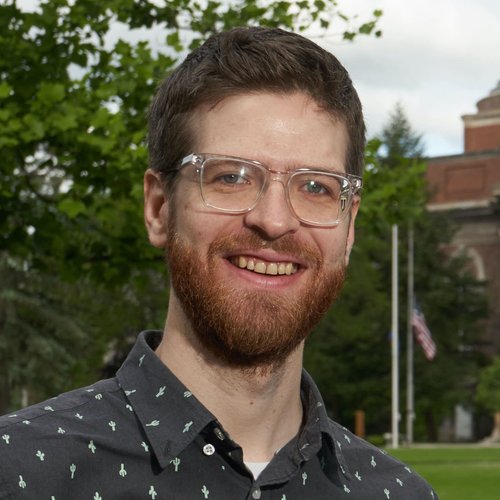
Professor Joey Paulsen and collaborators published a paper in Nature Physics demonstrating how emulsions decorated with magnetic particles can behave in unexpected ways. His research was featured in an A&S News article titled "Magnetic Salad Dressing: Scientists Shake Up Emulsion Science." This fall, Professor Paulsen moved to teach at his alma mater, St. Olaf College.
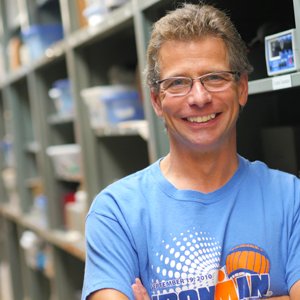
Lab Manager Sam Sampere was featured in a Syracuse University News video explaining solar maximum and coronal mass ejections in an article titled "What Happens When the Sun Burps?" Sampere breaks down why even the biggest solar eruptions are just a drop in the cosmic bucket.
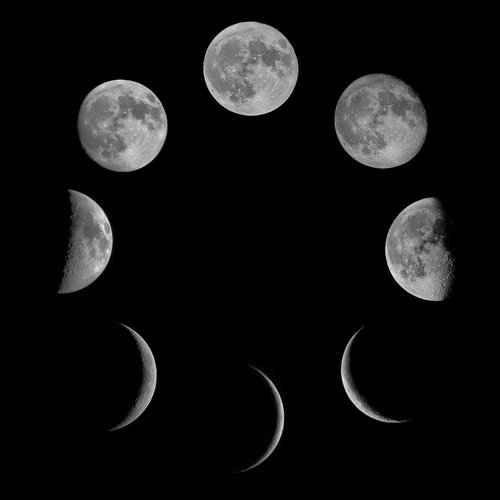
Professor Walter Freeman was interviewed by the Daily Mail about the rare astronomical phenomenon known as a "black moon." Freeman explained the science behind this second new moon in a calendar month and its significance.
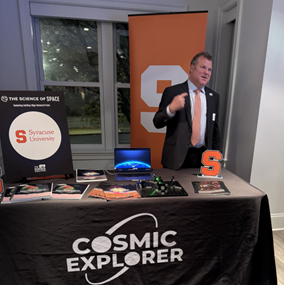
Professor Duncan Brown, Syracuse University’s Vice President for Research, attended the Science Coalition event in Washington, D.C. on November 18, where he advocated for federal research funding including support for the Cosmic Explorer gravitational wave observatory. Among the attendees was Congresswoman Valerie Foushee.
Published: Dec. 18, 2025
Media Contact: asnews@syr.edu