
Shared Work, Lasting Impact
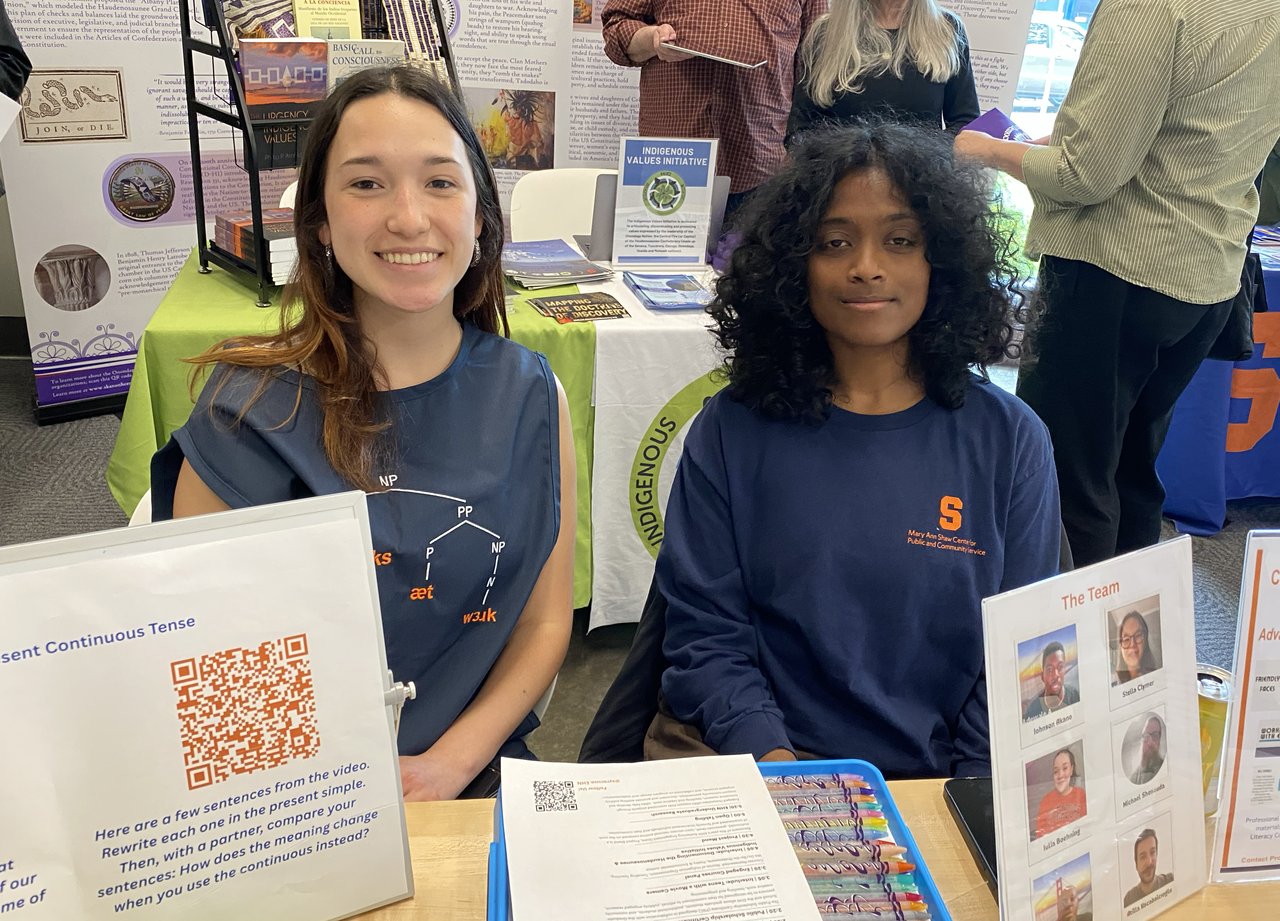
From insightful conversations to shared reflections on meaningful work, the Engaged Humanities Network (EHN) Community Showcase offered a powerful reminder of what’s possible when people come together in collaboration. The event brought together faculty, students and staff from Syracuse University with community partners to celebrate projects that address local and regional needs and opportunities through research, teaching and creative work.
The third annual showcase featured panel discussions and table presentations highlighting dozens of initiatives connected to EHN. Collectively, the showcased work represented collaborations across more than 50 departments from nine schools and colleges at Syracuse University, and partnerships with more than 75 community-based organizations. Projects ranged from arts- and storytelling-based initiatives to STEM research and educational programs focused on community empowerment, environmental sustainability and cultural preservation.
Watch the video below to learn more about this year’s showcase from Mary-Jo (MJ) Robinson, Program Manager for the Engaged Humanities Network in the College of Arts and Sciences (A&S).
“This is an annual event where we showcase all of the projects, courses and community engagement happening all across the city and region,” says Robinson. “The hope is to demonstrate the incredible work that’s being done, broaden exposure to these projects and help strengthen connections between partners.”
The event featured panel discussions, allowing speakers to share lessons learned, reflect on challenges and discuss opportunities to sustain and grow their work. Panels focused on EHN’s Engaged Communities and Engaged Courses initiatives, the new Public Scholarship Certificate, sustained long-term partnerships and EHN undergraduate research.
The showcase underscored the continued growth of EHN since its founding in 2020 by Brice Nordquist, Dean’s Professor of Community Engagement and associate professor of writing and rhetoric in A&S. Today, EHN supports more than 350 collaborators from across the University and works with dozens of community partners locally and nationally, from neighborhood-based organizations in Syracuse like the Northside Learning Center to the nation’s preeminent cultural institutions such as the Metropolitan Museum of Art.
“The EHN approaches the humanities not as a bounded academic domain, but as a set of practices that span disciplines and permeate everyday life—across ages, institutions, cultures and communities,” says Nordquist. “The work of the EHN is to recognize, support and connect these practices so that we can collectively respond to the demands of the present while sustaining long traditions of reflection, inquiry, creativity and learning.”
Robinson emphasized that the event is as much about relationship-building as it is about visibility. “EHN exists to support this work and to help make connections,” she says. “When people come together in a space like this, it creates new possibilities for collaboration and helps ensure that community-engaged work remains central to the University’s mission.”
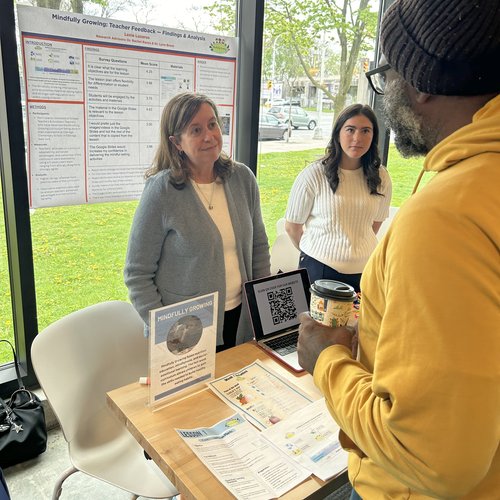
Lynn Brann (left), associate professor in Falk College, and Lexie Lazarus ’26, who majored in human development and family science in A&S, discuss their Mindfully Growing project with Charles Matlock, who works with Nourish Syracuse. The initiative combines nutrition education, mindfulness and social-emotional learning to help children build healthy eating habits.
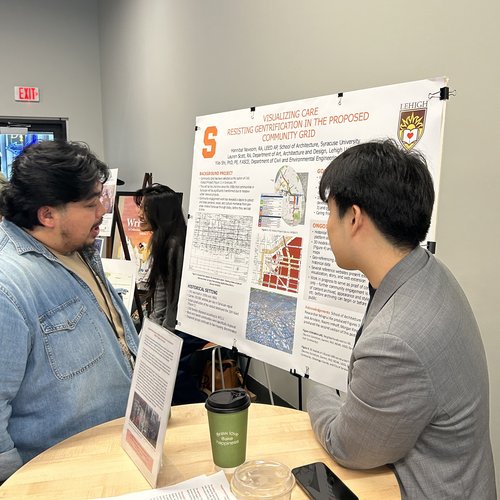
Manila Southammavong (left), a Syracuse City Planner, talks with Mingrui Xie ’26 from the School of Architecture about Visualizing Care: Resisting Gentrification in the Proposed Community Grid, a project within EHN’s Engaged Communities initiative. The project uses model-making and drawing workshops to engage residents of Syracuse.
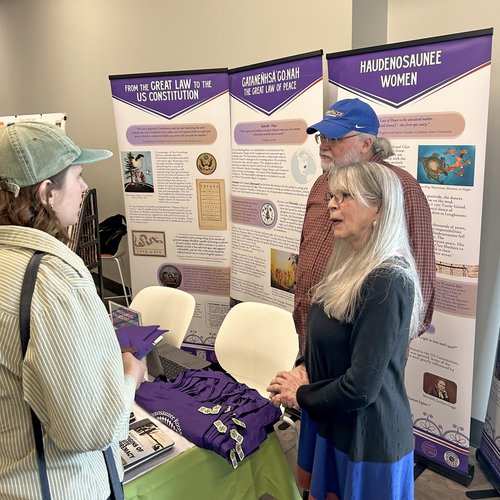
Philip Arnold, professor of religion and Native American and Indigenous studies in A&S, and Sandy Bigtree talk about their work with the Indigenous Values Initiative with Meghan Chelednik, a content specialist with the Lender Center for Social Justice.
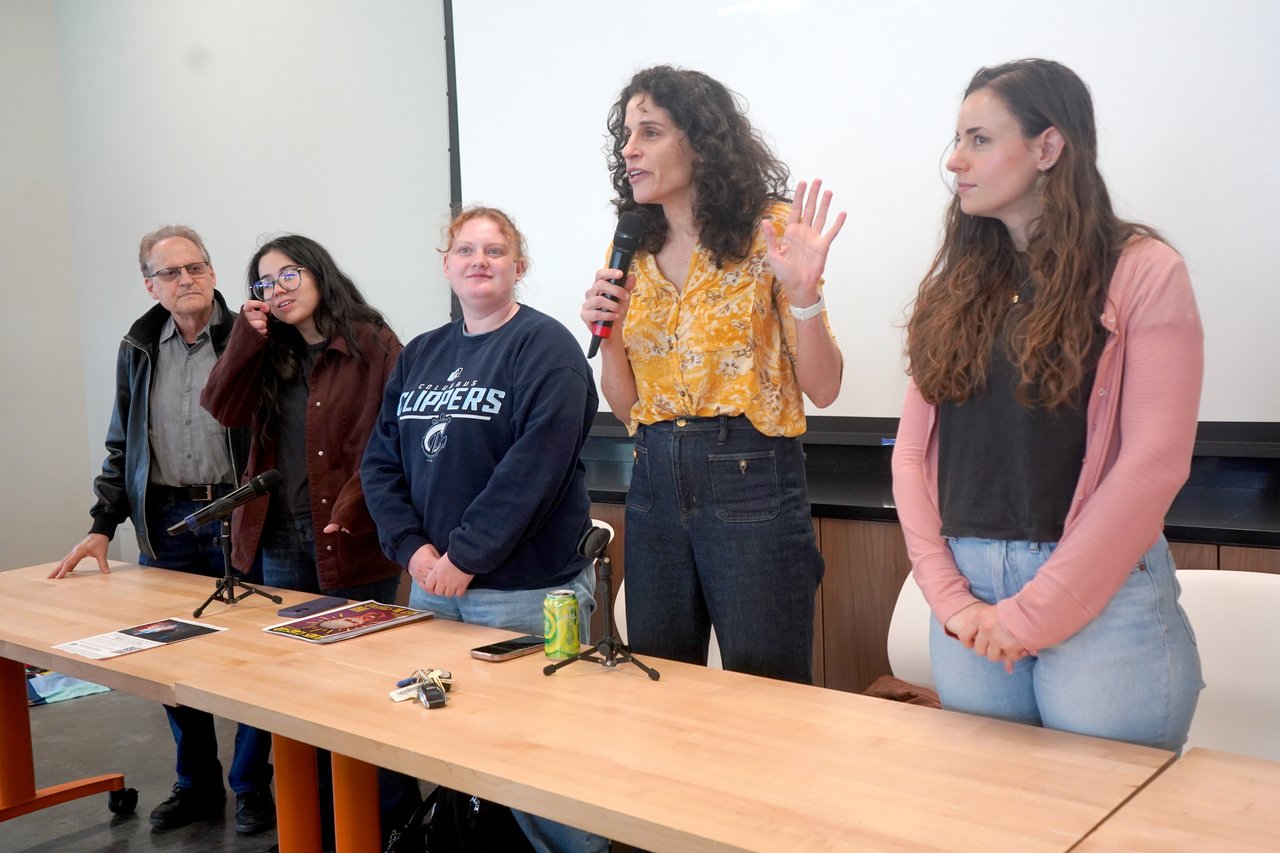
Free and open to the public, the Community Showcase welcomed attendees of all ages and backgrounds, reinforcing EHN’s commitment to accessibility and mutual exchange. As the network continues to grow, the annual showcase remains a key moment to reflect on the impact of community-engaged scholarship in Central New York.
Projects and courses represented at the event included: The Refugee Assistants Program’s Artisan Pathways, Black Women's Art Ecosystems, Black/Arab Relationalities Initiative (BARI), CODE∧SHIFT, Deaf New Americans CODA Tutoring Program, Documenting the Haudenosaunee Influence on American Democracy (EHN Engaged Course), Environmental Storytelling Series CNY, Geography of Memory: Unsettling Stories (EHN Engaged Course), , Hear Together, La Casita, Advanced Methods for Language Teaching (EHN Engaged Course), ME/WE Art Therapy Lab and Studio, Mindfully Growing, Narratio, Native America and the World: The Haudenosaunee (EHN Engaged Course), Natural Science Explorers Program, NOON, Not in the Books, Indigenous Values Initiative, Poetry and Environmental Justice (EHN Engaged Course), Project Mend, Public Scholarship Certificate Program, Safeguarding Syracuse Communities, Southside Connections/Southside Stories, Stories of Indigenous Dispossession Across the Americas (EHN Engaged Course), Teens with a Movie Camera, Traveling Teaching (EHN Engaged Course), Visualizing Care and Resisting Gentrification, We/Re-do Shakespeare (EHN Engaged Course) and Write Out.
Published: May 7, 2026
Media Contact: asnews@syr.edu