
News
(Oct. 8, 2026)
Fellowship Funds A&S Student’s Study on How Brains Combine SensesCollege of Arts and Sciences senior Taylor Powell explores how brains merge conflicting sensory signals. This research earned her a prestigious McKnight Pecot Fellowship.

(Oct. 8, 2026)
Recent Biology Ph.D. Graduate Earns Two Top Research HonorsTakunda Maisva has been honored with the Alexander Gourevitch Memorial Award in Biology and Syracuse's All-University Doctoral Prize for dissertation research spanning laboratory science and STEM education equity.
(Sept. 25, 2026)
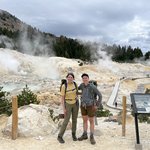
Biology Researchers’ Record-Breaking ‘Fire Amoeba’ Study Draws International Media AttentionTheir groundbreaking discovery, which reshapes scientific understanding of the temperature limits of complex life, was featured in The New York Times and numerous other outlets around the world.
(Sept. 23, 2026)
How Plants RememberA&S biologist Heather Meyer has been awarded an NIH grant to study the protein-based mechanisms organisms use to detect environmental changes and remember them.
(Sept. 22, 2026)
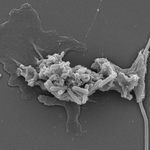
Pushing Life's Thermal LimitsSyracuse University biologists discover a record-breaking 'fire amoeba' that thrives at 63°C (145°F), rewriting the rules for complex cells.
(Aug. 3, 2026)
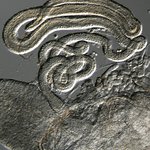
Uncovering Hidden Interactions That Shape FertilityA&S researchers are exploring molecular interactions that may hold the key to fertility, infertility and new contraceptive approaches.
(Aug. 3, 2026)
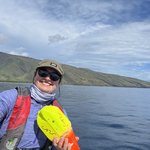
How a Whale's Dive Shapes Its SongA&S biologists connect humpback whale song structure to diving behavior for the first time, a breakthrough that could allow researchers to infer whale behavior from acoustic recordings and better monitor the effects of human activity in the ocean.
(July 24, 2026)
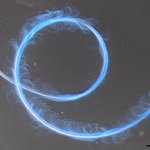
A Cooperative Approach to Reproductive SuccessSyracuse University biologists publish a new study examining how sperm cooperation has evolved over the past 500 million years.