
Sharing Hands-On Learning
For students in the College of Arts and Sciences (A&S) at Syracuse University, experiential learning, such as clinical simulations, research or creative projects, is a core feature of many programs.
That’s crucial because early-career professionals who took part in experiential learning in college report higher career satisfaction and earn more, on average, than peers who did not.
“This is one of the most fundamental elements that makes an A&S education distinctive,” A&S Dean Behzad Mortazavi said. “Our students gain that experience here at A&S, in ways that are hard to replicate at scale at other institutions. Employers keep telling us the same thing: they want graduates who’ve already done the work, not just read about it.”
Underscoring its importance, faculty and staff from across A&S gathered Oct. 22 for the inaugural Experiential Inquiry Exchange, a day of conversation about the experiential learning opportunities they and their colleagues have built for students. Hosted by the A&S dean’s office and organized by Associate Dean of Interdisciplinary Affairs and Partnerships Rachel Razza, the event followed a spring survey that mapped experiential inquiry across 10 programs. The survey identified 64 courses offered in the 2024-25 academic year where undergraduate research was the largest pathway. Simulations and peer mentoring were also offered broadly, while community engagement, work-based learning and creative arts operated at a smaller scale.
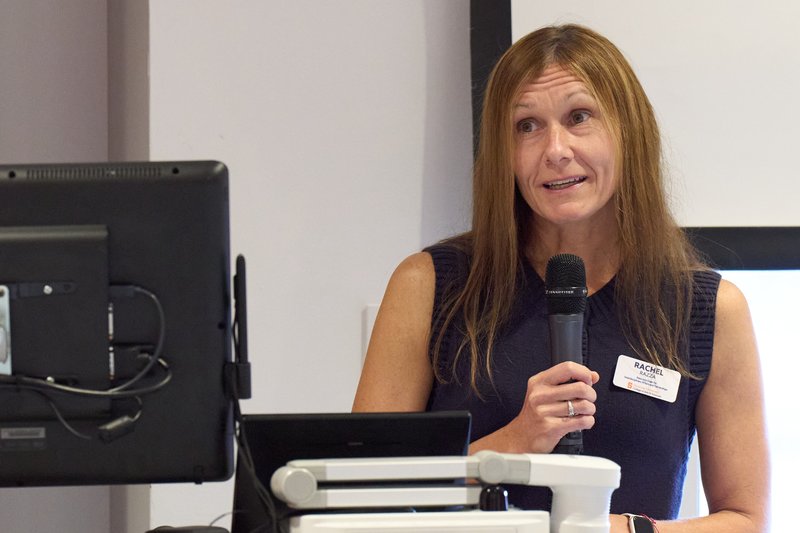
Associate Dean Rachel Razza welcomes attendees and introduces the first speaker.
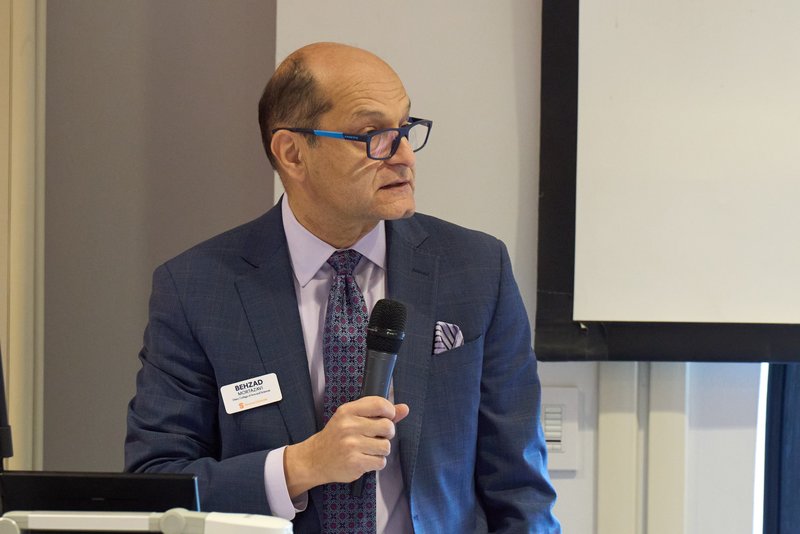
Dean Behzad Mortazavi speaks to the audience.
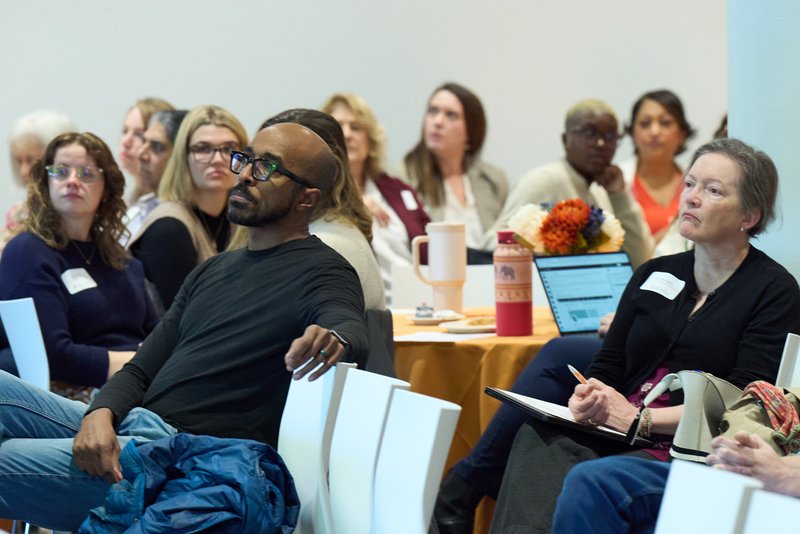
Attendees listen intently during the Experiential Inquiry Exchange.
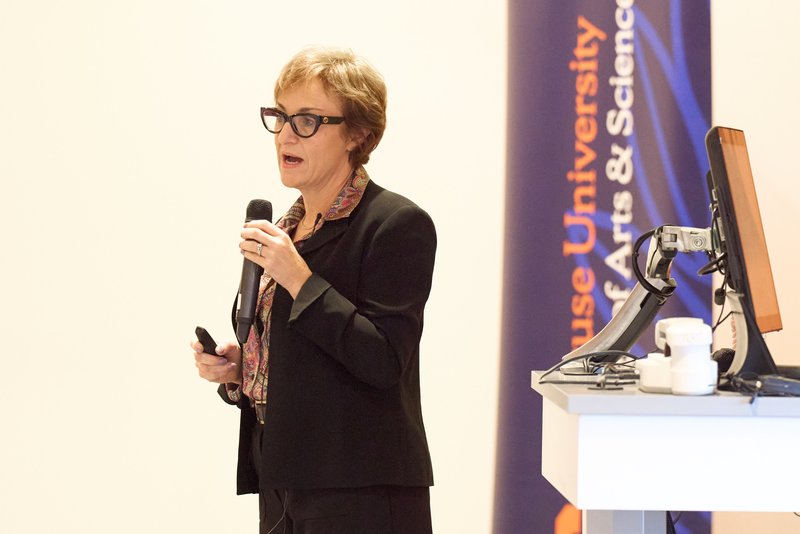
Mara Huber, senior director for instructional innovation and transformation at the University at Buffalo, the PEARL Project Framework for Innovative Teaching.
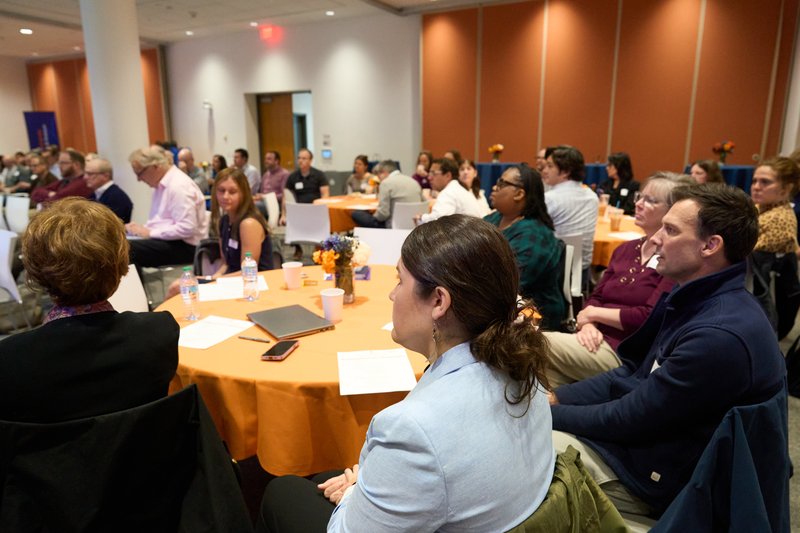
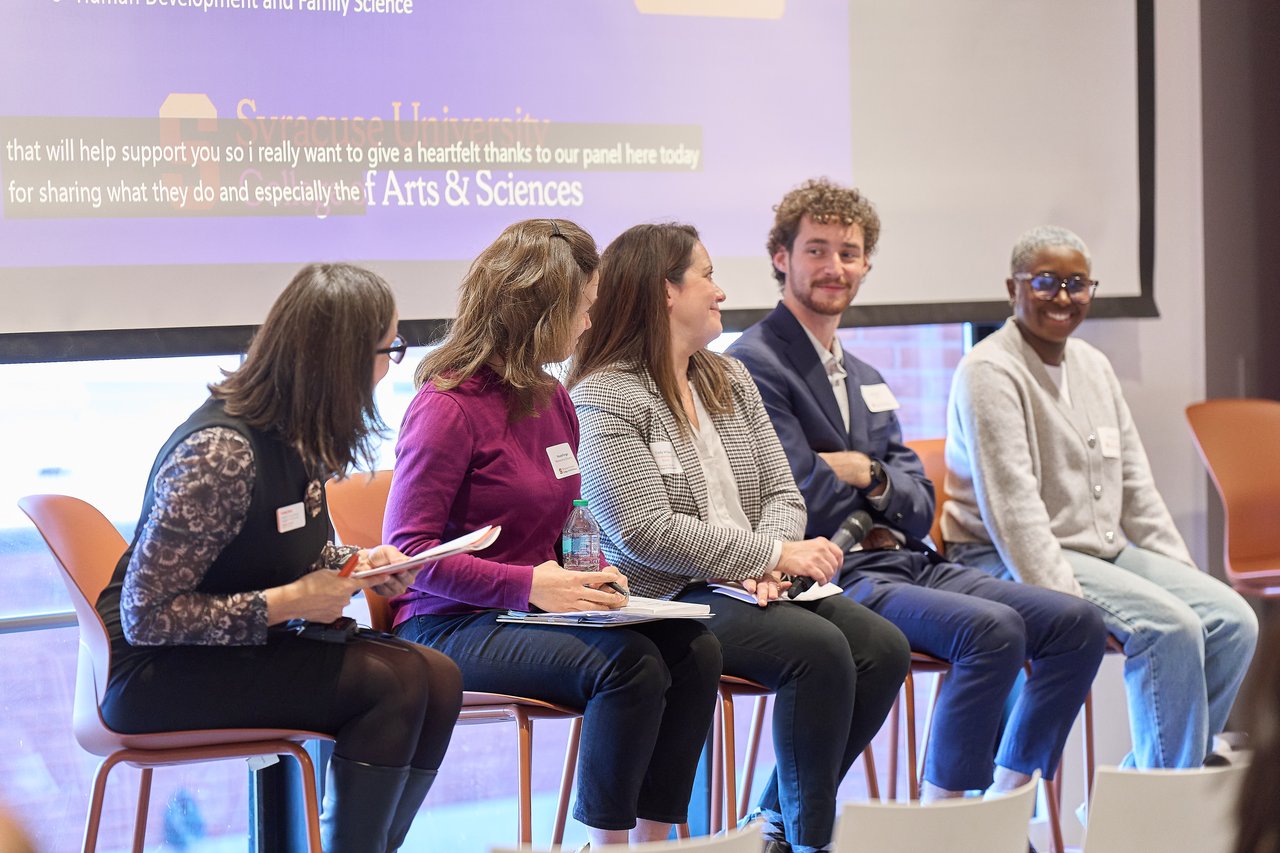
A full house takes in a panel discussion.
“In looking at the data, we realized that much of that work was happening in islands across the College. Great things—but happening quietly, department by department,” Mortazavi said to attendees. “Today is about connecting those islands, with bridges you’ll start building today. I believe the answers to ‘how do we scale this’ are already in this room. We just haven’t all compared notes yet.”
Following opening remarks from Razza, Mara Huber, senior director for instructional innovation and transformation at the University at Buffalo, delivered the keynote address, which encouraged attendees to think creatively about experiential opportunities and included an explanation of the PEARL Project Framework for Innovative Teaching.
Moderated panels that included student voices covered community engagement and internships; simulations and practical applications in the classroom; and peer mentoring and tutoring. Panelists shared projects ranging from Associate Professor of Mathematics Nicole Fonger’s Data Warriors, which engages Syracuse high school students to understand and address community issues through math, to Professor of Practice and Director of Forensics Research Mike Marciano’s forensic mock trials and Associate Professor Heather Coleman’s pairing of BIO 100 mentees with BIO 300 mentors.
“When you learn it in the classroom, it manifests itself as knowledge,” student panelist Liam Nolan ’27, a human development and family science major, said. “Knowledge does not automatically or directly translate to being a skill. So, being able to take that knowledge out into the community… you turn that knowledge into skill.”
"Applied learning allows you the opportunity to make mistakes in a very low-stress environment,” said Anna Fernandez ’25, a graduate student in the forensic science advanced laboratory M.S. program. "Make these mistakes now, because when you go do this in the field, you can’t.”
A working lunch featured themed roundtables on topics including community partnerships, peer-led learning and study abroad and study away.
"While this exchange is new, the work isn't," Razza said. "In fact, the hardest part of planning today was choosing how much we can fit."
The Exchange asked each program where experiential inquiry lives in its curriculum and how to offer it to more students. Attendees were encouraged to trade what is working and leave with concrete ideas for expanding or developing experiential learning in their own programs.
Razza acknowledged planning committee members Emily Williams, an internship placement coordinator in the Department of Human Development and Family Science; Forensic Science Professor of Practice Natalie Novotna; MJ Robinson, Engaged Humanities Network program manager; and Lauren Mavica, director of neurosciences ILM for making the event possible.
Published: Nov. 10, 2026
Media Contact: asnews@syr.edu