
From Studying Earth to Saving It

At Syracuse University’s College of Arts and Sciences, students do more than simply learn about the world. They learn how to change it for the better, thanks to a liberal arts education that gives them the versatility to make a difference in whatever direction life leads.
Consider graduates from the Department of Earth and Environmental Sciences (EES). Working alongside faculty whose expertise ranges from solid earth sciences to paleoclimatology to water resources, they gain hands-on experience through field work, geochemical and geophysical methods, quantitative analysis and professional skills development. This comprehensive training as scholar-scientists prepares students to shape environmental policy, advance climate science, innovate sustainable solutions and inspire public engagement with the natural world.
A&S recently caught up with EES alumni whose prominent roles include advising Congress on environmental legislation, analyzing complex datasets to inform policymakers about climate hazards, designing sustainable footwear, developing carbon sequestration technologies and creating topographic maps that deepen appreciation for natural landscapes. Their diverse career paths reflect how an A&S education equips graduates to solve problems that demand both subject-matter expertise and humanistic insight.
Bringing Sustainability to Footwear
Walk into any major shoe store, and you might spot a product inspired by Earth sciences alum Pete Lankford '87, '92. Among iconic designs he helped create is Timberland's "Mac and Cheese" field boot, known for its distinctive golden-tan color. During his career at Timberland, Lankford didn't just design trend-driven footwear; he also pioneered sustainability in the industry through the Earthkeepers brand, using eco-friendly materials and design principles.
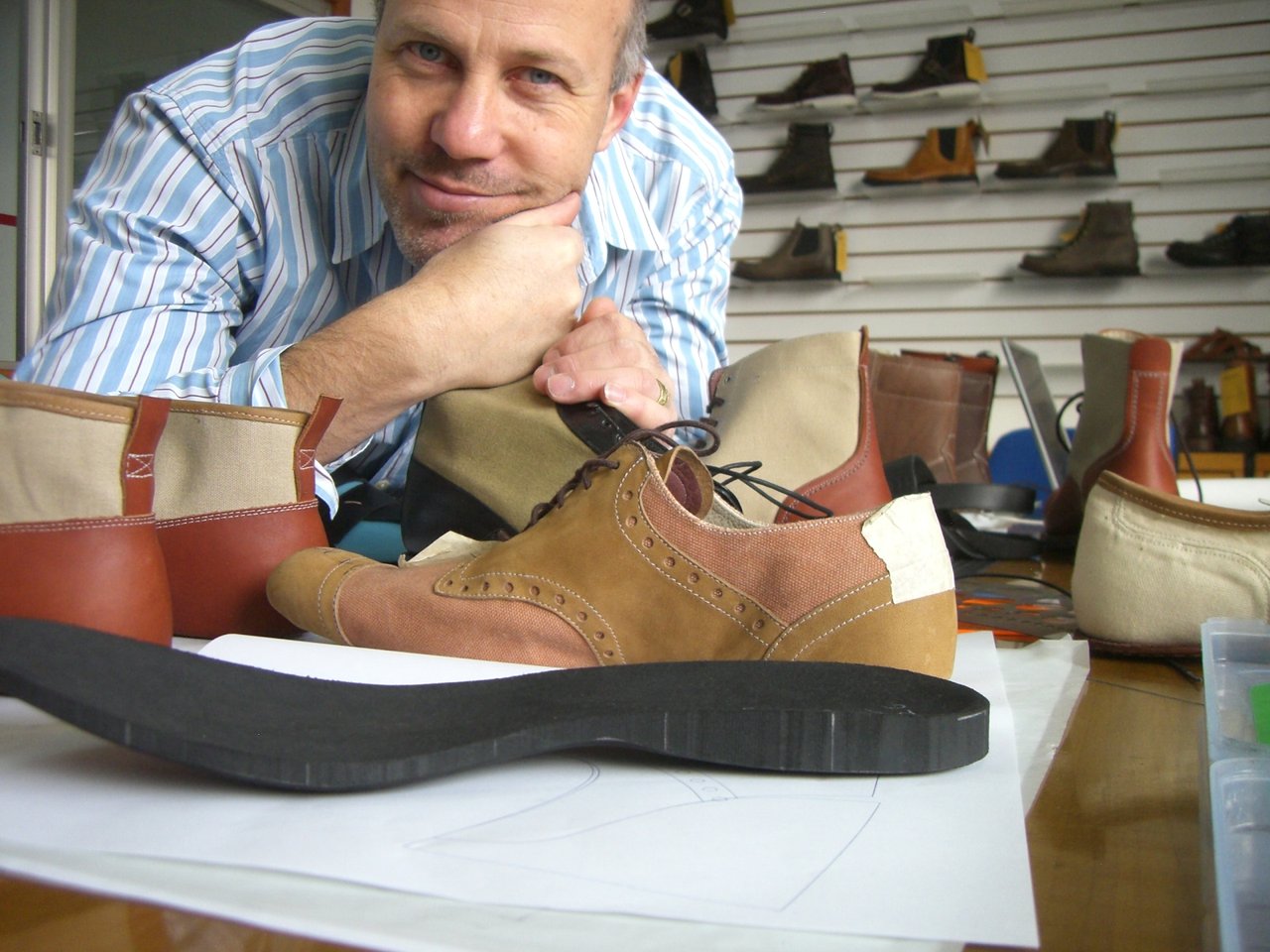
Lankford's path to becoming a pioneer of sustainable footwear was far from linear, but his time at Syracuse University provided the crucial foundation. After initially enrolling in Syracuse's architecture program, he discovered the field wasn't the right fit. Drawing on his family background, where his father was an oceanographer and geology professor, he switched to Earth sciences. There, he developed a passion for studying the Earth that would carry throughout his career.
"The thing I love about geology, and this is why it translates to design, is you have to imagine what was there before," he says. "You have to imagine the forces that created what you're seeing. You're not just looking at what's there. You're trying to figure out what was there and what happened."
A pivotal moment that shaped Lankford’s career trajectory came during his junior and senior years at Syracuse, when he took on a work-study position in the Department of Earth and Environmental Sciences. His responsibilities ranged from preparing thin sections of rock samples for microscopic analysis to photo-documenting paleontology specimens for graduate students and faculty, as well as assisting with the construction of test equipment.
It was during this time that his supervisor, who was a department technician in EES and was also a student in the College of Visual and Performing Arts’ Industrial Design (ID) program, introduced him to the field of ID. "The idea instantly appealed to me," Lankford recalls, attracted to the opportunity to create diverse products and master the entire design process.
Lankford stayed at Syracuse to pursue a second undergraduate degree in Industrial Design. This unique combination of Earth science and design became his signature advantage during his 18 years at Timberland, where CEO Jeffrey Swartz tapped him to lead sustainability initiatives. Lankford's geological knowledge proved extremely important to this work.
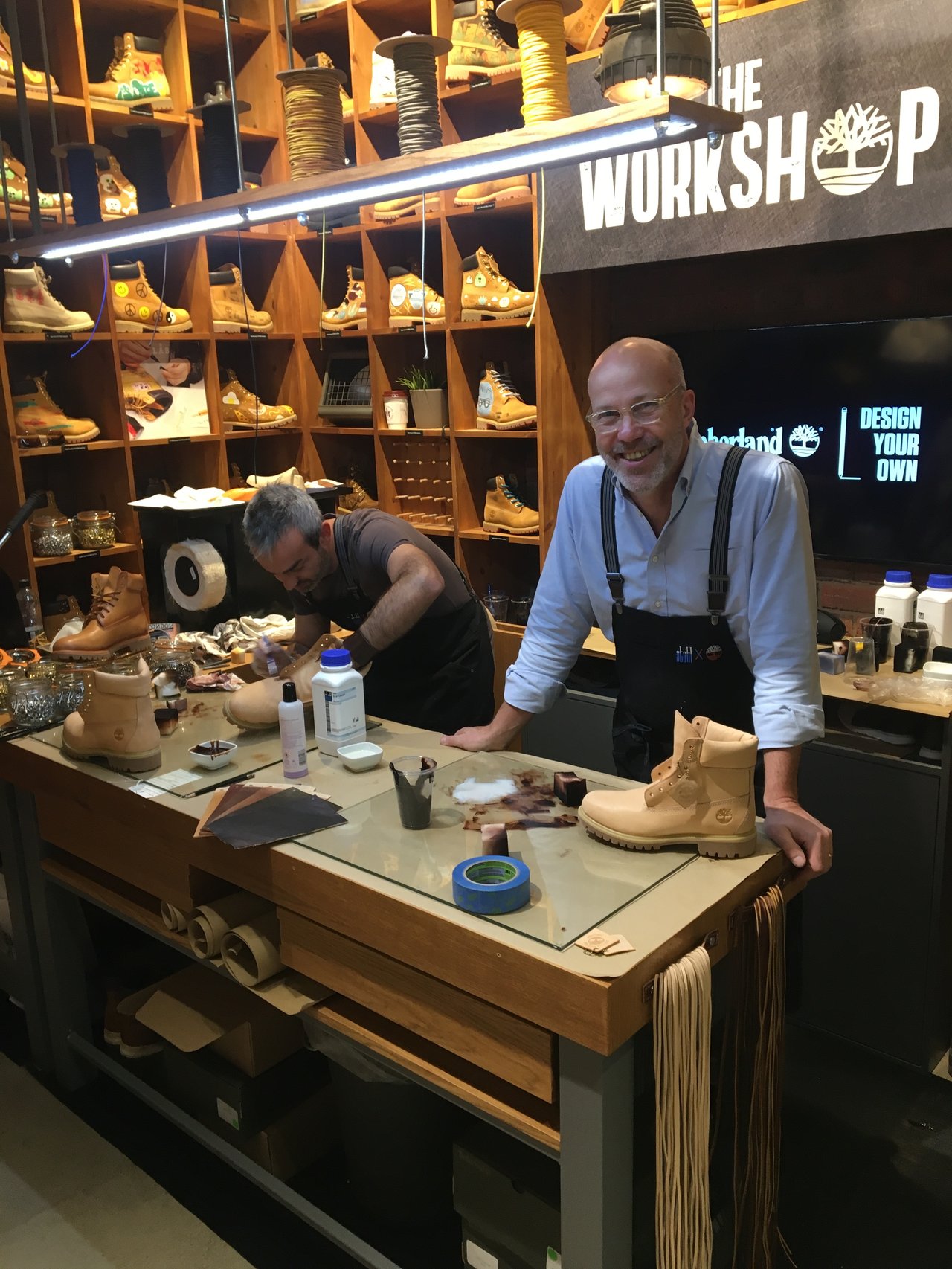
“If you're going to think about sustainability, you have to understand the carbon cycle," says Lankford. “My degree in a field of science also taught me the power of a logic-based approach to problem solving—for example, through the scientific method of observation, hypothesis, testing, evaluation and conclusions.” His foundational education in science became invaluable as he pioneered sustainable footwear, creating what he calls his "critical creative mindset" that allows him to shift fluidly back and forth between 'what if' and then 'how.'
After his time at Timberland, Lankford joined Erem, a startup founded by the Swartz family to advance sustainable footwear even further. There, he developed performance desert hikers designed to return safely and completely to the Earth—able to reenter the carbon cycle without causing harm. Erem described this approach as “bio-circular,” highlighting the footwear’s ability to break down naturally and responsibly.
"That was probably the biggest career challenge in my life," Lankford notes, describing months spent sourcing eco-friendly materials like dry, twisted linen thread from obscure manufacturers. The Erem work became what he calls "the best work I've ever done," landing a product that changed the industry conversation from whether sustainable performance footwear was possible to how competitors could catch up. For Lankford, his Syracuse education, bridging Earth Sciences and Industrial Design, was the first step toward his trailblazing career in sustainable footwear.
Informing Environmental Policy on Capitol Hill
Keeping our oceans safe requires a complex set of specific regulations. From managing fishing quotas to protecting marine ecosystems as climate change threatens habitats, the United States Congress can legislate and provide important oversight to safeguard this critical resource. Without congressional intervention, some short-term interests could damage the ocean ecosystems that humanity depends on for its survival and prosperity. But in order to act on policy proposals, members of Congress must first understand them. That's where Caitlin Keating-Bitonti '09 comes in.
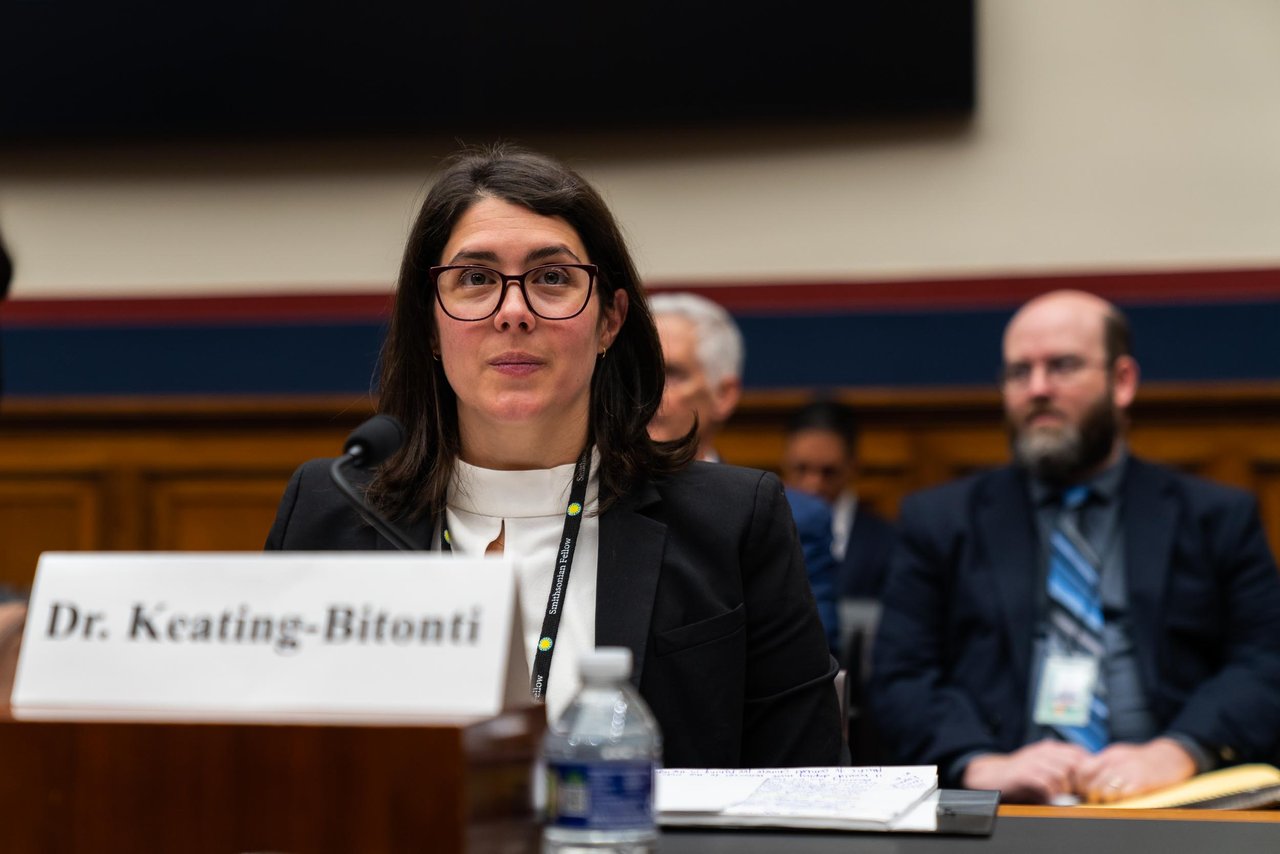
Keating-Bitonti works as a natural resources policy specialist for the Congressional Research Service, where she applies her scientific training to help members of Congress make informed policy decisions. She uses analytical skills she developed at Syracuse, such as synthesizing complex information, evaluating evidence objectively and communicating findings clearly, as the backbone of her daily work.
"What I like about the job is helping them get the information they need to make their own sound decisions," she explains. She takes pride in knowing that behind the scenes, "things aren't very political. Both sides are just trying to do good policy, and we're trying to help them with the research and analysis to get them there."
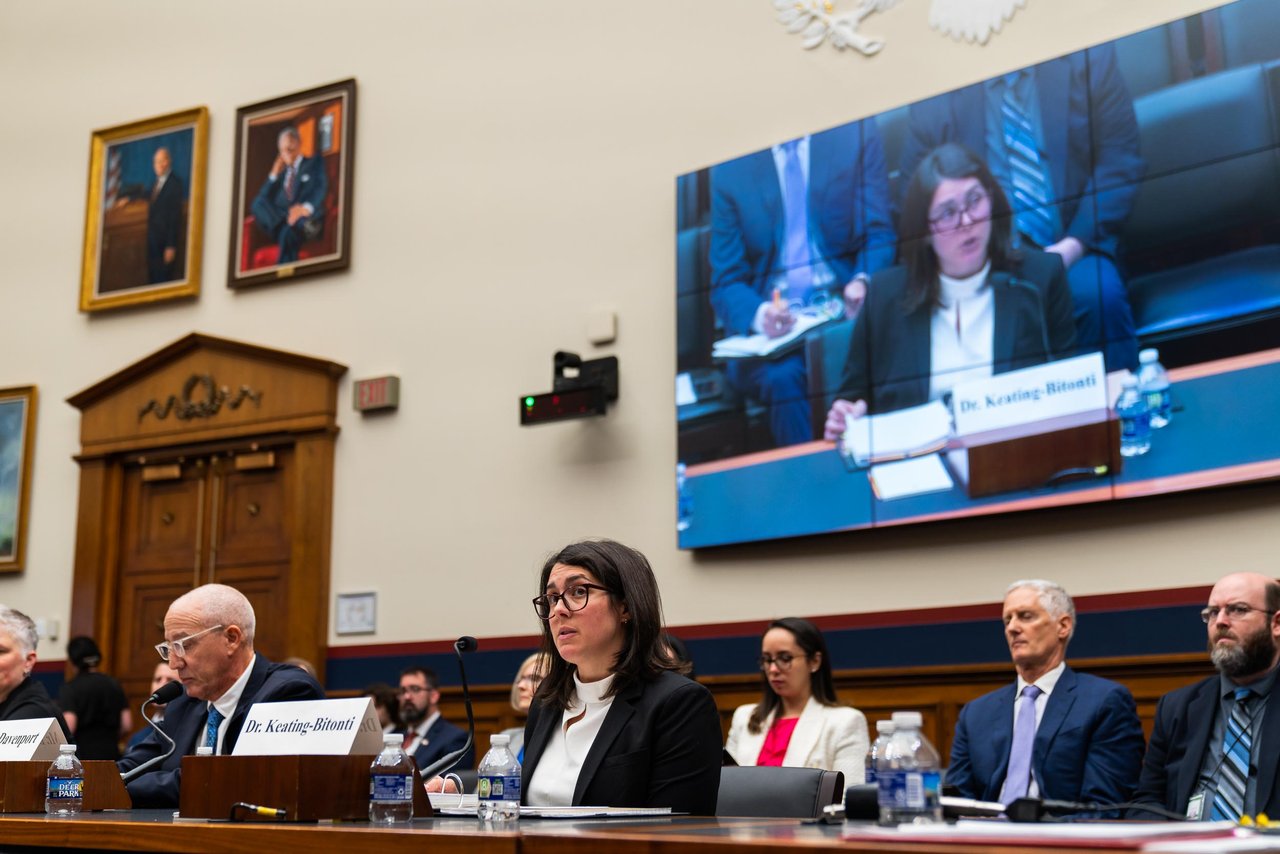
Being able to apply her knowledge to make a difference for the better is something she aspired to as a student at Syracuse, where she worked with EES Professor Linda Ivany. During her first semester, she began working in Ivany's paleontology lab, a position she maintained throughout her undergraduate years.
That early research experience proved transformative. With Ivany's mentorship, Keating-Bitonti wrote and published a peer-reviewed paper in the journal Geology, a significant milestone at that stage of academic training. The research examined ancient shell fossils from the U.S. Gulf Coast to understand what Earth's climate was like 52 to 54 million years ago—one of the warmest periods in recent geological history. Her findings revealed that ocean temperatures then were surprisingly similar to today, just a few degrees warmer, offering insights into what our planet might look like as it continues to warm.
The mentorship model she experienced at Syracuse continues to shape her approach to her work. Just as Ivany gave her autonomy while providing guidance, Keating-Bitonti now helps policymakers navigate complex issues by presenting options without bias.
"The Earth sciences department just went above and beyond for me," she says when reflecting on her time at Syracuse. Her education—particularly Ivany's encouragement to tackle challenging research, embrace intellectual rigor and persevere through setbacks—built the foundation for a career serving the public good through analysis that shapes national policy.
Mapping a Career Path
James Farrell G'19 didn't follow a traditional path into academia or laboratory research after completing his doctorate in Earth sciences at Syracuse University. Instead, he turned his expertise in fluid mechanics and structural geology—along with a lifelong fascination with maps—into East of Nowhere, an e-commerce brand headquartered in Camillus, New York that transforms geographic data into wall art.

James Farrell
"I wanted a way to turn geographic data into something beautiful enough to live on the wall, not just sit in a textbook or GIS (geographic information system) file," Farrell explains. What began as a creative side project has grown into a thriving business with a global audience. His work sits at the intersection of art, science and memory, creating works that connect people to places that shaped their lives.
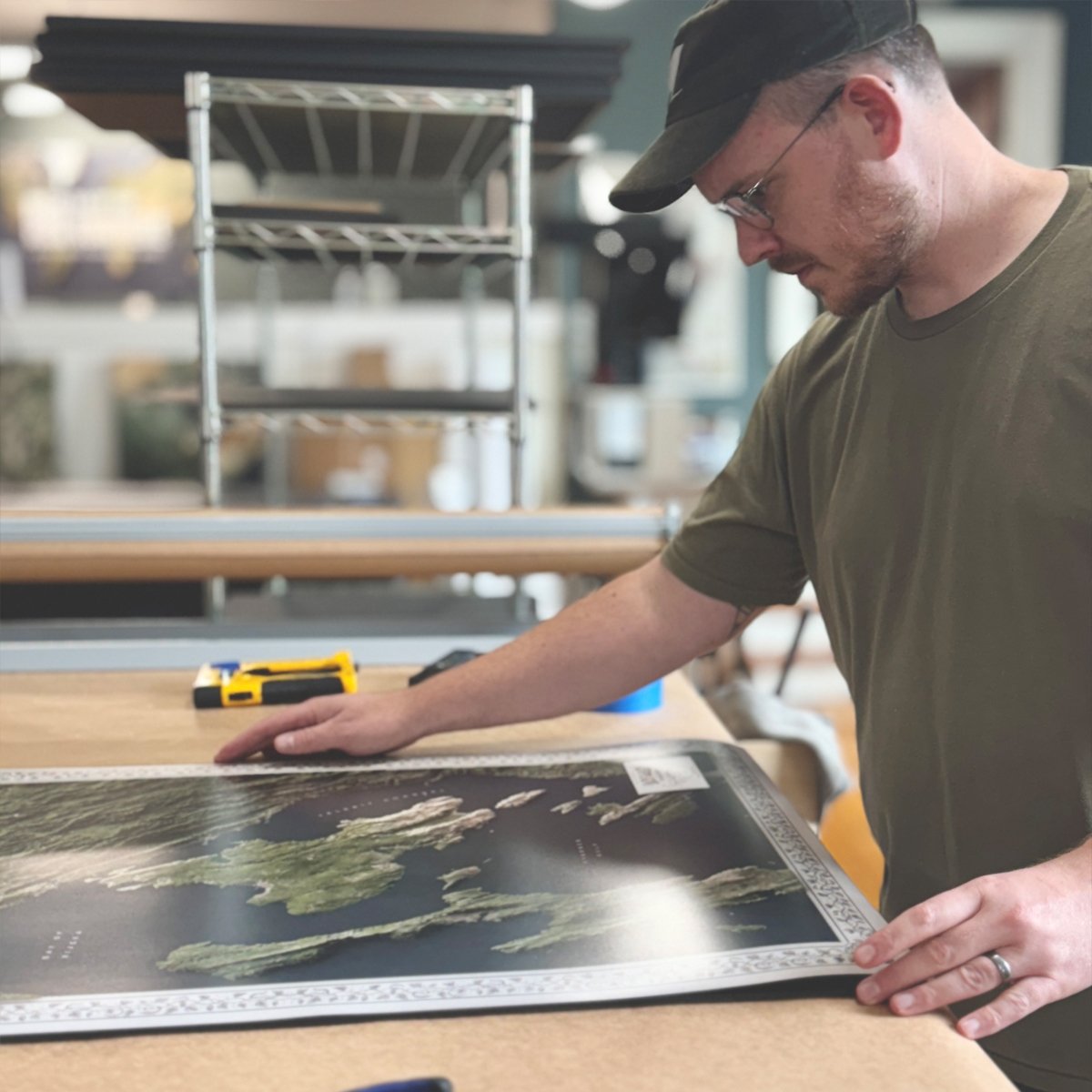
Farrell's Earth sciences education proved essential to this entrepreneurial journey. His involvement with the Syracuse Lava Project placed him at the nexus of science and art, giving him a well-rounded perspective that blended technical rigor with visual storytelling. "Being immersed in an environment where scientific work and creative practice overlapped shaped how I approach my work today," he notes.
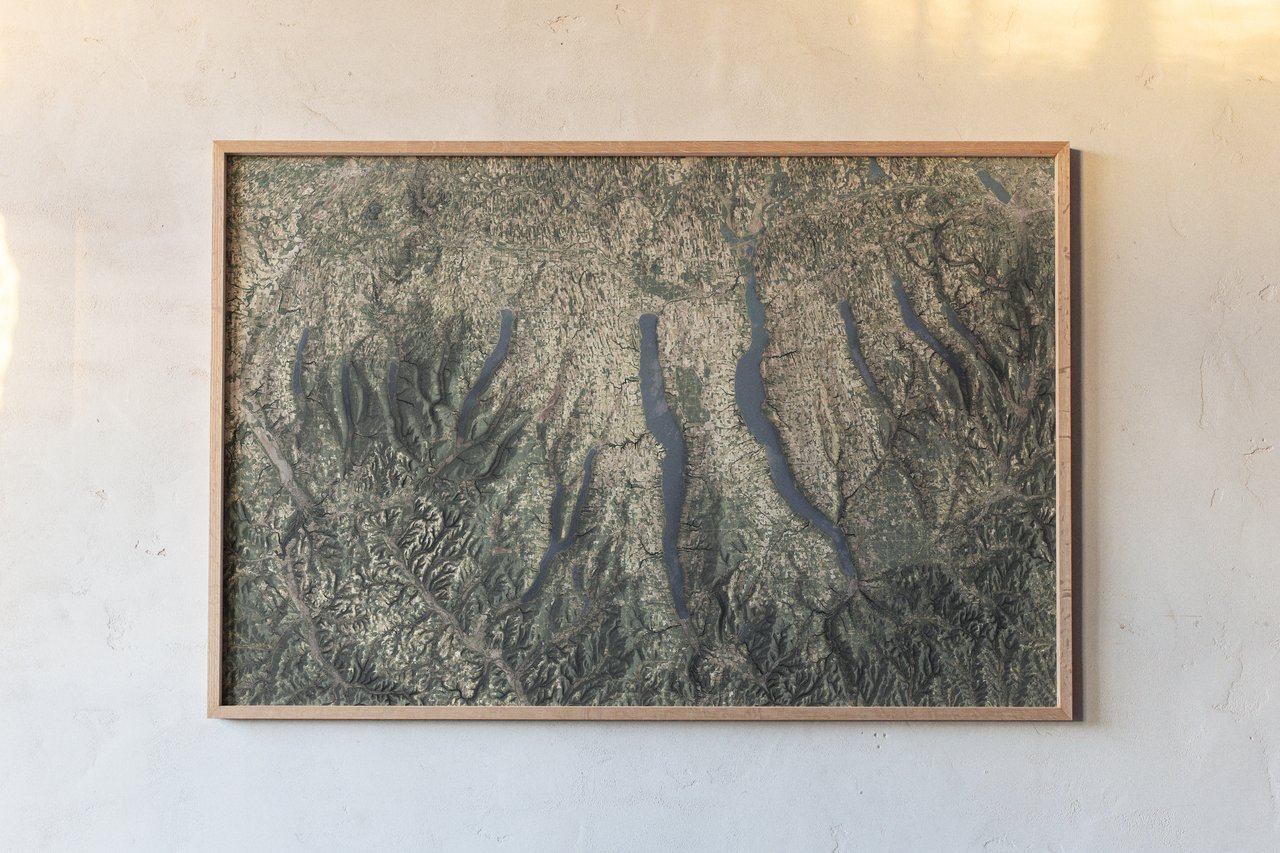
One particularly formative experience was a summer field season in Iceland, where he spent months living in a tent while mapping geological structures in the highlands. "That experience gave me a deep appreciation for both the art and science of mapping, as well as a lasting respect for landscapes themselves," Farrell recalls. The immersion fundamentally shaped how he thinks about geography, scale and the relationship between data and the real world—perspectives that now inform every map he creates.
Farrell encourages Earth sciences students to consider entrepreneurship. "Scientists already develop many of the skills that translate well into business, like problem solving, data analysis and systems thinking," he explains. He points to Syracuse's cross-disciplinary resources, including Whitman School coursework and pitch competitions open to students across the University, as valuable opportunities to expand their thinking about post-graduation possibilities.
For Farrell, his A&S experience provided not just technical expertise, but a framework for translating scientific knowledge into work that serves the public good—helping people connect more deeply with the places they love.
Charting a Course for Improved Carbon Capture
When Mallory Ringham '13, G'15 took an oceanography elective on a whim during her junior year, she had no idea it would reshape her career trajectory. At the time, she was majoring in physics and chemical engineering, but the course opened her eyes to ocean and climate science. When EES Professor Greg Hoke later invited her to pursue a master's degree studying paleoclimate and conduct fieldwork in the Andes, she made the leap into Earth sciences.
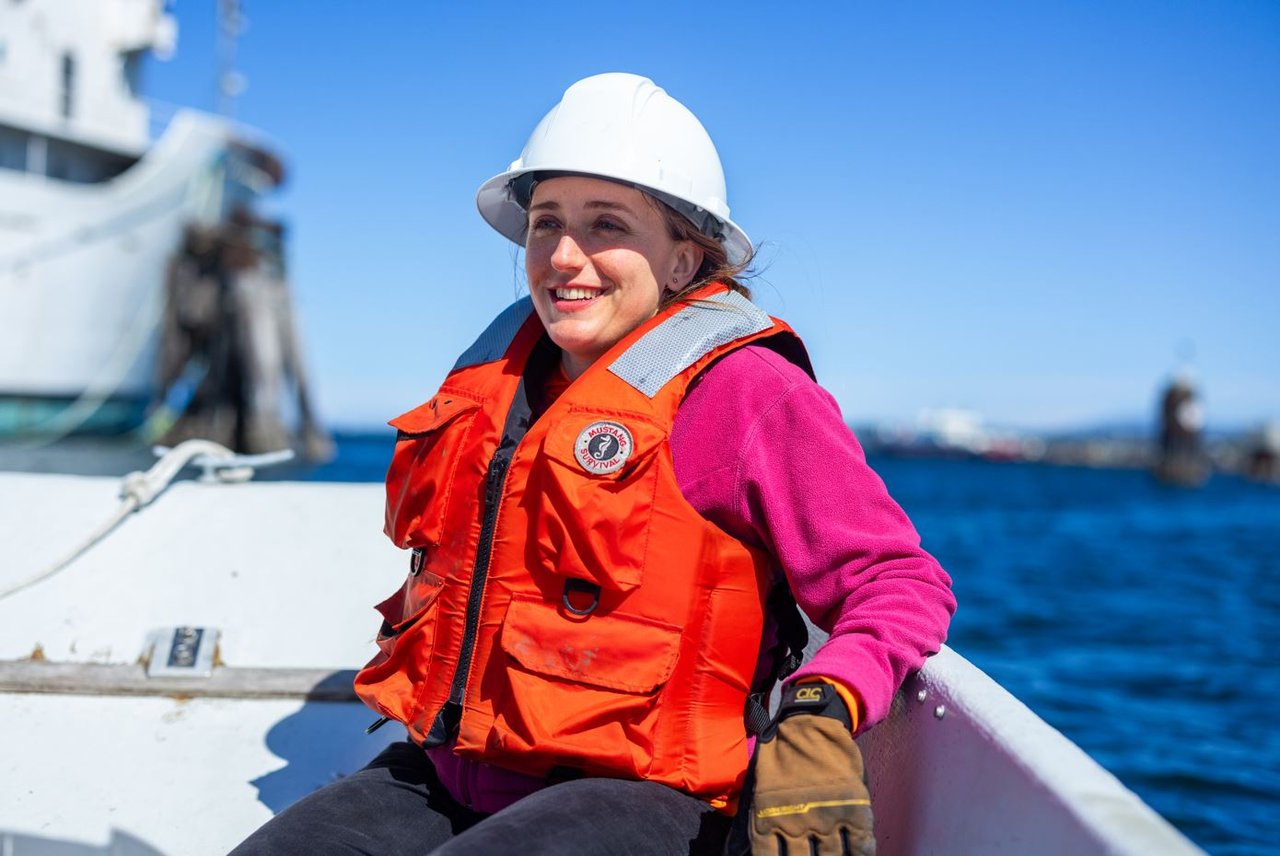
After earning a master's degree at Syracuse, she pursued a Ph.D. at MIT and Woods Hole Oceanographic Institution, where she developed sensors to observe ocean acidification. This experience solidified her desire to do applied work. “I wanted to do something tangible,” she says.
Today, Ringham serves as Head of Ocean Sciences at Ebb Carbon, a startup working to combat climate change through marine carbon dioxide removal. Her role involves designing seawater chemistry monitoring systems, collaborating with ocean modelers and leading interdisciplinary research on ocean alkalinity enhancement. Among their goals is to develop technology that alters seawater chemistry to increase the ocean's natural carbon capture capacity. The ocean already absorbs more CO2 than any other natural system, but by speeding up this natural process, they could help lower atmospheric CO2 levels and slow global warming. “The best part about this job is that we're working directly on a potential climate solution,” Ringham explains.
She credits the diversity of her education at Syracuse for preparing her to navigate the emerging field of ocean alkalinity enhancement technology. Her physics coursework proved crucial for building optical sensors. Her chemical engineering background helps her collaborate with engineers developing new technology. And her extensive Earth sciences field and laboratory work taught her about ocean modeling and how to design robust environmental monitoring campaigns. "Being able to pull on a lot of old threads and experiences, and to learn in different ways, is really important in my job," she notes.
Her passion for oceanography dates back to her first oceanography class with EES Associate Teaching Professor Dan Curewitz, who opened her eyes to marine science, while Hoke's geomorphology course with its Friday field trips to Labrador Hollow just south of Syracuse showed her that science could happen outdoors. "I am hugely grateful for a range of professors and advisors at SU who supported me when I wanted to try something a bit different every semester," Ringham says.
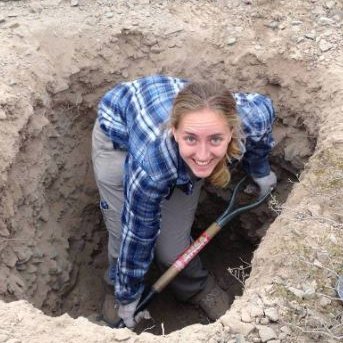
Ringham digging holes for soil carbonates in Chile during her master’s degree studies at Syracuse in 2014.
Her advice to current students emphasizes the value of exploration and networking. "Keep an eye out for opportunities and be willing to jump around a bit," she encourages, noting the importance of building an online presence and showing up to department seminars. For Ringham, her Syracuse education provided not just technical skills, but the adaptability to work at the cutting edge of climate solutions—helping write the protocols for how to responsibly deploy novel ocean technologies that could remove gigatonnes of CO2 from the atmosphere.
Turning Datasets into Climate Solutions
In an era when climate information is more critical than ever, EES alum Peter Brennan '23 Ph.D. is working to ensure that important data reaches those who need it most. For example, scientists use this data to develop reliable forecasts to prepare for extreme weather events like hurricanes, floods or heat waves; city planners need accurate projections to design resilient infrastructure to withstand future climate conditions; and farmers depend on precise seasonal predictions to make planting and harvesting decisions that affect food security.
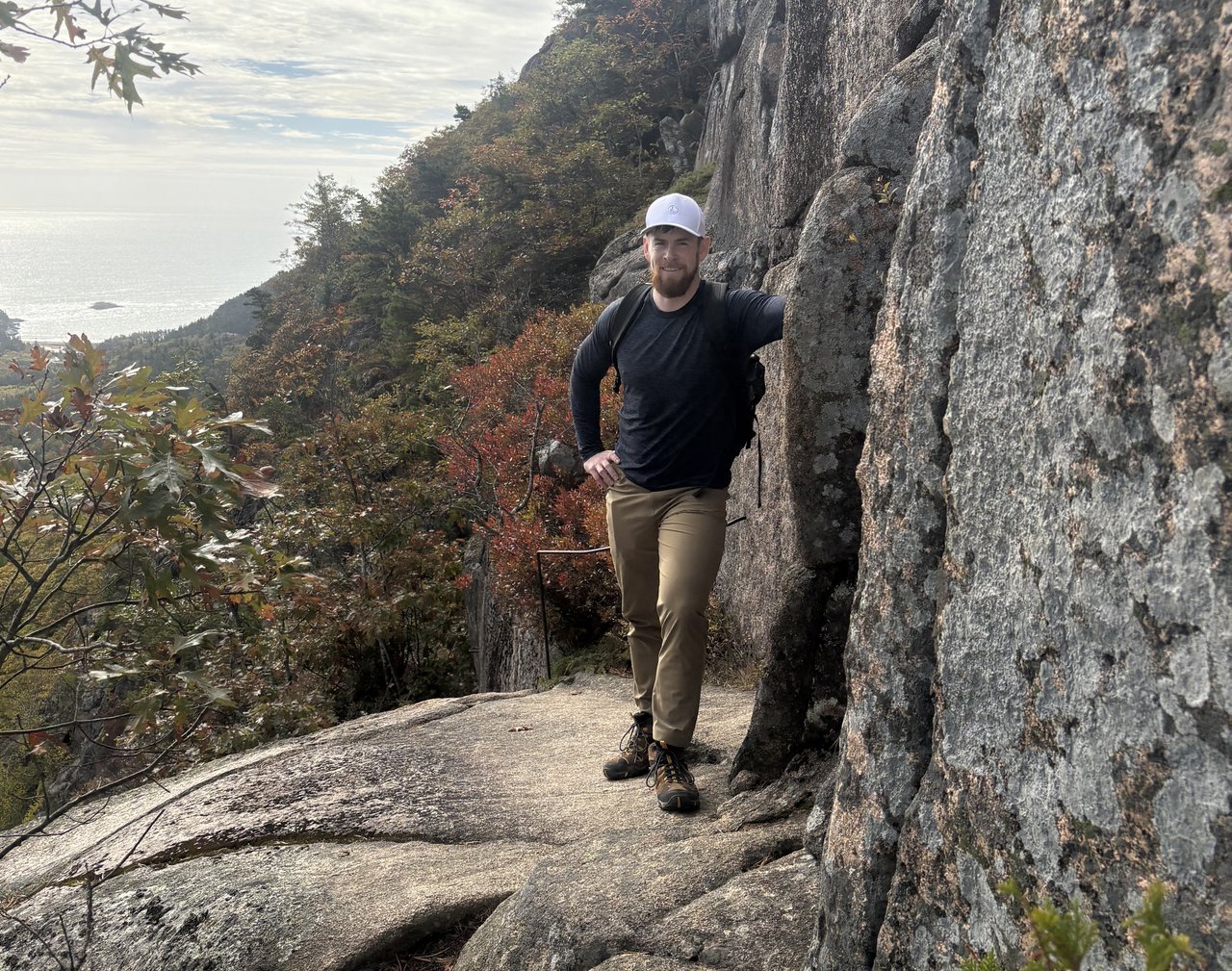
As an ORISE (Oak Ridge Institute for Science and Education) Climate Data Research Fellow working with the U.S. Geological Survey and National Climate Adaptation Science Center (NCASC) and consultant with NATO, Brennan transforms complex climate datasets into accessible, actionable information for scientists, policymakers and the public. His work bridges the gap between raw scientific data and real-world decision-making, using modern software to build infrastructure that makes massive climate datasets searchable and usable.
Brennan's path to becoming a leader in climate data science was shaped during his time at A&S. With mentorship from Tripti Bhattacharya, Thonis Family Professor in EES, he pursued research in paleoclimate dynamics and climate data science, employing diverse methodologies ranging from organic geochemical lab analyses to climate modeling and large-dataset work. This multifaceted training taught him to approach climate questions from multiple angles. This skill has proven invaluable in his current work.
"I learned some of the most interesting and technically demanding organic geochemical methods of my career at SU," Brennan says. "That lab training still shapes how I think about measurement, uncertainty and data quality." But it was the integration of traditional Earth science methods with emerging data science approaches that became his defining advantage.
A crucial element of Brennan's Syracuse experience was Bhattacharya's support of his push into climate data science at a time when it was still relatively new. "That encouragement and the department's support helped me develop a broader technical toolkit while keeping my work grounded in a clear scientific question," he explains.
In his current positions, Brennan's days vary widely depending on the project. Sometimes he's cleaning, visualizing and analyzing climate and geospatial datasets using Python, a versatile computer language that helps scientists make sense of complex information. Other days he's building online infrastructure like SpatioTemporal Asset Catalogs (STAC), which are standardized, searchable indexes for huge collections of datasets.
His work with NATO has been particularly rewarding, offering opportunities to collaborate with scientists and programmers from different countries and backgrounds, each approaching problems from unique angles. "The skill I use most day-to-day is the ability to learn quickly and then apply what I've learned in a real production setting," Brennan notes. He credits his Syracuse education with developing what he calls his "learn fast, build responsibly, ship something useful" mindset—an approach that combines intellectual agility with practical application.
As climate and environmental challenges become increasingly urgent, these EES alumni demonstrate how Syracuse graduates translate their education into meaningful action, merging scientific expertise with innovation, creativity and dedication to tangible results.
Published: Feb. 16, 2026
Media Contact: asnews@syr.edu