
Scotland as a Geological Classroom
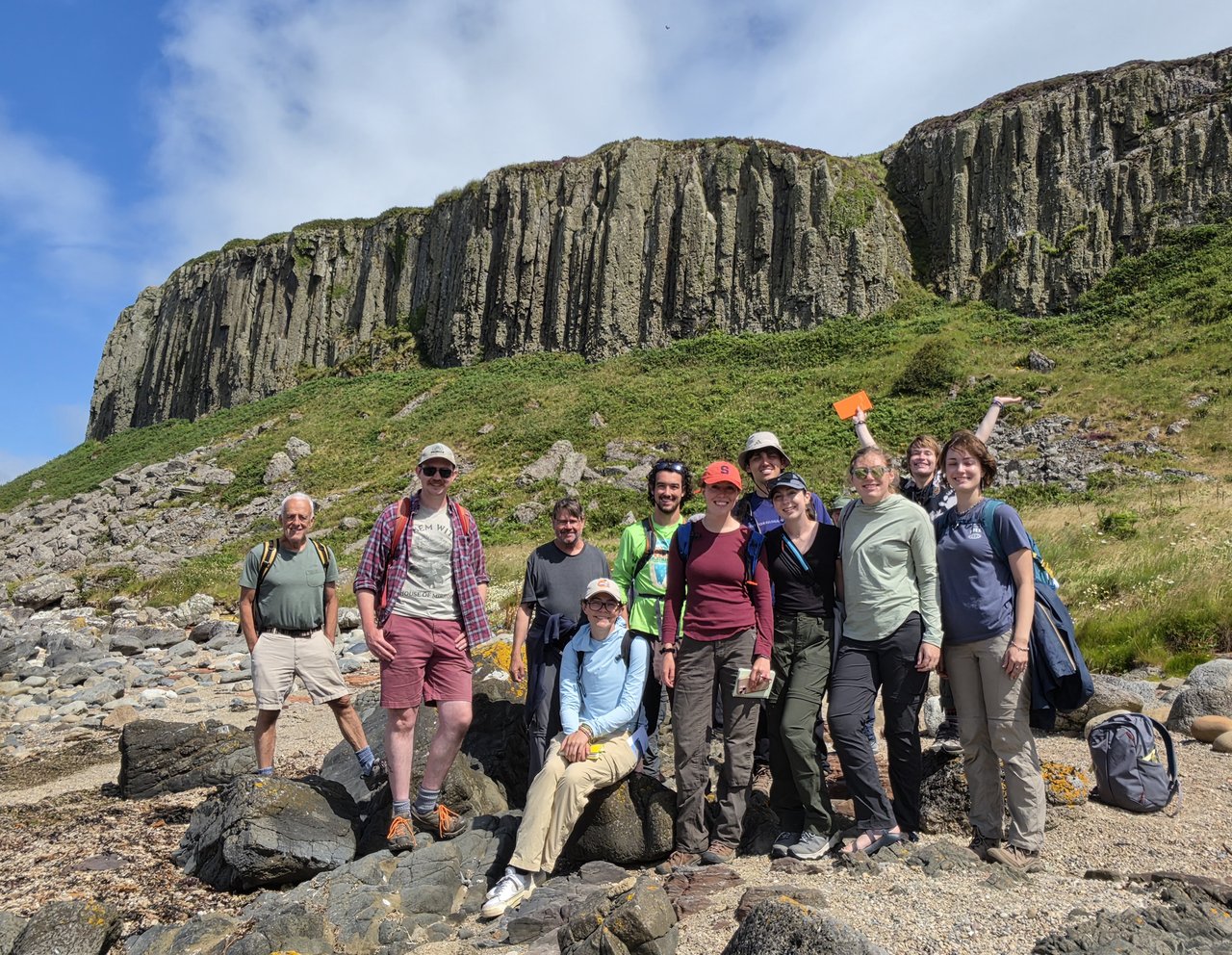
Three hundred years after the birth of James Hutton, the Scottish scientist known as the father of modern geology, Syracuse University students from the Department of Earth and Environmental Sciences (EES) walked the same landscapes that inspired many of his groundbreaking ideas. Hutton's observations of rock formations along Scotland's coast helped transform scientific understanding of Earth's history, laying the foundation for today’s discoveries.
Joined by EES faculty and alumni, the students trekked across Scotland's dramatic glens, crags and coastlines, visiting some of the world's most important geological sites as part of an international field study. Opportunities like these are central to the College of Arts and Sciences (A&S) educational journey, where students across majors and academic disciplines are encouraged to move beyond the classroom and build hands-on research and analytical skills in their field.
In the Footsteps of Geology’s Pioneer
The trip marked the fourth international EES excursion in recent years, following previous visits to British Columbia, Iceland and Newfoundland. Led by professors Scott Samson and Linda Ivany, the program took students to three key locations: Glasgow, the Isle of Arran and Edinburgh.
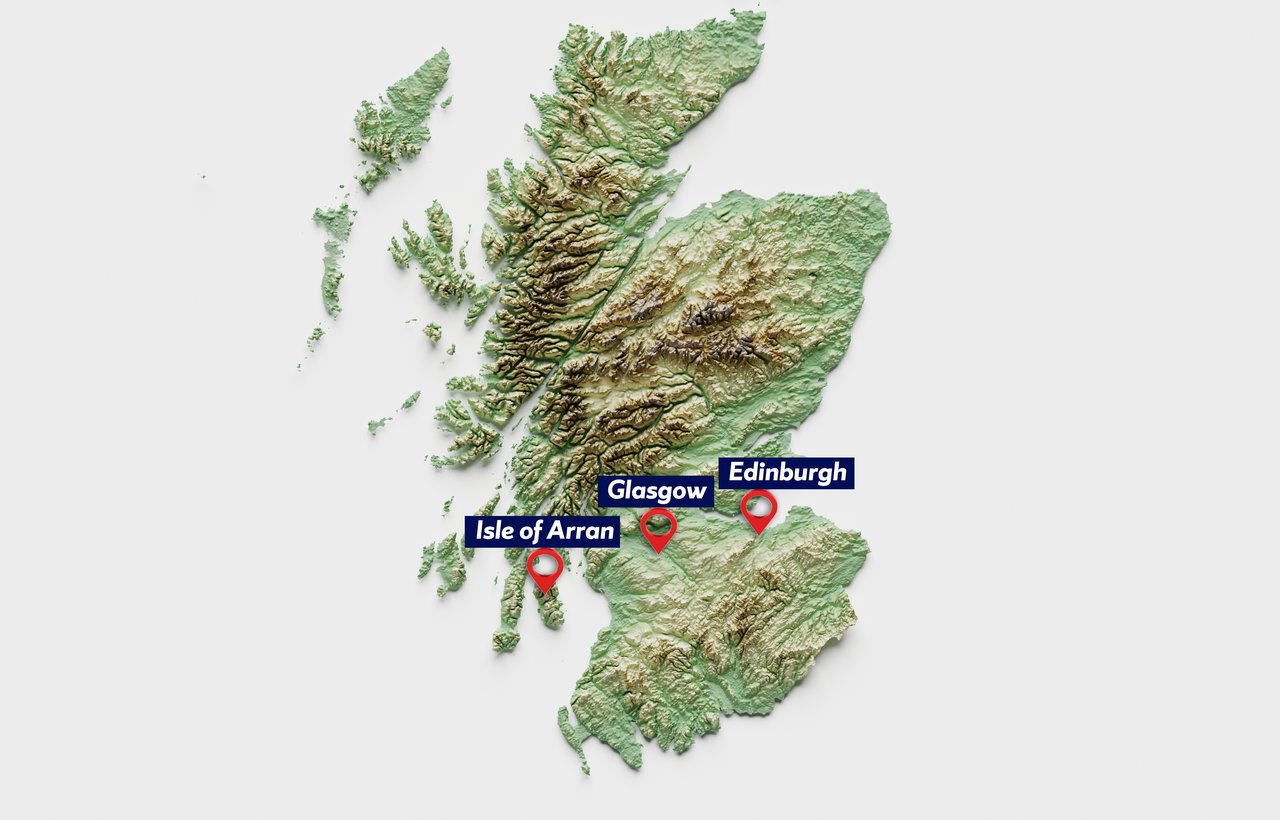
The trip gave students the opportunity to visit the places where Hutton observed rock formations during the late 18th century, revealing Earth's relentless, ongoing geological processes. These observations led Hutton to argue that the planet was far older than commonly believed, and that its history could be explained by processes we can see or infer through observation of the natural world, ideas that transformed scientific understanding of Earth's evolution.
"He is to geology what Darwin is to biology and what Isaac Newton is to physics and mathematics," Professor Samson says.
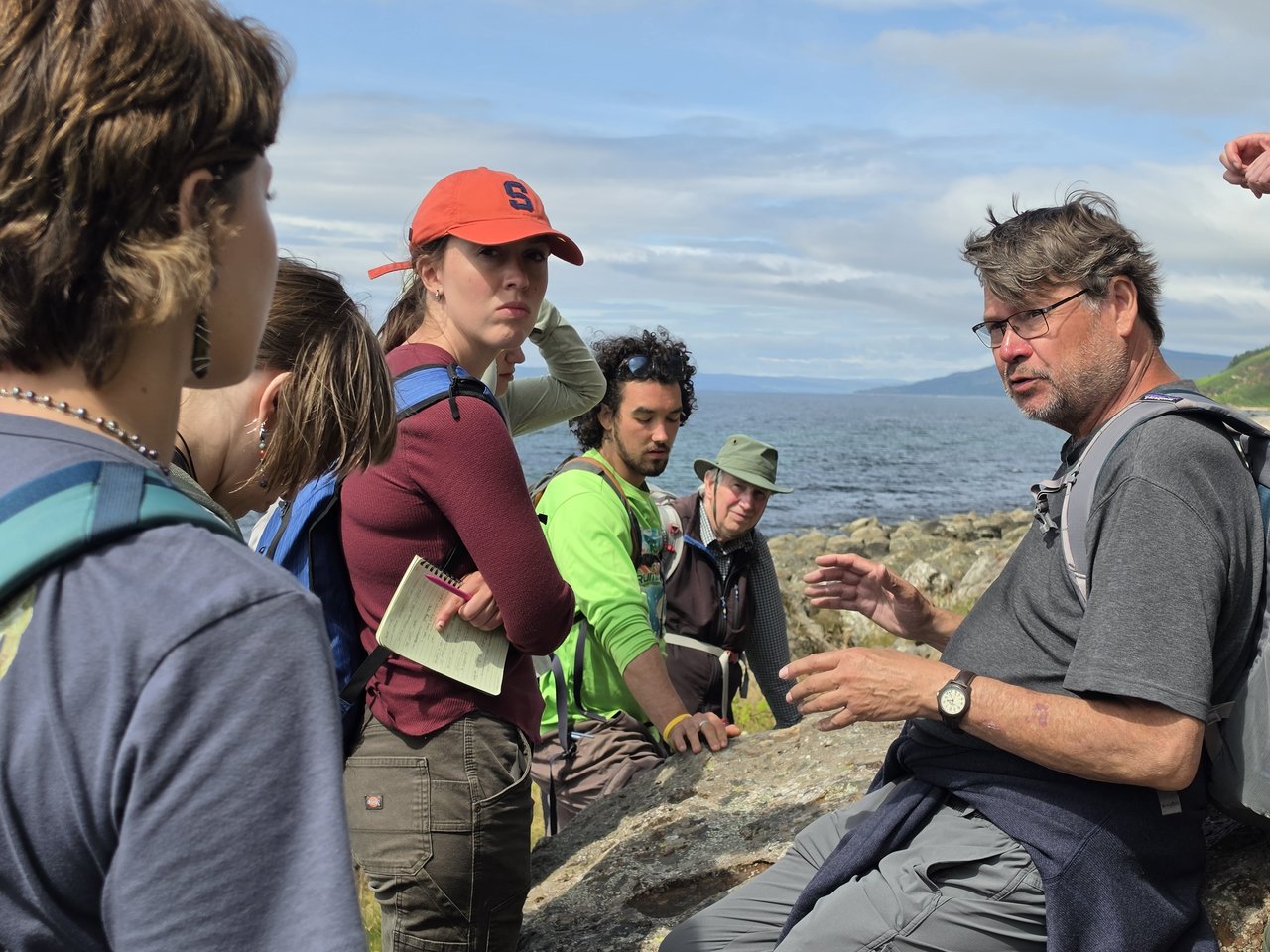
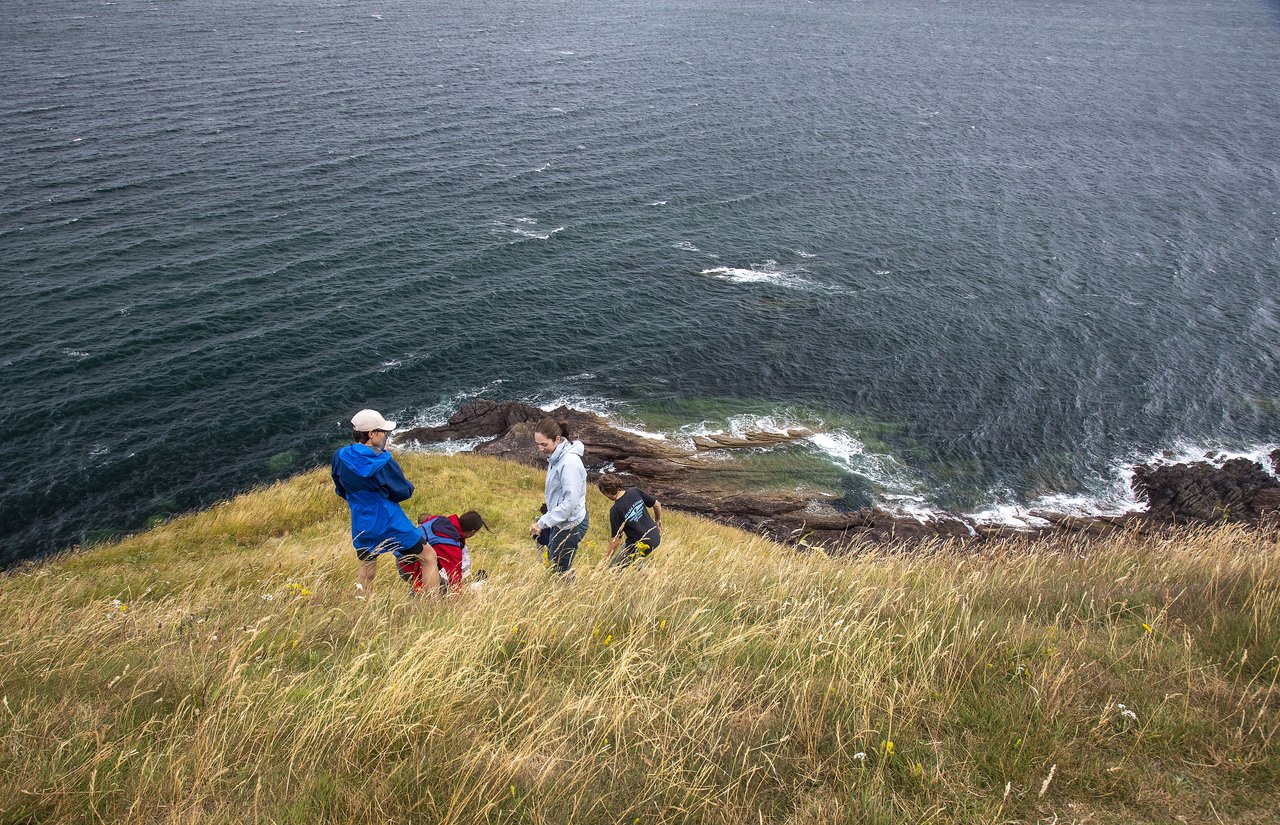
A major destination was the Isle of Arran, often described as a geological miniature of Scotland because of the diversity of rock formations and geological features found across the island. Students were based for four days in the village of Lochranza, where they stayed at a field station and worked closely with a local geology expert who guided the group through important field sites.
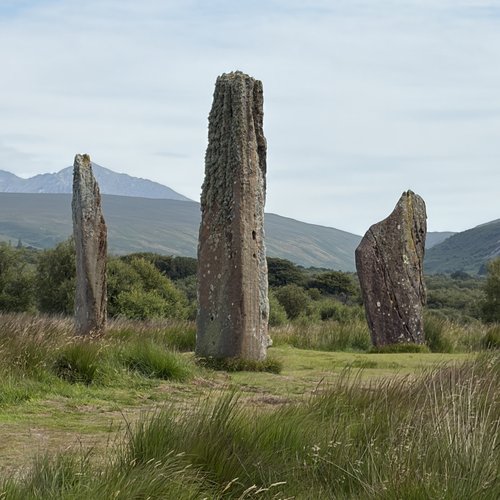
The prehistoric stone circles of Machrie Moor offer a striking glimpse into Arran's ancient landscape and archaeological history. (Photo by Mike Thonis)
Building Skills Through Experience
Students prepared for the trip by reading scientific literature related to the locations they would visit. Once in Scotland, however, the learning shifted from theory to direct observation – as it did for Hutton so long ago as he searched for field observations to support his revolutionary Theory of the Earth.
The group examined rock formations, geological structures and historic outcrops that have helped shape scientific understanding of Earth’s history. Among the highlights was a visit to the most famous angular unconformity described by Hutton, known as Siccar Point, a geological feature east of Edinburgh that demonstrates vast spans of geological time.
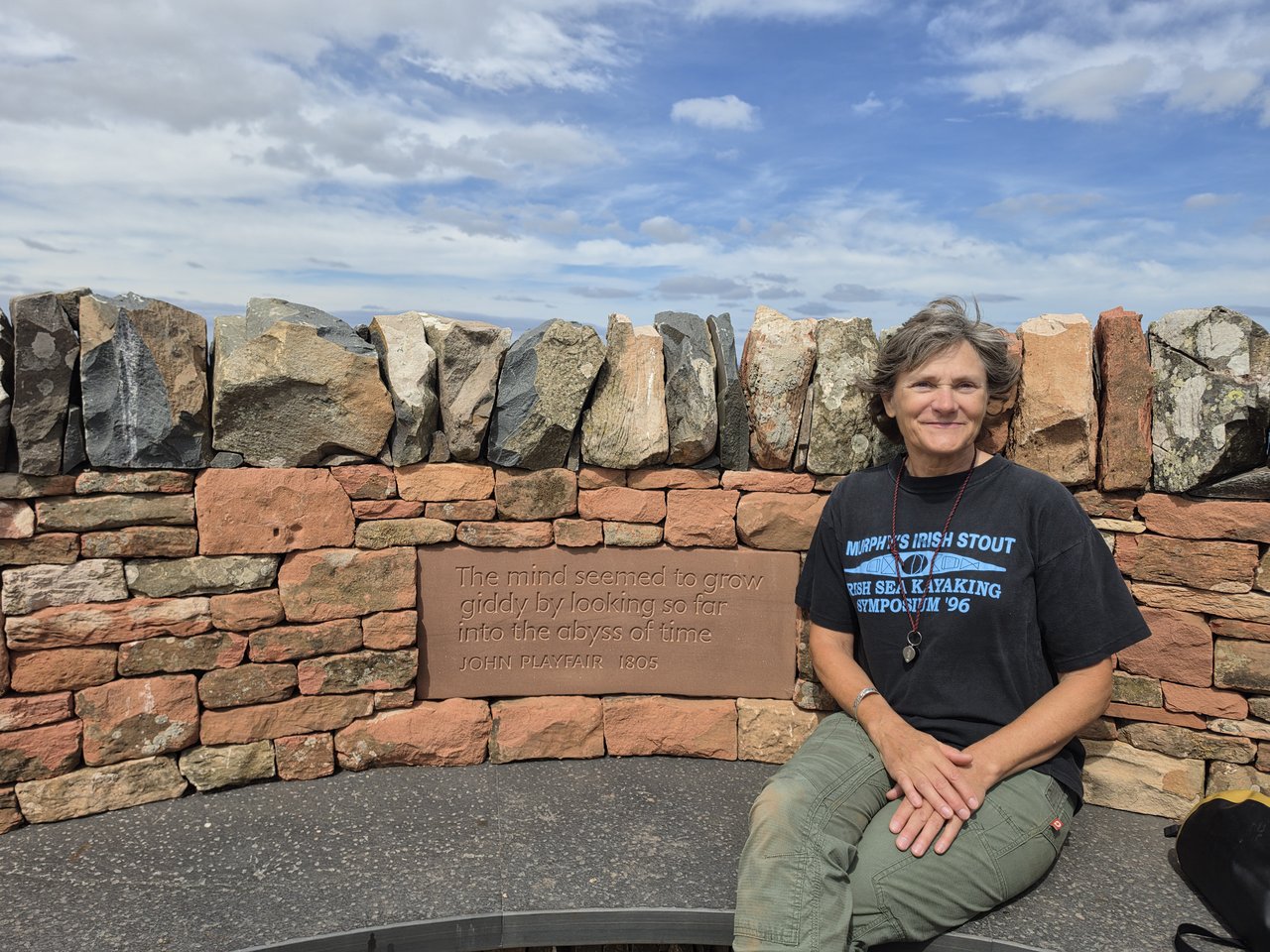
“This set of rocks changes your whole world view,” says Professor Ivany. At Siccar Point, James Hutton saw evidence that Earth continually renews itself through cycles of sedimentation, uplift, mountain building and erosion, challenging the idea of a static world with a fixed endpoint. This insight led to his famous conclusion, “We find no vestige of a beginning, no prospect of an end,” capturing his view of Earth as a dynamic planet shaped by continuous cycles of change over immense spans of time. “His insight completely transformed the study of our planet. This place is why we came on this trip,” says Professor Ivany.
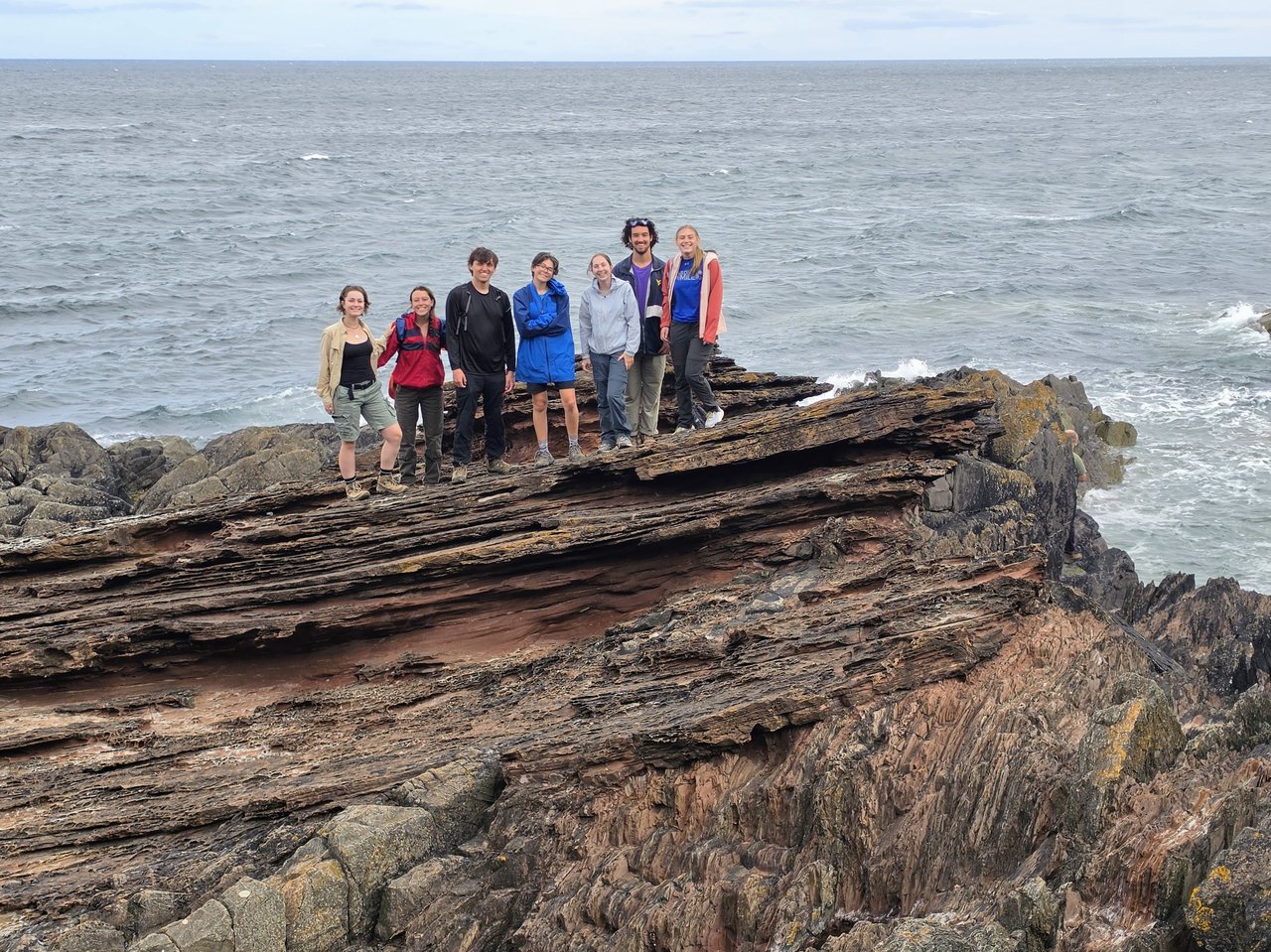
“Few people have ever seen it in person,” Professor Samson says. “But this set of rocks is in every single geology textbook ever published in the entire world.”
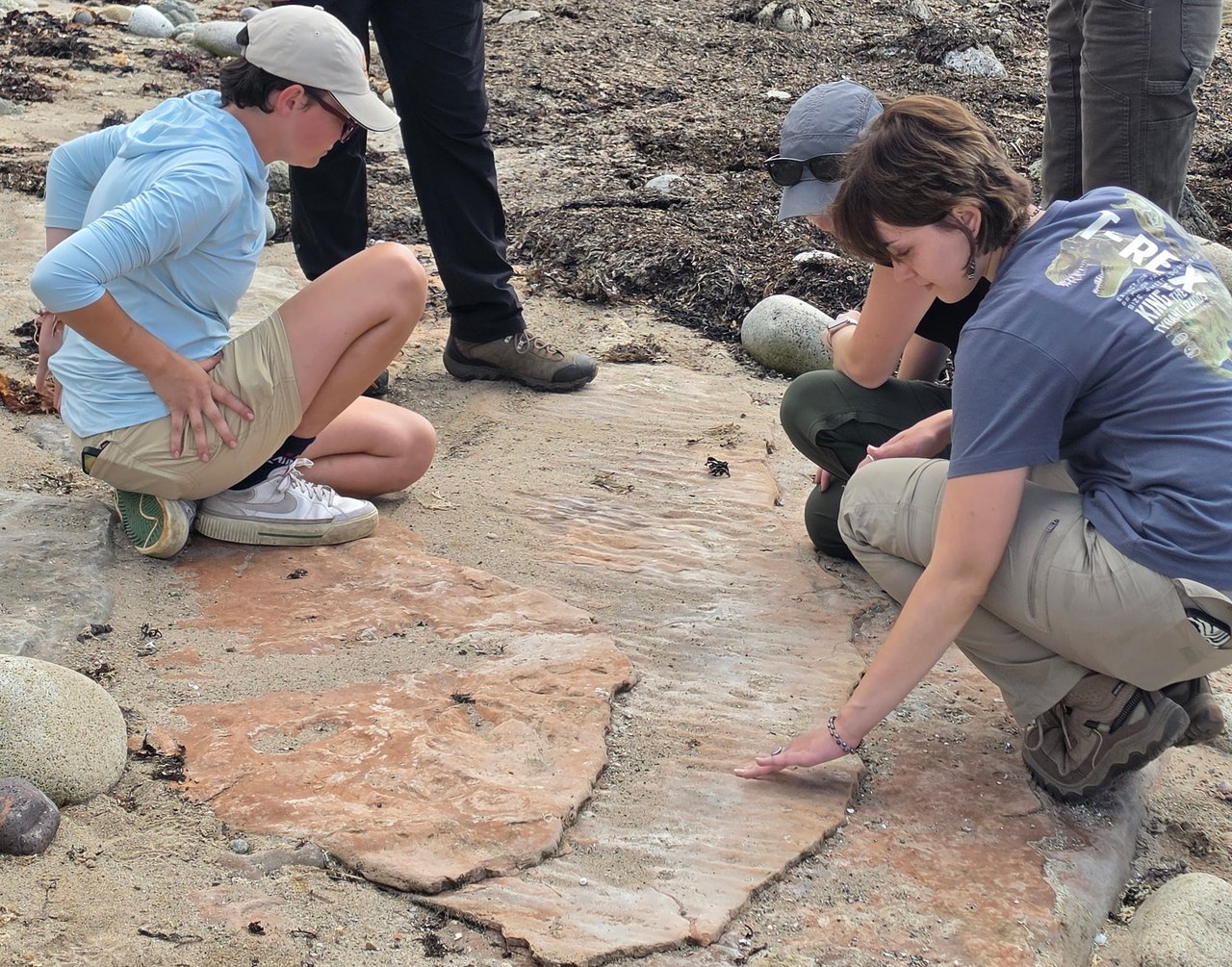
Fieldwork challenged students to apply what they had learned in the classroom to direct observation. They were tested on their ability to identify and sequence rock samples based on evidence they had gathered in the field.
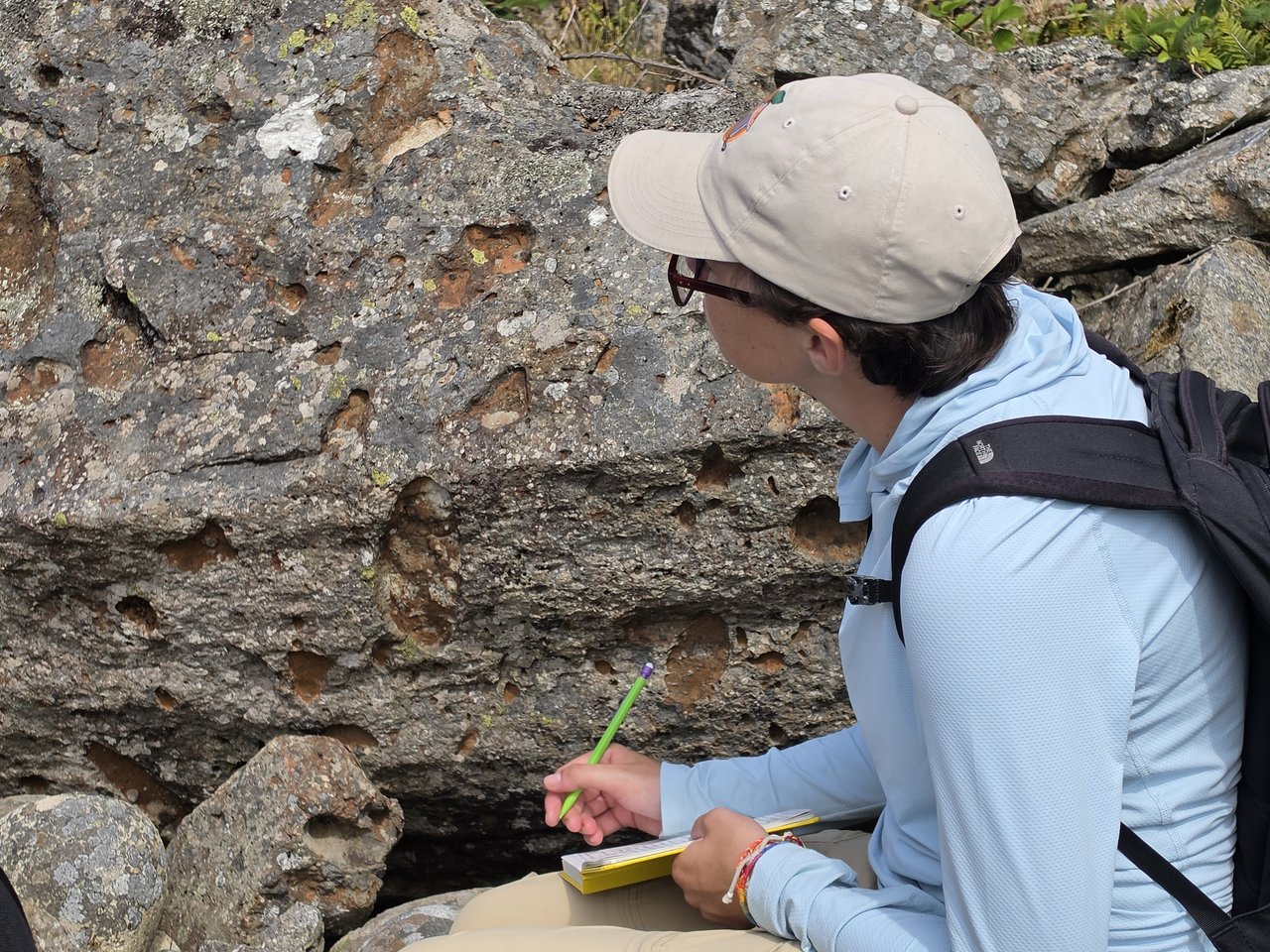
“They had to put specimens in order from oldest to youngest based on what we had learned at the geological outcrops,” Professor Samson says.
The exercise required students to analyze, interpret and defend their conclusions using real geological evidence, mirroring the work performed by scientists working in the field.
The trip provided students with a valuable first opportunity to study geology at a professional field scale. Rather than examining samples in a laboratory or viewing photographs in a textbook, they worked directly with landscapes, rock formations and geological structures.
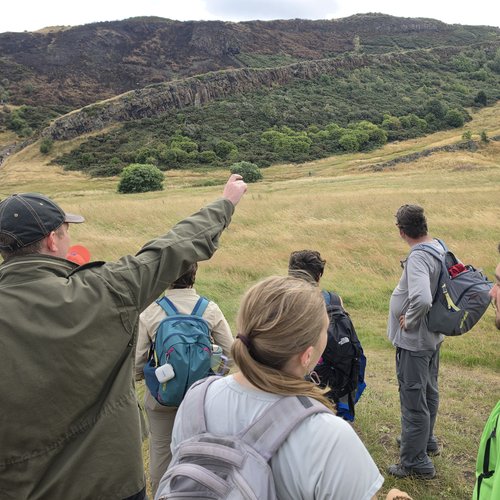
EES students and faculty discuss ancient lava flows of the Salisbury Crags, once visible from the windows of James Hutton’s home in Edinburgh. (Photo by Linda Ivany)
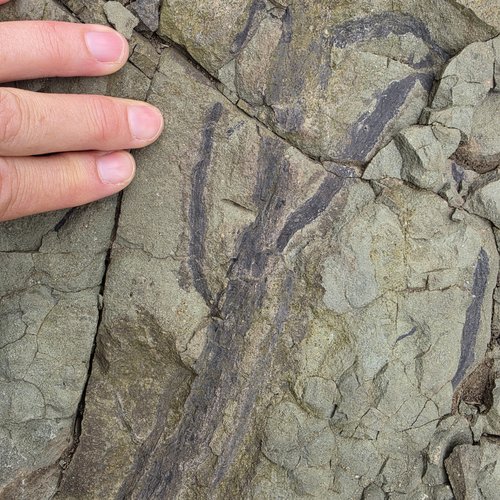
Students discovered fossils of 300-million-year-old plants in rocks overlain by the lava flows of Edinburgh. (Photo by Linda Ivany)
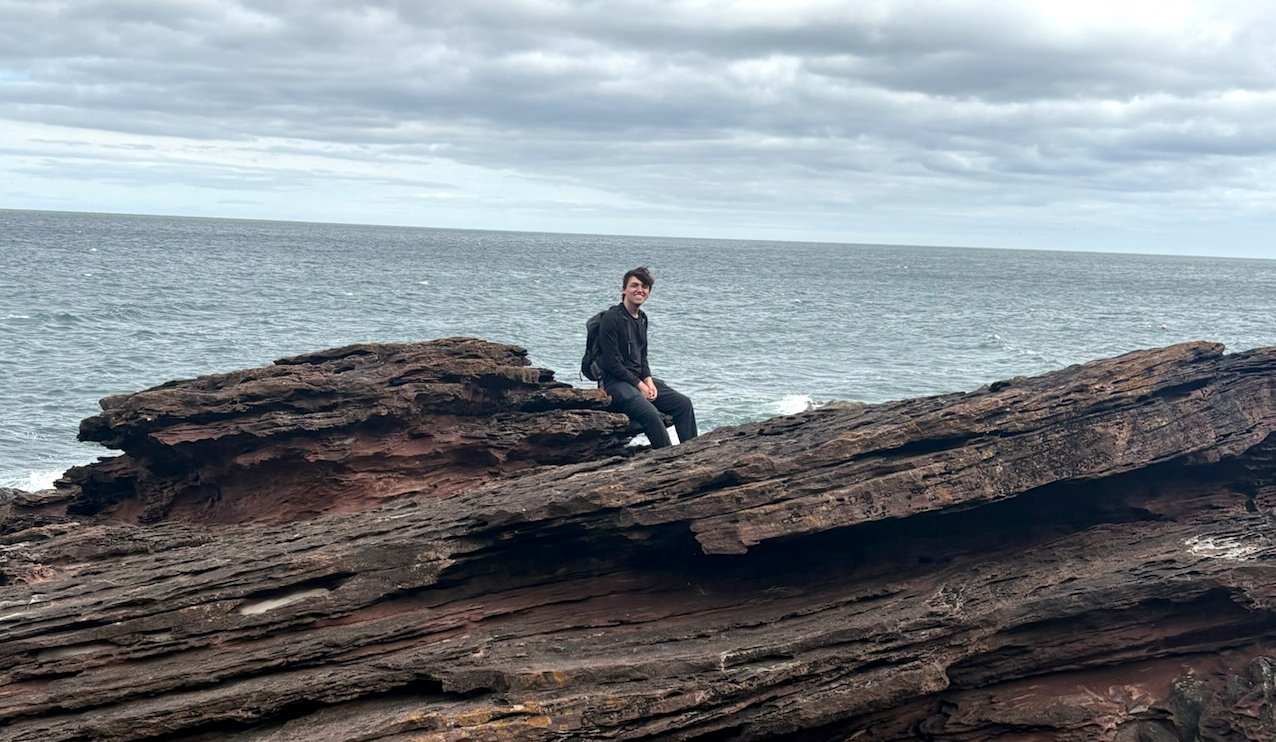
For Christopher Paradis ’28, an Environmental Geoscience major in A&S and an Environment, Sustainability and Policy major in the Maxwell School, the expedition reinforced his passion for field-based science. After hearing about the opportunity from faculty, he was immediately drawn to Scotland’s rich natural history and globally significant geology.
“This experience has absolutely confirmed for me that I want to study a science that puts me out in the field as often as possible,” Paradis says. Exploring rocky riverbeds, rolling pastures and coastal cliffs gave him a firsthand look at landscapes shaped over hundreds of millions of years, bringing the geologic history he’s learned about through his coursework to life.
An Alum's Return to the Field
Paradis was not the only member of the group inspired by the experience. Mike Thonis ’72, a Syracuse University life trustee, Earth sciences alumnus and longtime supporter of the Department of Earth and Environmental Sciences, joined the trip as an alumni participant. Though he earned his geology degree more than 50 years ago and went on to build a successful career in investment management, his passion for geology remains as strong as ever. Following his retirement five years ago, he devoted himself to researching and writing a recently published work on the geologic history of North America – something that hadn’t been done since 1963 before the advancement of plate tectonics.
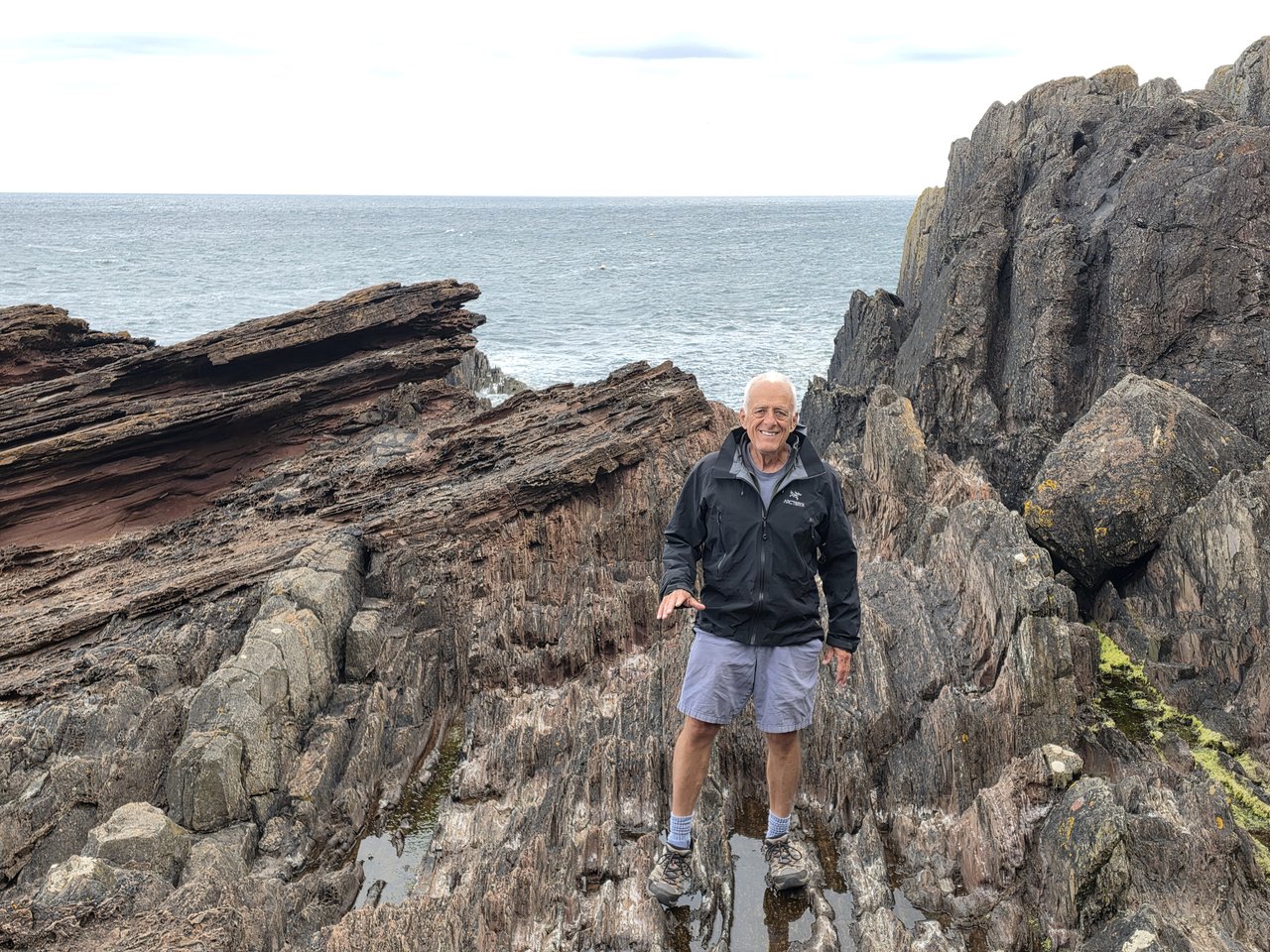
For Thonis, one of the most memorable moments came on a rugged beach near Edinburgh. "We had walked two miles across thousands of layers of sandstone that correlated with the Catskills in New York State," he says, highlighting the deep geological connection between Scotland and North America, which were once linked before plate tectonics gradually separated them, making way for the Atlantic Ocean. "Such is geology!"
Experiences like this, he notes, are what make field-based learning so valuable. "The more rocks you see, the more discerning you get. ‘Rocks’ includes their settings, and this can only happen outdoors." He added that field experiences also allow students to witness how scientists collaborate and learn from one another in real time.
"The Syracuse students on this Scotland trip were the best ever," he says, noting that their curiosity, enthusiasm and willingness to tackle challenging field exercises reflected the culture of a department that has long emphasized hands-on learning and close faculty-student engagement.
Preparing Future Scientists
Experiences like this play a vital role in shaping the next generation of scientists. By connecting classroom concepts to real-world observations, students gain the confidence and practical expertise needed for graduate study, research careers and professional work in the geosciences.
The Scotland program demonstrated how immersive field experiences can accelerate learning, challenge students to think critically and inspire a deeper appreciation for scientific discovery. It also reflected A&S' commitment to the priorities outlined in its Academic Strategic Plan, Shaping the Future: Innovation, Engagement and Impact, by providing global learning experiences that integrate scientific investigation with human-centered inquiry.
For Scott Samson, the impact was clear.
“In short, best international geology trip I’ve ever been part of,” he says. “The students absolutely loved it.”
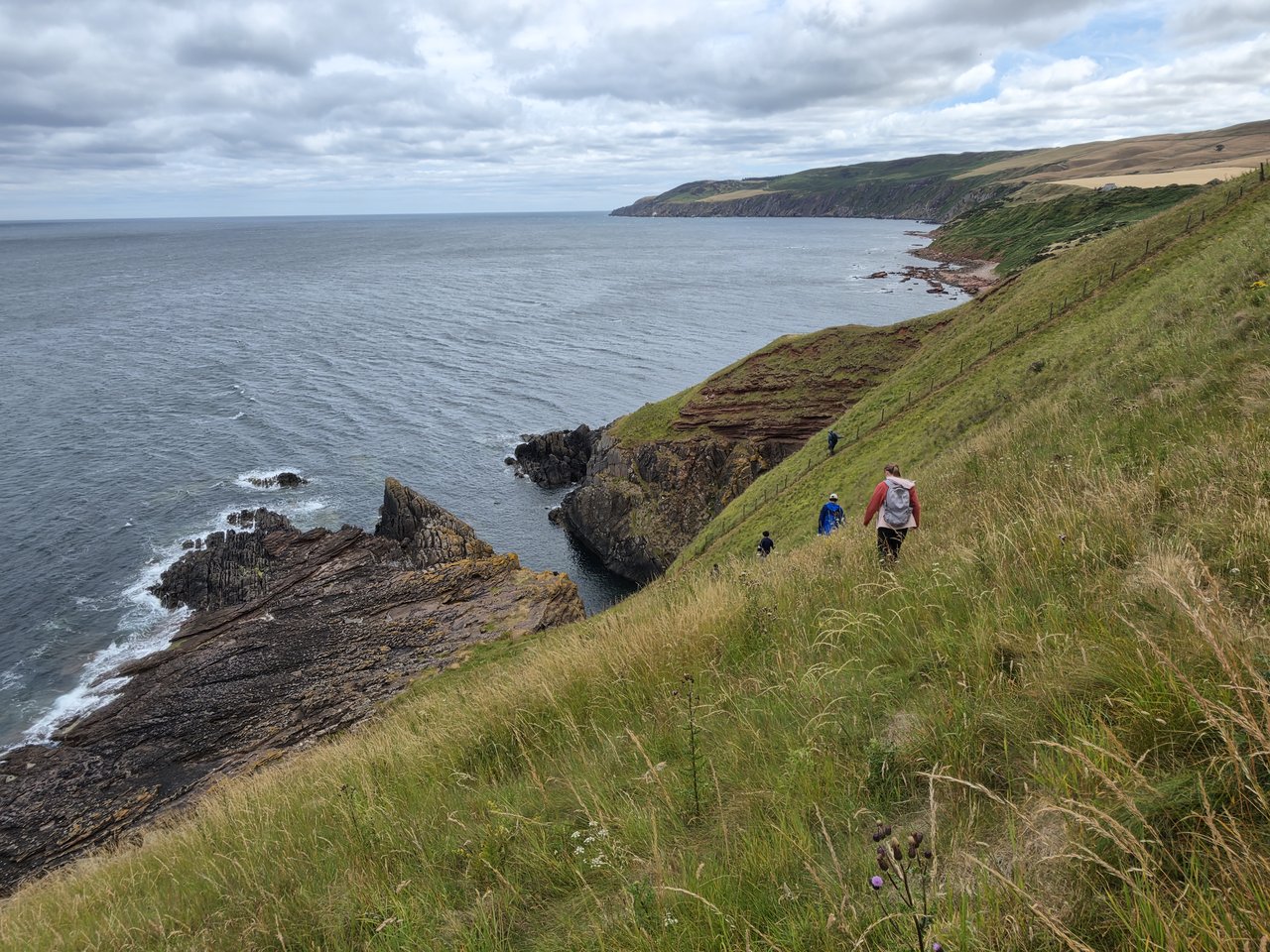
For those students, Scotland became far more than a travel destination. It became a living laboratory where they experienced firsthand how scientific knowledge is built, tested and understood, one outcrop at a time.
Published: Sept. 11, 2026
Media Contact: asnews@syr.edu