
Remembering a Pioneer of Medieval Stained Glass

The College of Arts and Sciences (A&S) at Syracuse University mourns the passing of Meredith Lillich, professor emerita of art history, who died on March 18, 2026 at the age of 94. A member of the University’s faculty for more than four decades, Lillich was an internationally recognized scholar of medieval stained glass, a dedicated teacher and mentor, and a foundational figure in the modern study of Gothic art.
Born in Chicago, Lillich demonstrated an early devotion to intellectual pursuits. After double majoring in English and art history at Oberlin College and graduating in 1953, she traveled to Europe on a Fulbright fellowship, taking part in a formative abroad experience that sparked what would become her life’s scholarly focus: medieval stained glass.
Lillich would go on to earn a master’s degree in art history from Cornell University in 1957 and a Ph.D. from Columbia University in 1969. While finishing her dissertation, The Stained Glass of Saint-Père de Chartres, she joined the A&S faculty in 1968. She remained at the University until her retirement in 2010, shaping generations of students and playing a central role in establishing A&S as a hub for research and teaching on medieval art.
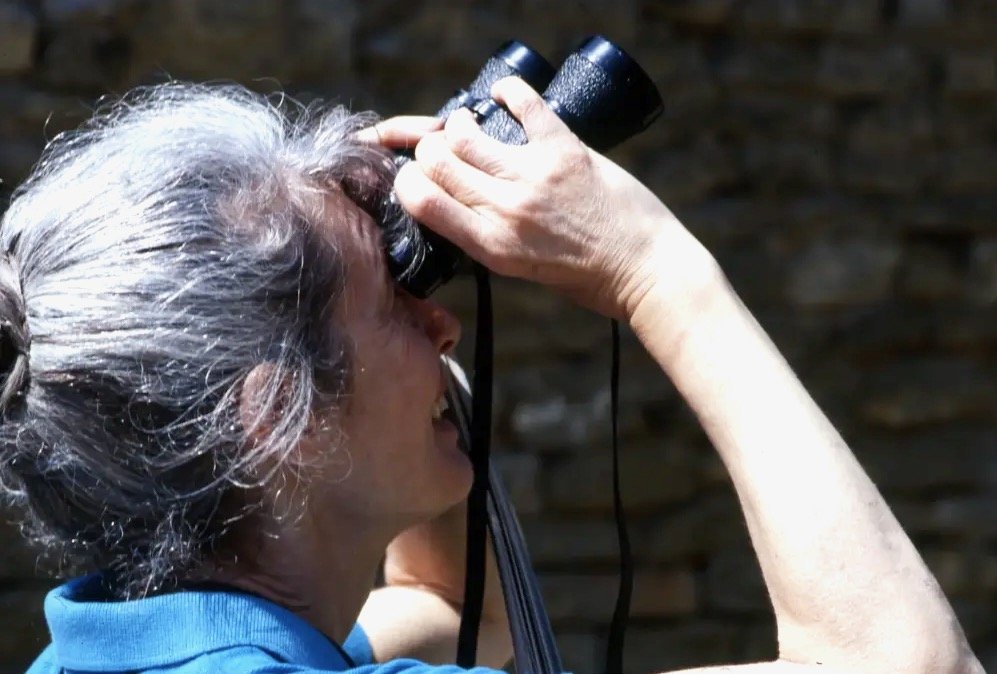
Her research took her frequently to Europe, where she was known for her determination and fearlessness in the field. Undeterred by cramped staircases, great heights or the less hospitable corners of medieval buildings, Lillich, according to her obituary, climbed into hard-to-reach spaces in churches (i.e., triforia, towers and clerestory levels) to study stained glass up close. These efforts yielded landmark publications, including The Armor of Light: Stained Glass in Western France, 1250–1325 (1994) and The Gothic Stained Glass of Reims Cathedral (2011), along with numerous influential articles.
Among her many honors, Lillich received fellowships from the John Simon Guggenheim Memorial Foundation, the Institute for Advanced Study in Princeton, NJ, the National Gallery of Art’s Center for Advanced Study in the Visual Arts, the National Endowment for the Humanities, the American Council of Learned Societies and multiple Fulbright awards. At Syracuse University, she was recognized with the Wasserstrom Prize for Outstanding Graduate Teaching (1987), the Arts and Sciences Special Service Award for Service to Field (1989) and the Chancellor’s Citation for Exceptional Academic Achievement (1999).
Wayne Franits, Distinguished Professor of Art History and Chair of the Department of Art and Music Histories in A&S, recalls Lillich’s immense scholarly stature and international reputation. “Her colleagues used to call her the ‘Queen Bee of Medieval Art,’ and for good reason,” Franits says. “Meredith received prestigious academic recognition abroad, particularly in France, where her scholarship was widely respected and influential.”
Beyond her scholarly achievements, Lillich was deeply revered as a mentor, and her influence extended far beyond Syracuse through the students she trained. Former student Eric M. Ramírez-Weaver, now an associate professor of medieval art history at the University of Virginia, credits Lillich with shaping both his intellectual orientation and professional ethos. “I affectionately refer to Meredith as my ‘medieval momma,’” he says. “Her model of academic excellence, devotion to family and research output are a model for anyone to follow. Her passion for stained glass studies was unrivaled.”
Read more about Lillich’s career in a memorial article in Vidimus magazine, written by Ramírez-Weaver and two other former Syracuse students: Renee K. Burnham, now an independent art historian specializing in Italian stained glass; and Alyce A. Jordan, a professor of art history at Northern Arizona University.
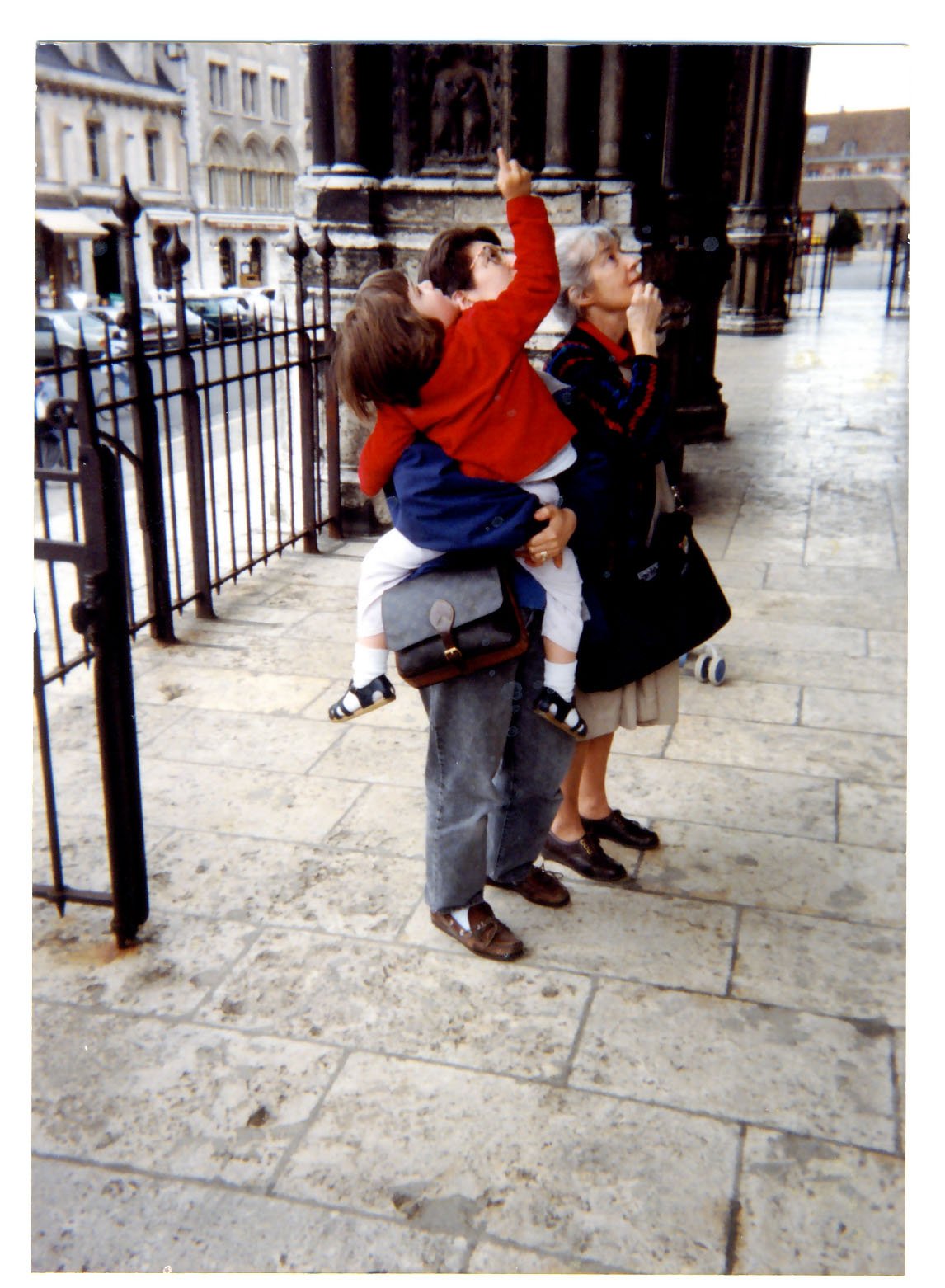
Her colleagues and former students describe Lillich as a scholar whose curiosity was tireless. By understanding both the people behind the art and the meaning embedded in their work, Lillich believed society could gain deeper insight into the cultures that shaped these artworks and the values they still reflect.
Lillich’s expertise made her a sought-after authority worldwide. She was a central and foundational figure in the American chapter of the Corpus Vitrearum Medii Aevi, an international scholarly initiative devoted to the study, documentation and preservation of medieval stained glass. Her influential work on subjects such as Cistercian grisaille, band windows (which are clerestory windows featuring horizontal narrative strips) and collaborative research at institutions including the Corning Museum of Glass continues to shape the field. Colleagues across the discipline described her as “fiercely brilliant,” a “force of nature,” and one of the founding mothers of American stained-glass scholarship.
Meredith Lillich leaves behind a legacy of rigorous research and devoted teaching. Her influence endures not only through her work and students, but also through her family. She is survived by two daughters, Victoria A. Lillich and Olivia P.L. Hilton; and four grandchildren, Rebecca Lillich Krüger, Miles Hilton (Lis Meiss), Rupert Krüger and Aaron Hilton (Enjolique).
Published: May 20, 2026
Media Contact: asnews@syr.edu