
Meaning Behind the Music
When watching a film or television program, music can often be just as memorable as the acting or dialogue. A score sets the pace and emotional rhythm of a scene, guides the viewer’s response and helps build entire worlds on screen.
The early 20th century marked the first time that dialogue, music and sound effects were synchronized to video. This was known as early sound cinema. During this time, film helped define popular music styles, influencing how cultures were understood both within their own communities and abroad. These portrayals continue to shape cultural narratives today, making it vital for scholars to examine how these sounds and images were crafted and what they left out. It is within this rich intersection of music, representation and media that Cary Peñate, assistant professor of music histories and cultures at Syracuse University’s College of Arts and Sciences, conducts her research.

Cary Peñate
Peñate studies how Afro-Cuban dance music was depicted in early film soundtracks across Cuba, Mexico, Argentina, Spain and Hollywood, with a particular focus on the figure of the mulata (a woman with African and European ancestry) and the cultural meanings projected onto her. Over time, the mulata became a stereotyped figure in film, music and literature, often exoticized, particularly in Cuban and Mexican cinema. Peñate’s work reveals how cinema has influenced global understandings of Afro-Cuban musical traditions and exposes the ways race, gender, politics and popular entertainment converged on screen during a pivotal era in transnational film history.
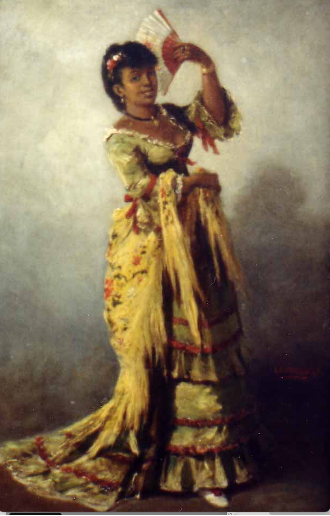
An artist’s depiction of a mulata, titled “Mulata de rumbo" (1881), by Patricio Landaluze.
As Peñate explains, the musical treatment of Afro-Cuban genres was itself a site of cultural negotiation. “Film composers frequently transformed Afro-Cuban dance music (e.g., rumba, mambo, cha cha chá, danzón) for presentation to international middle-class audiences, often through its fusion with cosmopolitan styles such as jazz, flamenco, samba and other forms of popular music,” notes Peñate. “These transnational musical circulations played a central role in shaping definitions of cubanidad (Cubanness) both within Cuba and abroad.”
Her scholarship not only clarifies how these influential images and musical portrayals were constructed but also highlights why revisiting them matters today. This research places Peñate in important conversations in global film music studies, Latin American cultural studies and decolonial humanities—a field that looks at how colonial histories shaped which stories were told, who was allowed to tell them and whose perspectives were pushed aside. By reexamining these representations, Peñate helps illuminate how film shaped audiences’ perceptions of Caribbean identity and why these historical representations are still important.
Distinguished Residency Supports Transformative Research
Peñate’s selection for a prestigious summer residency at the National Humanities Center (NHC) in North Carolina will further strengthen and expand this work. The competitive four-week program offers uninterrupted research time, dedicated writing space, full library services and weekly professional development sessions within an interdisciplinary scholarly community known for its lively exchange of ideas.
This opportunity was made possible through Syracuse University Humanities Center’s new membership to the NHC, initiated by Humanities Center Director Vivian May. Peñate's winning proposal was supported by extensive preparation and nomination efforts from both May and Sarah Workman, Director of Research Development for the Arts and Humanities.
"Sarah and I collaborated to identify this opportunity, prepare the nomination and ensure Syracuse could put forward a strong candidate in our first year of NHC membership," May says. "We’re committed to creating meaningful avenues of research support and making sure our humanities scholars have access to opportunities like this."
For Peñate, whose work is inherently interdisciplinary—bridging musicology, media studies, history, gender studies and Latin American critical theory—she notes that the residency offers a rare opportunity to deepen methodological approaches and broaden the scholarly impact of her project.
“I look forward to engaging with NHC scholars and participating in workshop offerings as an opportunity to strengthen both my writing and the broader scholarly framework of my book project and current articles,” she says.
Advancing a Major Book Project
During the residency, Peñate will focus on completing her book manuscript, Scoring the Cuban Mulata: Music, Film, and Transnational Constructions of Race and Gender. This project examines how early sound films shaped cultural narratives about Afro-Cuban music and identity, expanding the field’s understanding of how soundtracks not only reflected but actively constructed ideas about race, gender and cultural belonging across the hemisphere. Peñate hopes to leave the NHC with a final manuscript prepared for submission to a university press.
Her research builds on her prior work supported by notable fellowships, including awards from the American Council of Learned Societies and the Goizueta Foundation. A professor at Syracuse since 2023, Peñate has also been an active member of the CNY Humanities Corridor’s working group on Decolonial and Critical Thought in Latin America and the Caribbean, which brings together scholars committed to rethinking traditional narratives through decolonial frameworks.
Strengthening Teaching at Syracuse
Peñate’s residency at the National Humanities Center will also enrich the classroom experience for Syracuse students. Insights gained during her time at the Center will inform courses such as “Film Music,” “Music in Latin America,” “Music in the Caribbean,” “Latina Divas in Hollywood” and “Music and Media.” “I expect my work at the NHC to open new avenues of exploration within these courses, and conversations with scholars from other disciplines may also inspire new course ideas in the future,” she says.
Peñate’s residency selection highlights the meaningful impact of her scholarship and the depth she brings to humanities research at Syracuse. Her work sheds light on how colonial histories shaped the stories that appeared on screen and helps amplify voices and perspectives that were too often overlooked. By bringing these narratives forward, she is contributing to a broader understanding of how culture is represented, and why it matters.
Published: March 17, 2026
Media Contact: asnews@syr.edu