
Discovering Vasari Beyond the Page
Most students of Renaissance art encounter Giorgio Vasari through a book. His Lives of the Most Excellent Painters, Sculptors, and Architects, first published in 1550 and expanded in a second edition in 1568, is often considered the first major work of art history, shaping how generations have understood artists such as Michelangelo, Leonardo da Vinci and Raphael. For centuries, Vasari's reputation has rested largely on his role as the artistic biographer of the Renaissance.
Less familiar, however, is Vasari’s own work as a painter and architect. While his biographies helped to immortalize many of the Renaissance’s greatest artists, their accomplishments ultimately eclipsed those of their chronicler, despite Vasari’s influential career and the prestigious commissions he received throughout Italy. Among his most notable projects is the Salone dei Cinquecento (Hall of the Five Hundred) in Florence's Palazzo Vecchio, which Vasari and his workshop renovated and decorated for Duke Cosimo I de' Medici.
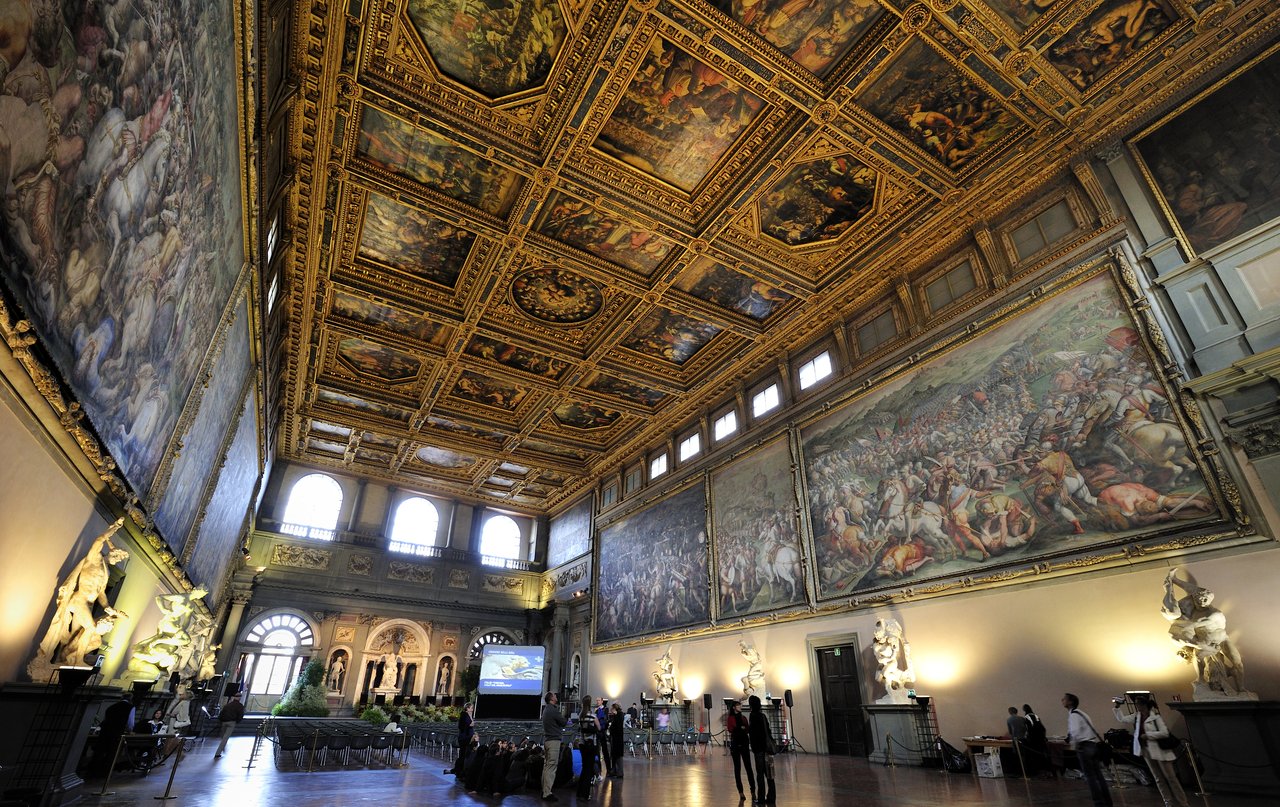
Sally Cornelison, professor of art history in the College of Arts and Sciences and director of Syracuse University's Florence Graduate Program in Italian Renaissance Art, is bringing greater attention to aspects of Vasari's legacy beyond his literary achievements. Through years of archival research, travel across Italy and an intensive study of Vasari's work in his hometown of Arezzo, Cornelison is looking beyond the pages of Lives to examine his work as a painter, architect and builder of local identity.
Her latest book, Vasari and the Sacred Image, investigates how art, religion, civic pride and personal ambition intersected in one of the most important churches in Arezzo, the Pieve di Santa Maria, where Vasari was baptized in 1511 and buried in 1574. Her scholarship reveals a more complete picture of a Renaissance figure whose artistic accomplishments have long been obscured by his literary fame in a town that often falls off the Renaissance radar.
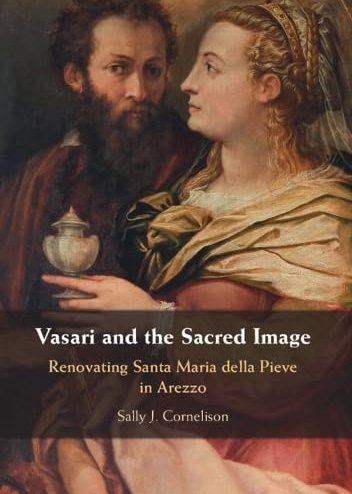
Cover of Cornelison's Vasari and the Sacred Image.
Rediscovering Vasari
Cornelison’s journey into the world of Vasari began in 2012, when she curated an exhibition at the Spencer Museum of Art in Lawrence, Kansas, while a professor at the University of Kansas. What started as an effort to authenticate a small painting attributed to the circle of Vasari evolved into a much larger scholarly journey. As she uncovered new materials and archival sources, she became increasingly fascinated by the artist and the many aspects of his career that had received limited attention from historians.
“I found so much material in the process of working on that exhibition,” Cornelison says. “I got the Vasari bug.”
All of that research culminated in her new book, in which Cornelison examines a group of altars and altarpieces that Vasari designed for the medieval basilica of the Pieve but that were removed or destroyed during a late nineteenth-century renovation. By analyzing these works and reconstructing how they originally functioned individually and collectively within the Pieve, she reveals how Vasari transformed the church into an integrated artistic and devotional environment.
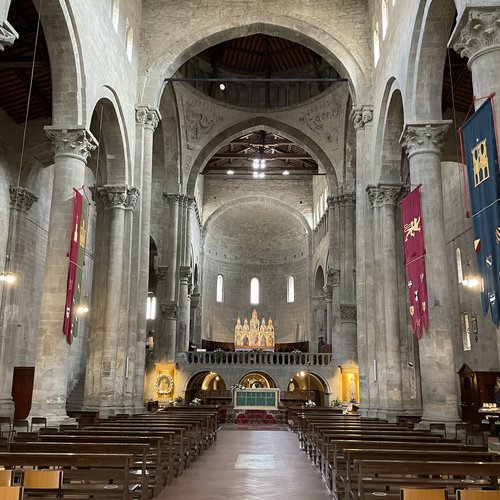
Interior of the Pieve in Arezzo, Italy. From 1560 until his death in 1574, Giorgio Vasari renovated portions of the church, adding altars and altarpieces that helped to shape its spiritual and visual identity.
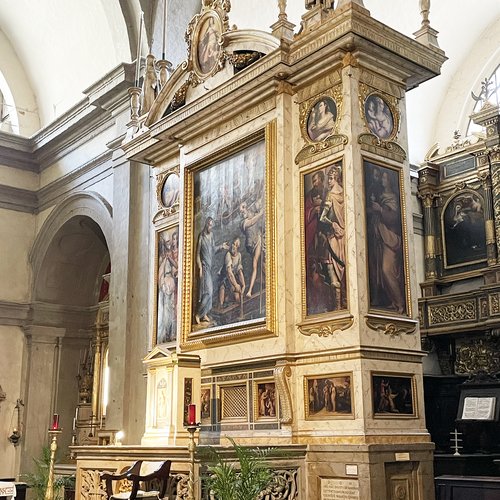
Vasari’s completed high altar, which was later removed from the Pieve and relocated to the Abbey of Saints Flora and Lucilla in Arezzo.
Cornelison studied paintings, drawings and archival records to better understand Vasari’s approach to sacred art. Her research revealed an artist who carefully conceived images in relation to their surroundings and audiences, creating works that were part of larger narratives about faith, identity and place. She argues that these achievements deserve greater recognition than they have traditionally received.
“He has a long-standing reputation as a bad artist that isn’t deserved,” Cornelison says. “He was an excellent draftsman, and his drawings are really spectacular. It's just a hard label to shake, the idea that he isn't worth looking at as an artist and that it's really the Lives of the Artists that matters. I think there's more value in his art than he's been given credit for.”
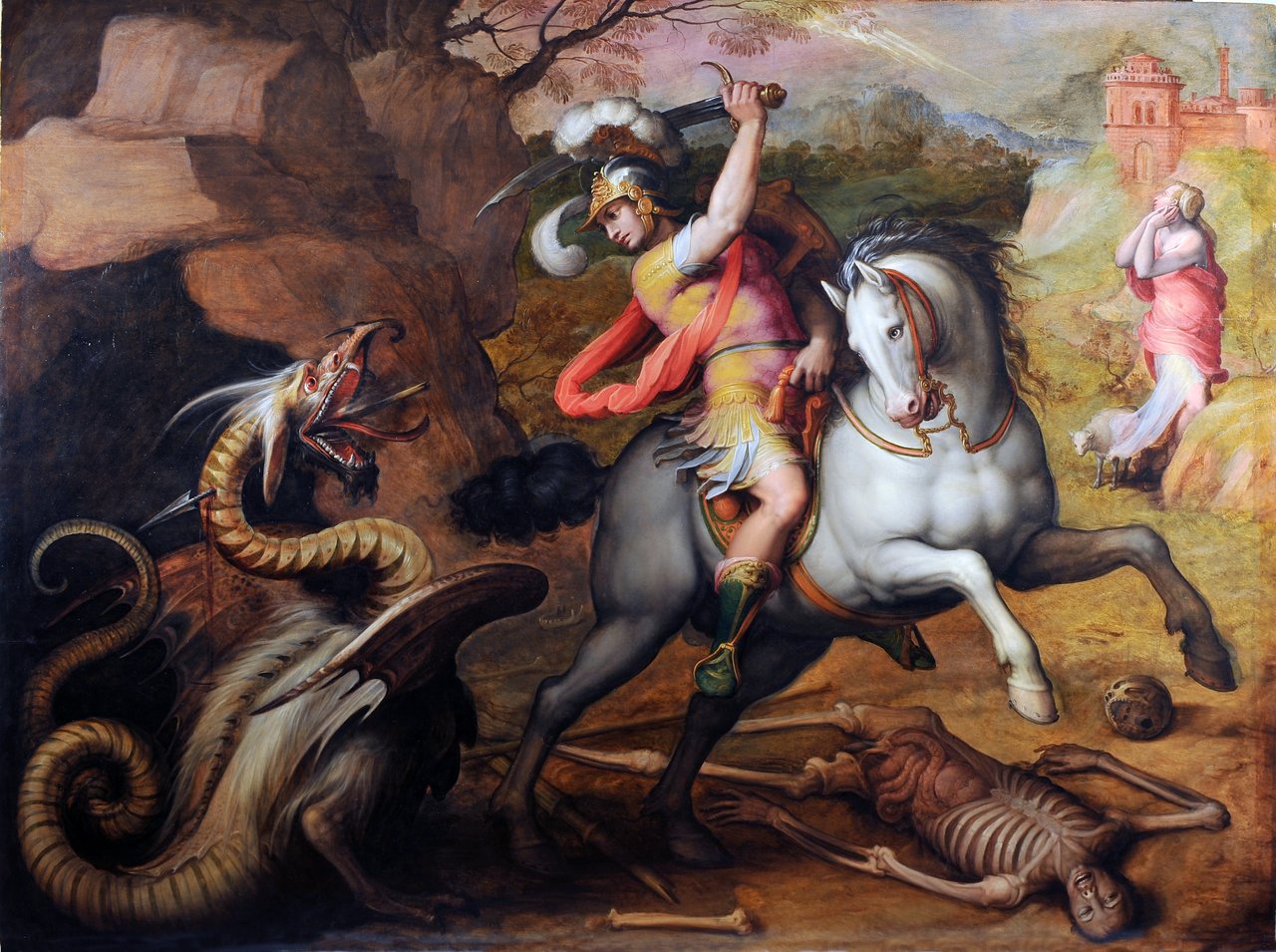
Stepping Inside Vasari's World
But the book wasn't the end of the journey. Drawing on years of research, travel and firsthand documentation, Cornelison found a new way to bring Vasari's world to life. She translated her scholarship into a digital humanities project, creating immersive experiences that invite audiences beyond academia to explore Vasari and Renaissance art.
The idea emerged while she was developing a class project that would require students to create StoryMaps, an interactive digital platform that combines maps, images, text and multimedia storytelling. Wanting to learn the technology herself before teaching it, she created a StoryMap focused on Vasari and Arezzo. What began as an experiment quickly became a passion project, allowing her to translate years of research into an accessible, visually engaging format that invites users to explore the artist's hometown and artistic legacy.
“It started as just playing around with the tool, and I became completely obsessed,” says Cornelison. “I cranked out the Vasari and Arezzo StoryMap in about two and a half weeks over the summer.”
She has since expanded the initiative with additional projects, including a second StoryMap exploring Vasari’s refectory (dining hall) paintings, and is planning future projects focused on Vasari’s writings and other research topics.
Bringing History to Life for Students
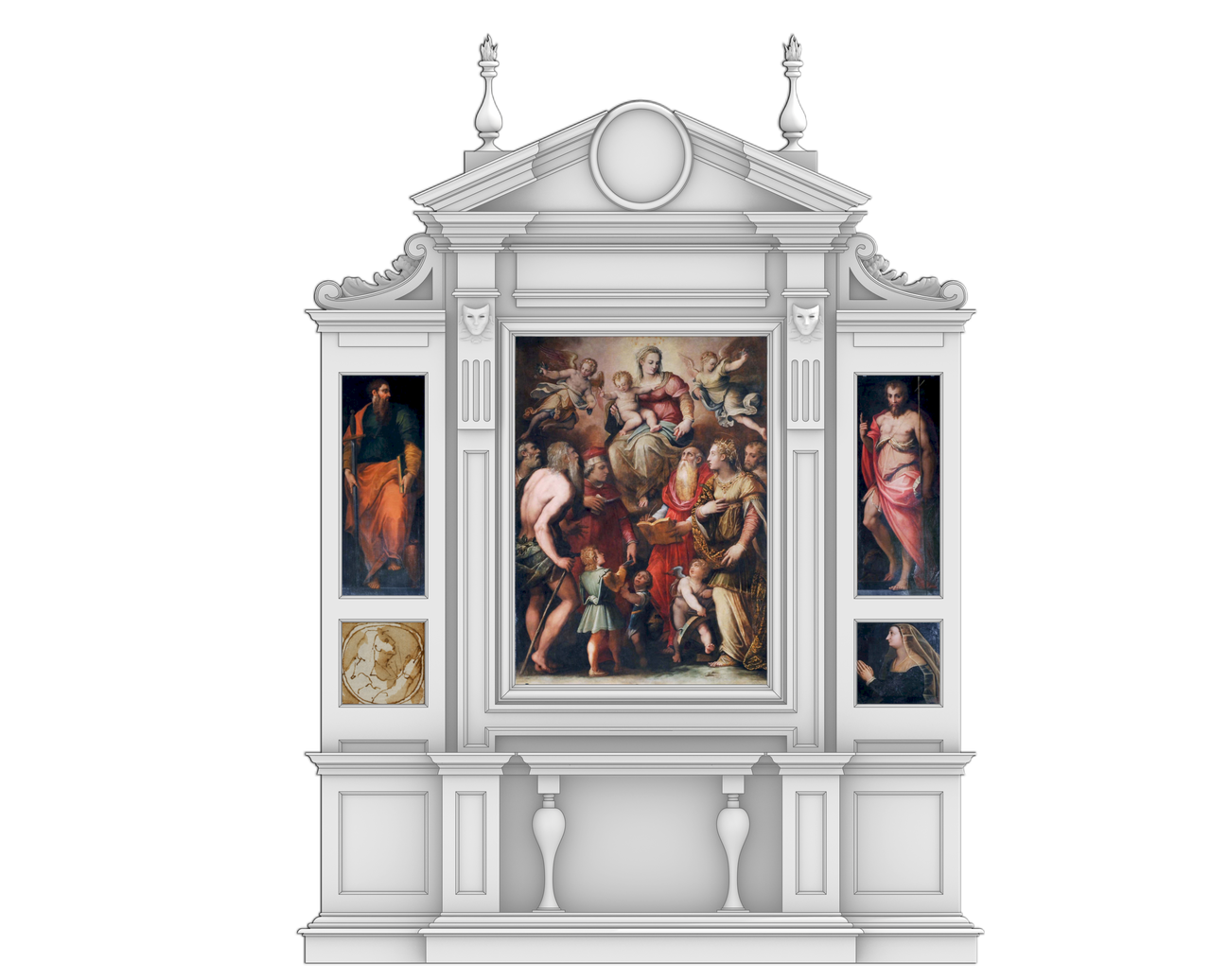
The project also reflects Cornelison's commitment to teaching and student collaboration. Among those who contributed to Vasari and the Sacred Image was Sarah Ritchey, a Syracuse University School of Architecture alumna who later completed the Florence Graduate Program in Italian Renaissance Art that Cornelison directs. Ritchey produced the altar reconstructions featured in the book, helping readers visualize how Vasari's chapels and altars originally appeared before later renovations dramatically altered the church's interior. These reconstructions became an important component of the publication, demonstrating how faculty research and student expertise can work together to shed new light on centuries-old works of art.
Vasari is already an important figure in the history of Italian Renaissance art because of his famous biographies, and Cornelison's expertise brings his world to life for students both within and outside the classroom. In her graduate-level Proseminar in Italian Renaissance Art (HOA 623), students enrolled in SU’s main campus and Florence art history graduate programs engage with Vasari’s literary and artistic works. In addition, she has taken Florence graduate students to Arezzo on multiple occasions to explore the city where Vasari was born and baptized, began building the artistic legacy that would influence generations, and was ultimately laid to rest at the foot of the high altar he designed for the Pieve.
For students, there is no substitute for experiencing these places in person. For Cornelison, that hands-on engagement is at the heart of both her research and teaching. Through Vasari and the Sacred Image, she has helped to broaden scholarly understanding of Vasari's artistic and architectural achievements. In the classroom and on site in Italy, she brings that same research to students, combining archival discovery, immersive learning and firsthand exploration to make the Renaissance come alive.
Published: Oct. 2, 2026
Media Contact: asnews@syr.edu