
For six intense weeks each summer, A&S physics labs are full of high school students from the Syracuse City School District (SCSD) building cosmic-ray detectors, simulating colliding black holes and studying the molecular physics of biological systems. This is SU-SHIP, the Syracuse University Summer High School Internship Program.
Mentored by both professors and returning students, they tackle real questions in computational astrophysics, biophysics and particle physics. They learn to think like scientists and discover capabilities they never knew they had. Plus, this may be the first time these students are focusing worry-free on learning, instead of earning. Integral to SU-SHIP is its paid internship model. This stipend means students are not forced to choose between financial responsibility—and future opportunity.
Investing in Workforce Development
Founded in 2022 by SCSD teacher Melanie Pelcher G’11, physics professor and interim dean for the College of Engineering and Computer Science, Jennifer Ross and Ruell Branch ’24 (himself a SCSD graduate), SU-SHIP has already begun transforming the trajectory of many young lives. It is also one component of Syracuse University’s multi-faceted approach to investing in workforce development in New York State and beyond. This approach includes numerous partnerships with community colleges, trade unions and businesses such as leading semiconductor manufacturer Micron Technology, which is building a plant in the area.
Thanks to grant support from the National Science Foundation, we have been able to support 24 participants annually. But with changes in funding, there is an urgent need for donor support to help sustain and expand the program for even more students.
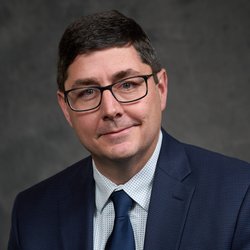
professor and chair of physics
"This program allows us to increase our impact on both local high school students interested in STEM careers, and also on our undergraduate and graduate students who work alongside them and develop as mentors, teachers and scientists."
Shaping Career Trajectories
Participants in SU-SHIP hone their college-ready skills through hands-on STEM research experiences and exposure to the frontiers of physics, while also earning a meaningful stipend. The program’s paid internships remove the financial barriers that force so many young people to choose between summer employment and summer enrichment.
Our approach is working. More students are seriously considering a STEM career. In fact, participant surveys reveal that 70% of students plan to pursue post-undergraduate degrees—up from 54% before the program. In fact, six recent participants are now pursuing studies in STEM at Syracuse University, while another is studying at the neighboring SUNY College of Environmental Science and Forestry.
Building a Community-University Pipeline
By 2031, STEM occupations are projected to grow by more than 10%. It’s essential for today’s high school students to gain a solid foundation in math, science and engineering. With Micron’s chip manufacturing facility coming to the Syracuse area, it’s imperative that we help build a pipeline from our labs to these high-paying positions.
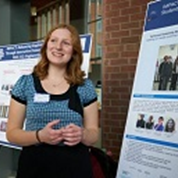
SU-SHIP participant and mentor
“I’m really glad to have had that door opened for me. In some families, high schoolers are responsible for providing income, so they need to work over the summer. An unpaid role could be a huge barrier. Adding the paid internship element makes this opportunity a lot more accessible.”
A Critical Juncture
The funding from the National Science Foundation has recently been pulled back, creating an urgent need for donor support. $250,000 is needed annually to support this important program.
Gifts will enable us to:
- Expand participation to 36 students annually
- Provide stipends of $6,000 per student, plus materials and transportation
- Develop year-round programming and alumni engagement
- Support program evaluation and reporting
To learn more, call 315.443.2464 or email asgiving@syr.edu.