
Connecting Classrooms, Inspiring Students
A student sends a paper airplane gliding across a Cicero-North Syracuse (C-NS) High School English classroom. A classmate catches it, unfolds it and reads aloud a question about the role of literature in Holocaust remembrance. Moments later, an animated discussion unfolds between high school students in teacher Patrick McAvoy’s class and Syracuse University students in Professor Harvey Teres’ The Holocaust in American Literature course. The thoughtful exchange and collaborative learning capture exactly what Teres envisioned when he created the Traveling Teaching initiative.
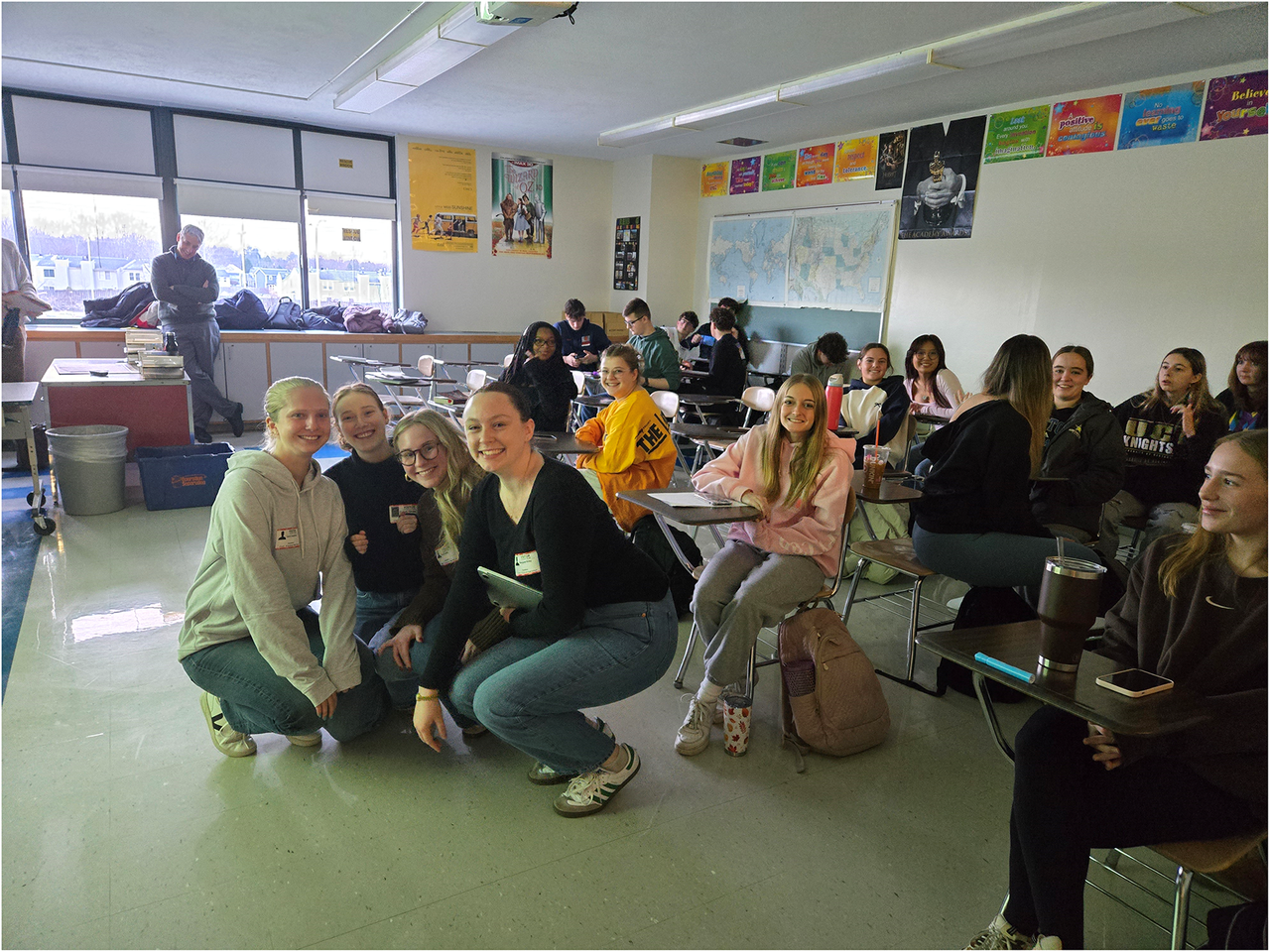
Traveling Teaching connects Syracuse University faculty and students with local schools through shared curriculum and experiential learning opportunities. The idea is to foster reciprocal partnerships.
“When students are asked to learn by teaching others, they respond with extraordinary commitment and sense of responsibility,” says Teres, the William P. Tolley Distinguished Teaching Professor in the Humanities in the College of Arts and Sciences (A&S).
Supported during the 2025-26 academic year through a $3,000 Engaged Humanities Network (EHN) course grant, the inaugural year included four partnerships across Central New York: English professor Stephanie Shirilan and her Shakespeare students worked with classes at Nottingham High School; English professor Vanessa Evans and her Indigenous Studies students collaborated with students from Manlius Pebble Hill School and Hannibal High School; and Teres and his students partnered with classes at C-NS.
The initiative builds on Teres’ previous effort of bringing his students into local classrooms to present on Holocaust studies, but Traveling Teaching broadens that work into a larger model of community-engaged learning.
The program benefits everyone involved. Syracuse students deepen their mastery of course material while strengthening their communication, collaboration and public speaking skills, and high school students gain exposure to college-level perspectives and interactive approaches to learning.
“Traveling Teaching does many things,” Teres says. “It inspires our own students; it brings novel forms of teaching and learning to the high schools; it strengthens the vital connection between higher education and surrounding schools and the community as a whole; and it strengthens collaborative learning.”
Learn more about each class below.
An Opportunity to Reflect
With a focus on Holocaust education, historical analysis and experiential learning, students in Teres’ The Holocaust in American Literature delivered presentations to C-NS high school students on a range of Holocaust-related topics, including “Women in the Holocaust,” “Prosecuting Nazi War Criminals,” “How to Read and Judge Holocaust Literature” and “Nazi Propaganda.” Each presentation began with a clear overview of the Holocaust before diving into the specialized subjects in depth.
The sessions encouraged participation from C-NS students through trivia competitions, small-group discussions and creative activities, including the paper airplane question exchange described above. These activities helped spark discussion and enabled students to engage with challenging topics in an approachable way.
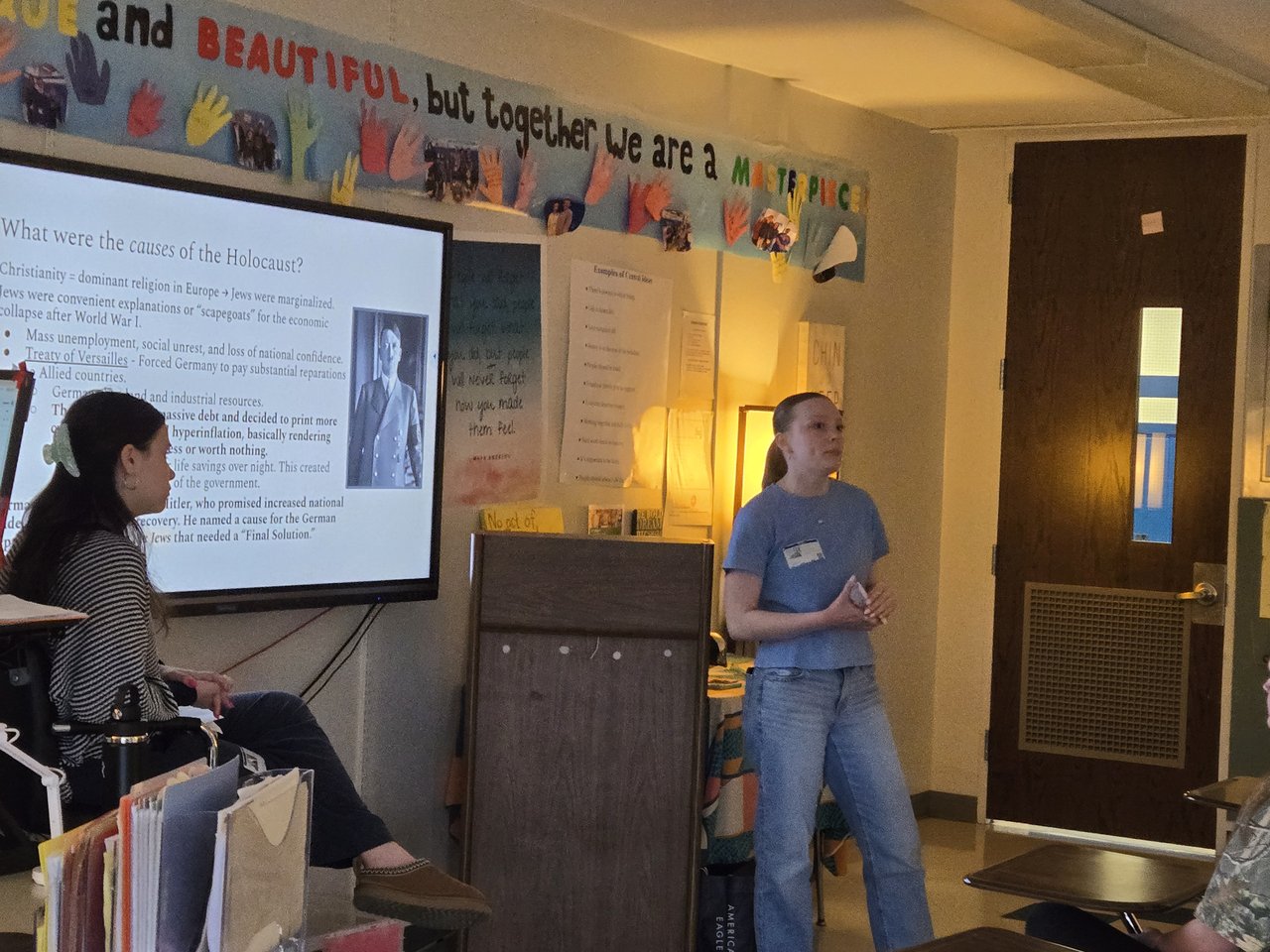
“Holocaust education in the United States is often limited, so opportunities like this can make a real difference,” Teres says. “Our students used videos, graphics and interactive activities to communicate complex historical subjects with clarity and enthusiasm, and the high school students came away with a much deeper understanding of the Holocaust and its relevance today.”
McAvoy says the collaboration gave his students the opportunity to engage with intellectually curious college students who were only a few years older than themselves, creating an environment that encouraged deeper inquiry and dialogue. He observed noticeable increases in student engagement, confidence and critical thinking as students exchanged ideas in meaningful discussions.
“What stood out for me was the way this course addressed the crossroads of politics, history and literature,” McAvoy says. “It helped students see that ‘cross-disciplinary’ isn’t just an academic concept. Understanding the history deepened their understanding of the literature, and the literature, in turn, led them to a deeper understanding of the history.”
McAvoy adds that the most successful sessions were those that emphasized direct interaction between the students at Syracuse University and C-NS. Activities centered on collaborative learning sparked conversations that benefited both groups and encouraged students to engage more actively with the material.
Expanding Access to Shakespeare
At Nottingham High School, students were able to experience Shakespeare beyond the pages of a book. They were on their feet acting, directing and reimagining scenes in contemporary settings, transforming Shakespeare from something to be studied into something to be explored, interpreted and made their own.
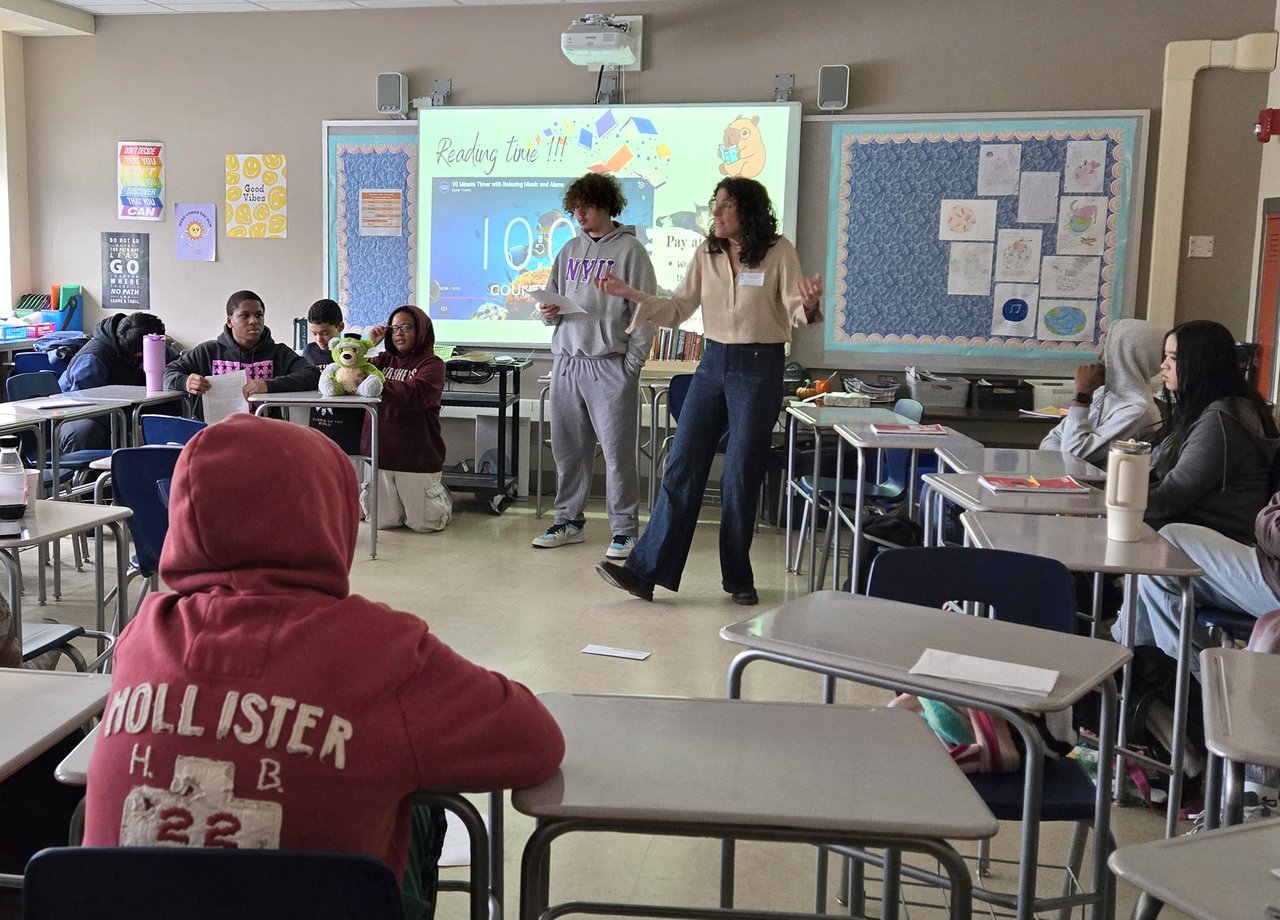
The exercise stemmed from Stephanie Shirilan’s A&S course Doing Shakespeare, which also received support through a 2025-26 EHN course grant. In the course, students — many of whom have no previous theater experience — work together to organize and perform a full theatrical production of a Shakespeare play, gaining firsthand experience in collaboration, performance and literary interpretation. Through the Traveling Teaching initiative, they brought that hands-on approach to Nottingham.
Partnering with Nottingham teacher and Syracuse University alumna Sinead Feeney O’Connor ’25, Shirilan encouraged students to engage with Shakespeare through performance and adaptation rather than lecture-based study. Students created modernized versions of Twelfth Night and Much Ado About Nothing, taking ownership of interpreting, staging and directing the plays themselves.
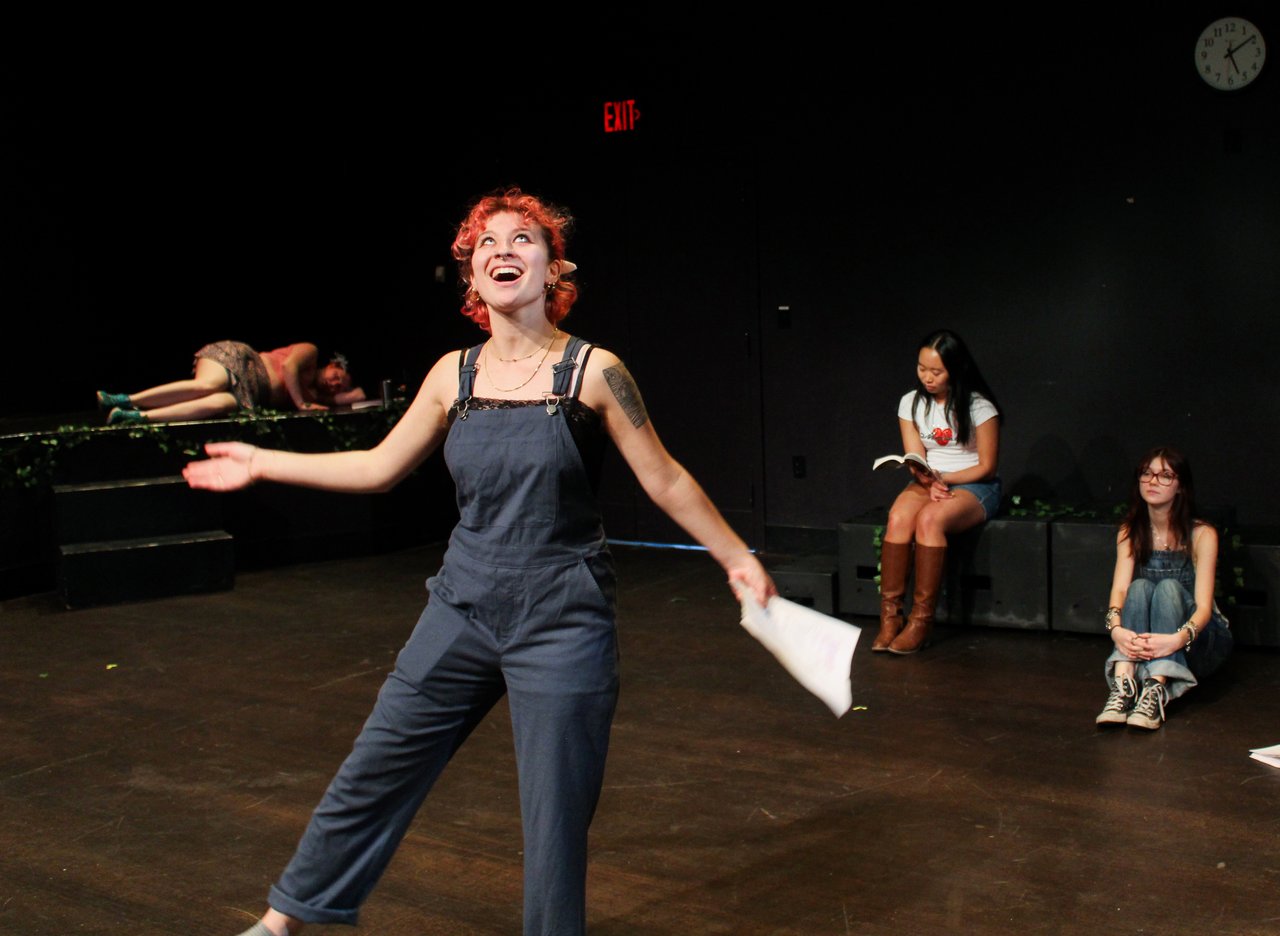
O’Connor says students responded enthusiastically to the creative process, noting that many “took on a whole new attitude toward learning and came out of their shell” through the acting and joint exercises.
The collaboration reflected the broader goals of Shirilan’s “Doing Shakespeare” initiative, which seeks to broaden participation in Shakespeare and classical theater by creating more inclusive and accessible opportunities for students. Through classroom workshops and performance-based activities, Nottingham students gained confidence engaging with Shakespearean language and interpretation.
“It was a delight to work with Sinead and her students, many of them studying English as a new language, as our research partners,” Shirilan says. “We are excited by the possibility of welcoming them to campus as SU students in coming years.”
The partnership also invited students to think creatively about adaptation and relevance, reimagining Shakespeare’s works in contemporary settings while building connections to higher education and the arts.
“The most beneficial part of this experience was giving the students the chance to see what is possible,” O’Connor says. “They were able to put on their own small production and have a conversation with a college professor and her students about Shakespeare.”
Exploring Indigenous Histories and Futures Through Literature
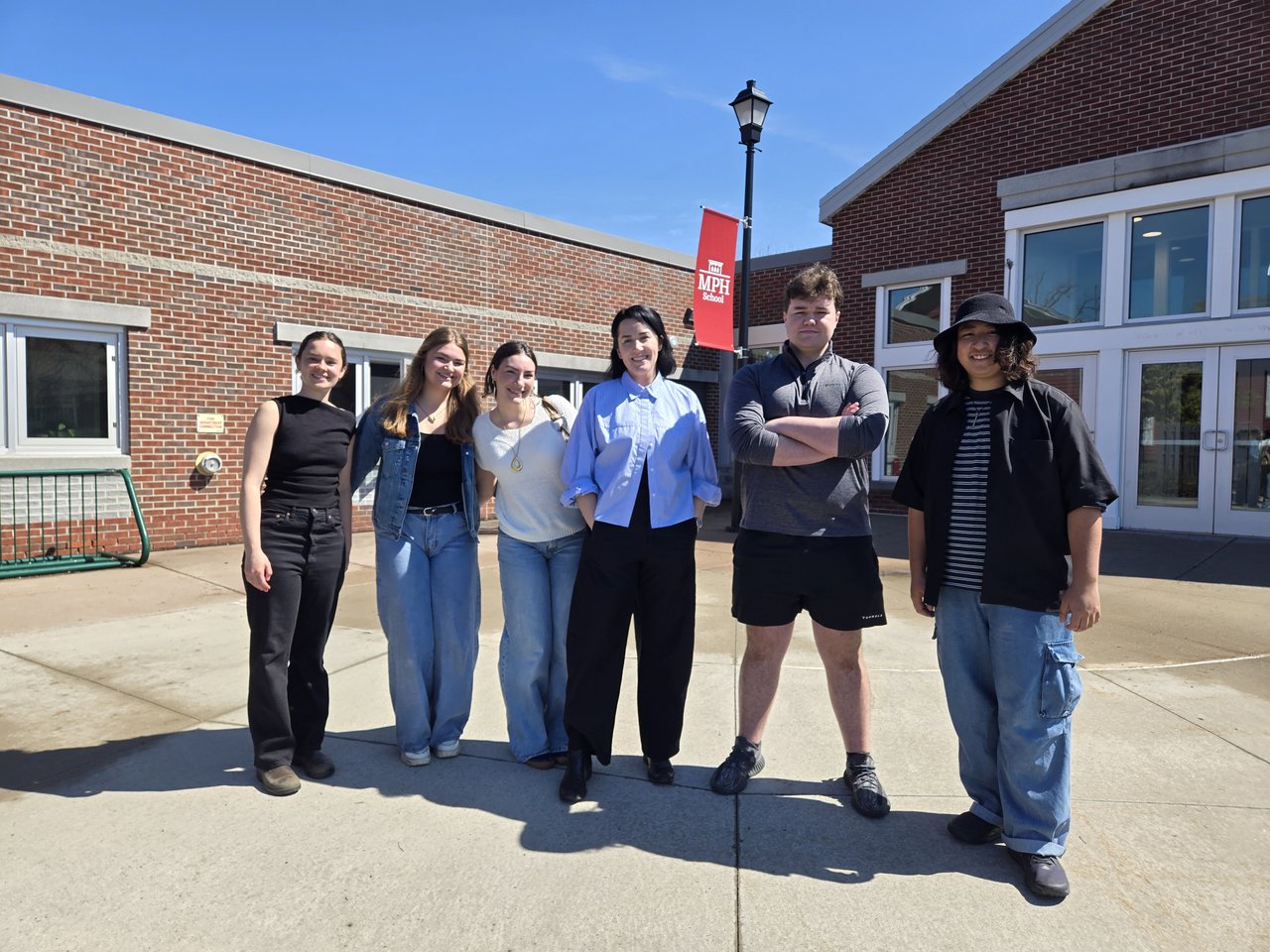
In classrooms at Manlius Pebble Hill School and Hannibal High School, discussions about literature opened the door to deeper conversations about Indigenous history, identity, community and the power of storytelling. Those conversations were sparked through a partnership with students in Professor Vanessa Evans’ Syracuse University courses, (Re)Writing Residential School and Indigenous Futurisms.
“The project is designed around conversation, collaboration and mutual learning,” Evans says. During classroom visits, her students introduced key concepts, led discussions and close-reading activities, and shared perspectives on college life with high school students.
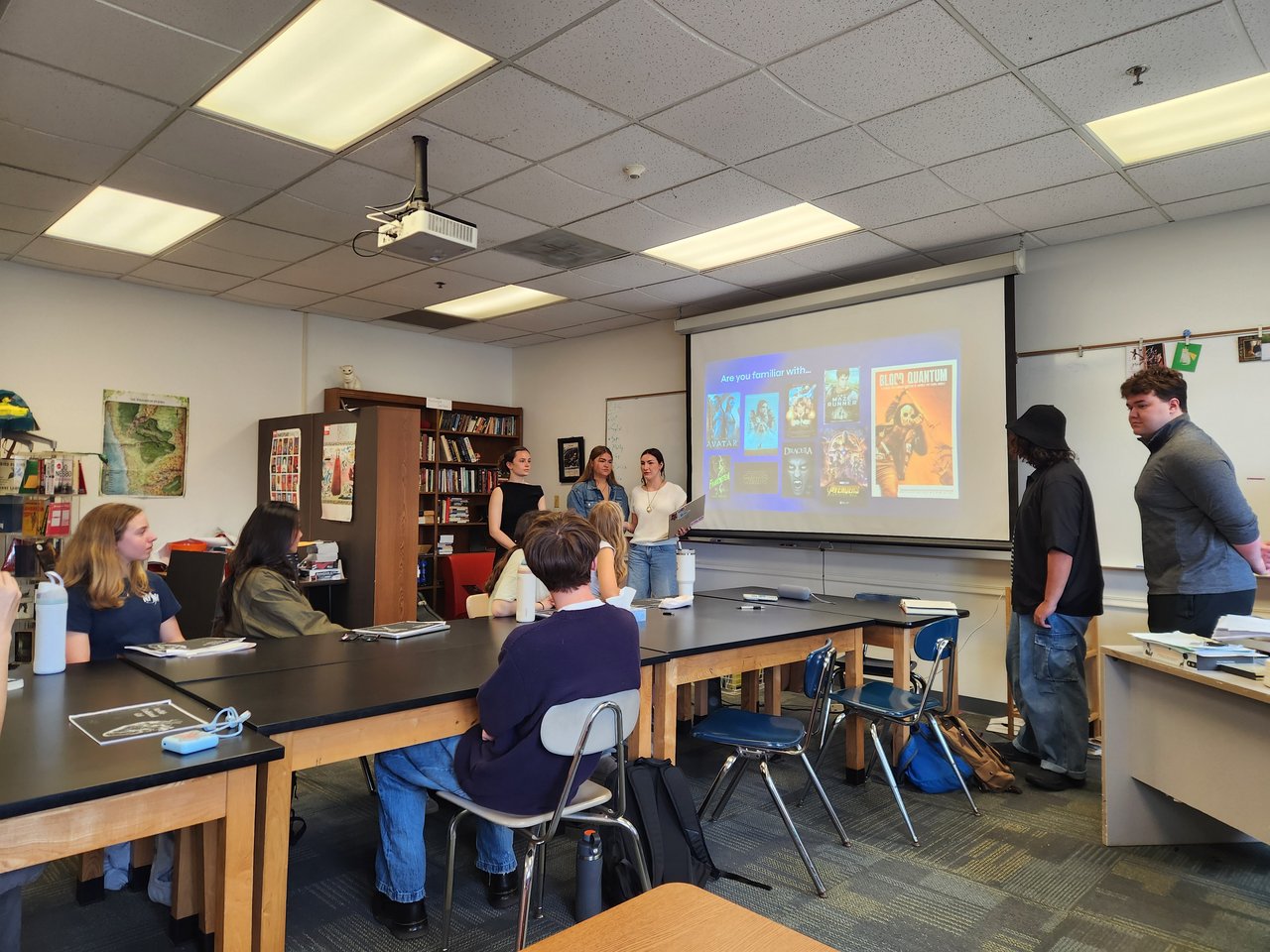
Evans says the collaboration helped students see how literature connects to contemporary social and ethical issues. At Hannibal High School, English teacher Dan Jordan saw students respond enthusiastically to both the content and the opportunity to interact with Syracuse University students.
“Students really enjoyed this experience,” Jordan says. “They found it very interesting to see what it looked like to ‘do English’ at a college level.” He noted that students who were initially hesitant gained confidence as they participated in discussions and analysis alongside the college students.
“My students were very engaged and participated in a high-level analysis activity,” he says. “It was meaningful to see them recognize they could contribute to a college-level discussion.”
The benefits were reciprocal. Conversations about Indigenous futures, historical trauma and community responsibility resonated with the high school students while also reinforcing the value of the humanities for the Syracuse University students. Evans says working with younger learners encouraged her students to communicate complex ideas more clearly and create welcoming spaces for dialogue.
“My students became more attentive listeners and more thoughtful facilitators,” Evans says. “They also saw firsthand how powerful these texts can be outside the university classroom.”
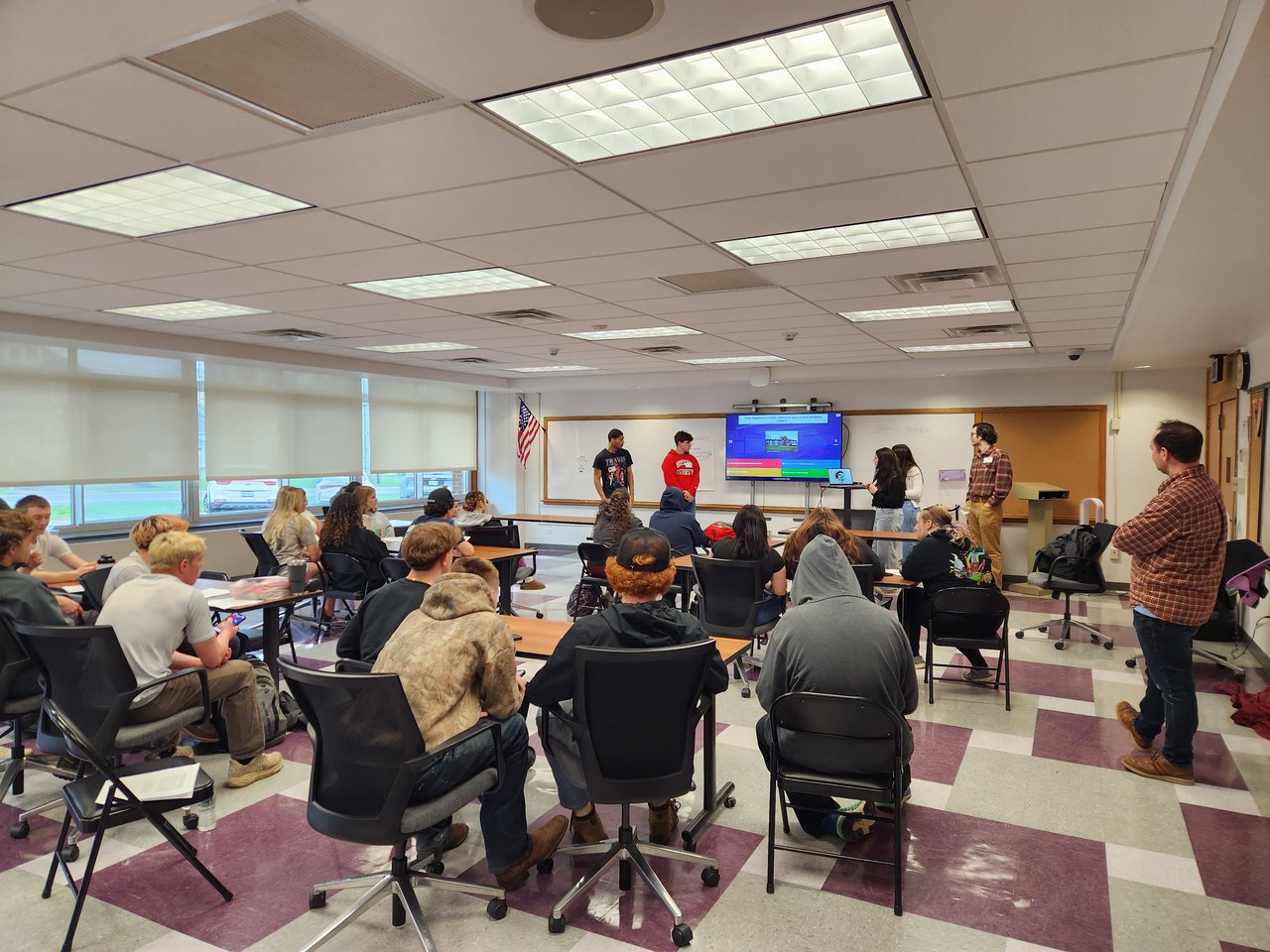
For Jordan, one of the most valuable outcomes extended beyond the classroom content itself. The experience helped students in a rural school community envision new possibilities for their futures.
“With everything said about the academic aspect of the collaboration, the most exciting and impactful thing to me was simply creating this connection between high school and college students,” Jordan says. “It was wonderful to see my students with thoughtful questions about college and life after high school, and to see SU students so willing to interact with them and share honest reflections about their experiences.”
The Traveling Teaching initiative has created meaningful learning experiences for Syracuse University students, local high school students and teachers alike, demonstrating the value of collaboration across educational settings. Building on the success of its inaugural year, Teres hopes to expand the program throughout Central New York and eventually beyond, creating new opportunities for shared learning and engagement. By bringing high school students into direct conversation with Syracuse faculty and students, the initiative also helps demystify college life and inspire participants to see themselves one day continuing their education at a place like Syracuse University.
For SU faculty interested in joining the Traveling Teaching initiative, contact Teres at hmteres@syr.edu.
Published: Aug. 13, 2026
Media Contact: asnews@syr.edu