
Exploring Earth’s Resources for a Clean Energy Future
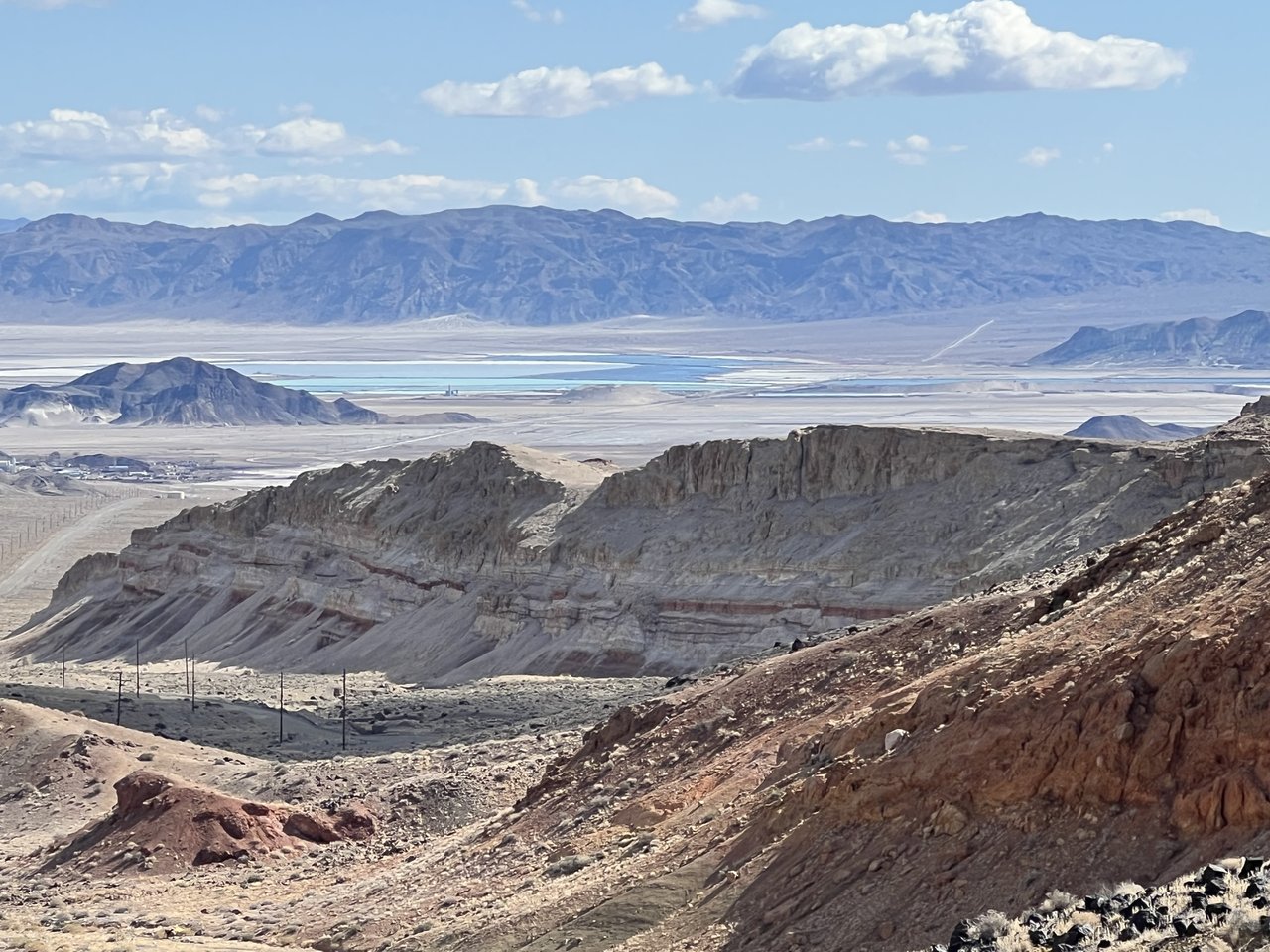
As electric vehicles, renewable energy systems and battery storage technologies become increasingly central to the global economy, demand for lithium, a critical mineral used in rechargeable batteries, has surged. According to the International Energy Agency (IEA), the need for lithium used in clean-energy technologies is projected to more than quadruple by 2030, making it one of the world's most sought-after critical minerals.
Despite its growing importance, scientists still do not fully understand why lithium becomes concentrated in certain locations or how to most effectively identify new domestic sources. Those questions are at the heart of research led by Adam Cawood, the Michael G. and Susan T. Thonis Assistant Professor of Earth Sciences at Syracuse University’s College of Arts and Sciences (A&S).
Through a newly funded National Science Foundation (NSF) project, Cawood is investigating how geological processes control the movement and concentration of lithium in Earth's crust, work that could improve exploration strategies and strengthen domestic supplies of a mineral critical to the energy transition.
Meet Adam Cawood
Cawood joined the A&S faculty in Fall 2026. Before coming to Syracuse, he served as a senior research scientist in the Space Science Division at Southwest Research Institute in San Antonio, Texas, where he studied how faults and fractures in Earth's crust influence fluid movement, mineral formation and geologic hazards. A structural geologist by training, Cawood focuses on the cracks and breaks in the Earth's crust that act as the planet's plumbing system, controlling where water and geothermal fluids flow, where critical resources like lithium are concentrated and where hydrocarbons accumulate. As the newest Thonis Professor, Cawood continues a tradition established by Michael and Susan Thonis to support excellence in Earth science research and education.
The Geological Footprint for Lithium Exploration
One of Cawood’s latest projects is an NSF-funded study titled “Tectonic Controls on Lithium Delivery and Enrichment in the Basin and Range.” The three-year grant provides funding to investigate how geological processes concentrate lithium in economically valuable deposits.
“Lithium is a critical component of rechargeable batteries and will play an increasingly important role as the world transitions toward lower-carbon energy and transportation,” says Cawood. The research focuses on Clayton Valley, Nevada, home to the only producing lithium brine operation in the United States, making it an ideal location to study how lithium deposits form.
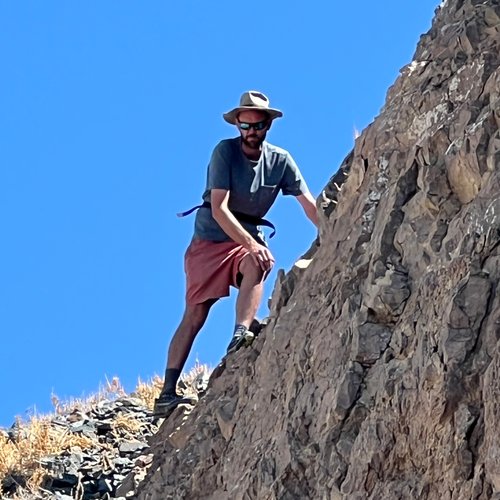
Cawood navigating the terrain at Clayton Valley, where he is investigating how faults, fluid flow and other geologic processes concentrate lithium into economically valuable deposits. (Courtesy: Adam Cawood)
The project combines field geology, geochemistry, geochronology and structural analysis to reconstruct the geological evolution of the region. Researchers will investigate how faults developed, how fluids moved through the basin and how lithium was transported and concentrated over time. A key question is whether faults act as pathways that help lithium-rich fluids move through the crust or as barriers that prevent fluid movement.
Cawood and his team hope to develop a comprehensive geological model that explains how faulting, volcanism, sedimentation and fluid circulation combined to create the lithium resources found in Clayton Valley. The findings could improve exploration strategies throughout Nevada and the broader western United States, helping identify future sources of this critical resource while reducing dependence on foreign supplies.
The grant also includes a strong educational component. Funding will support graduate student research while helping establish a Western U.S. Critical Minerals Field School. This initiative will provide students with hands-on experience in one of the fastest-growing areas of geoscience and natural resource development.
Connecting Researchers Through Digital Landscapes
Cawood’s second newly funded NSF project demonstrates his commitment to both scientific innovation and educational accessibility. The grant, titled “eRock – An Open Platform and Community Pipeline for Digital Outcrops,” will support the expansion of eRock, a repository founded by Cawood to share digital geological data from outcrops, or rock exposures, at Earth’s surface.
Fieldwork remains a cornerstone of geoscience, but advances in drone technology and three-dimensional imaging have transformed how researchers document and analyze geologic features at the Earth’s surface. Today, scientists can create highly detailed digital models of rock outcrops that preserve critical observations long after field campaigns conclude. However, Cawood notes that many of these valuable datasets remain isolated within individual research groups, making them difficult for other scientists to find, access and reuse.
“eRock grew from the idea that we need a better way to preserve digital outcrop data and make field geology more open and accessible,” he says. His team aims to create a community-driven platform for storing, discovering, visualizing and sharing digital geological models.
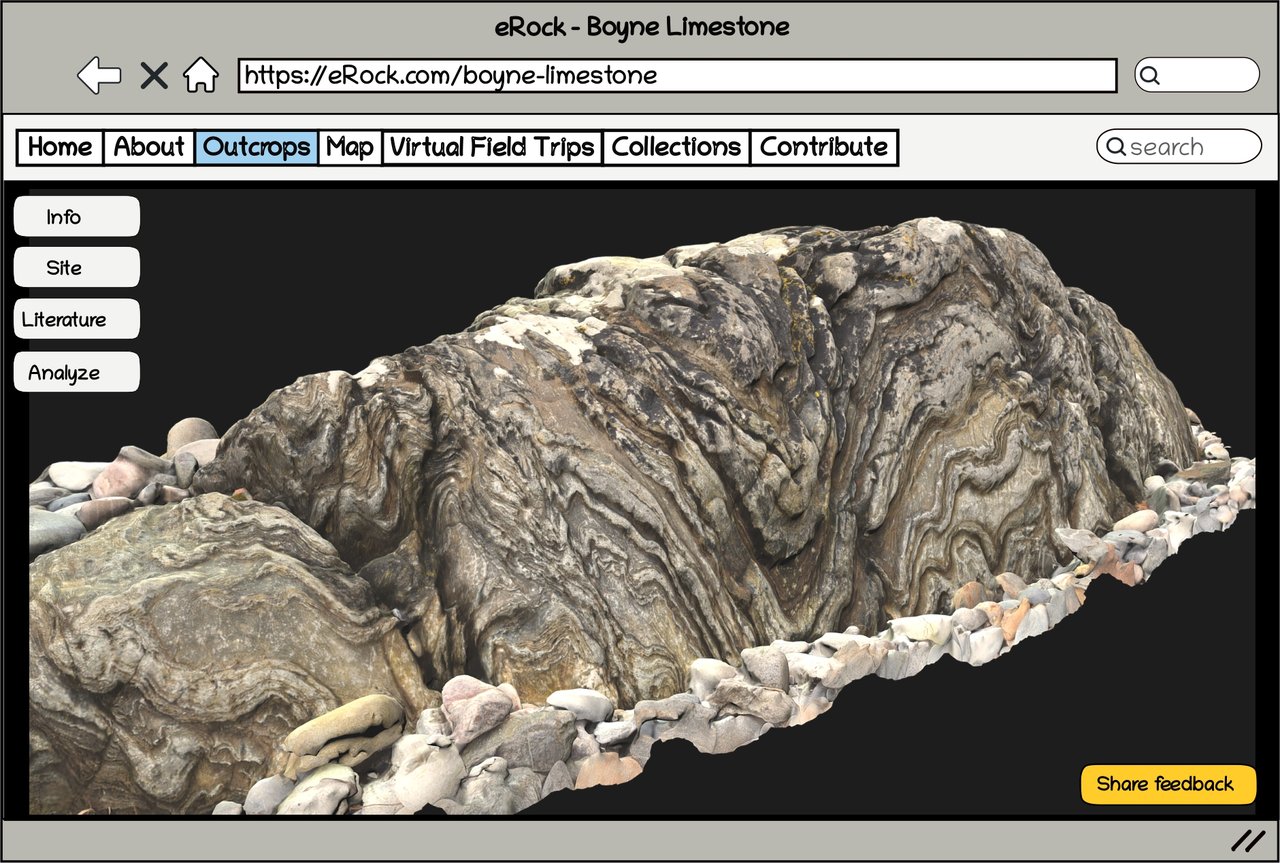
Project activities include developing data standards and infrastructure, creating map-based search and visualization tools, and working directly with researchers, educators and students to understand how digital outcrop data can best support research and teaching. Students will also contribute by collecting and curating new datasets.
The long-term goal extends beyond creating a database. Cawood hopes to build a sustainable scientific community that encourages collaboration and data reuse across institutions and disciplines. Researchers will examine how metadata should be organized, how users interact with digital models and how virtual observations can complement traditional fieldwork.
“It will allow people to experience and investigate geological field sites they may not otherwise be able to visit because of distance, cost, mobility or other barriers,” Cawood says. By broadening access to field experiences, eRock has the potential to make geoscience education more inclusive while preserving valuable research data for future generations.
Together, these two NSF-funded projects highlight the breadth of Cawood’s research vision. One initiative seeks to solve critical questions about mineral resources needed for the shift toward cleaner energy, while the other reimagines how geological knowledge is preserved and shared. As energy systems evolve and demand for Earth science expertise grows, Cawood’s research is helping build the scientific foundations needed to responsibly manage natural resources, expand educational opportunities and better understand the processes shaping our planet.
Published: Sept. 14, 2026
Media Contact: asnews@syr.edu