
Accelerating the Search for Rare Earth Elements
Key Takeaways:
- Import Dependence: The United States relies heavily on overseas sources for many rare earth elements, which are essential to electric vehicles, wind turbines, electronics and advanced manufacturing.
- Potential Domestic Resources: Weathered granite in the southeastern U.S. may hold potential rare earth resources similar to those mined in Asia, but their distribution and formation remain poorly understood.
- AI-Assisted Exploration: Syracuse University researchers are helping develop physics-informed AI tools that could improve understanding of where rare earth elements occur and help prioritize areas for follow-up investigation.

The critical metals powering your phone, electric vehicle and countless advanced technologies are increasingly at the center of a national supply challenge. Although these elements are essential, the U.S. Geological Survey estimates that imports accounted for about two-thirds of U.S. apparent consumption of rare-earth compounds and metals in 2025.
Fortunately, scientists believe some of those materials may already be here, within deeply weathered granite formations across parts of the southeastern United States. The challenge is understanding where it occurs, how it forms and which areas merit closer study.
Researchers in the College of Arts and Sciences' Department of Earth and Environmental Sciences at Syracuse University are part of a national project to help answer that question using a combination of field science, computer modeling and artificial intelligence (AI).
Hidden Resources in Weathered Granite
Led in part by hydrogeochemist and associate professor of Earth and environmental sciences Tao Wen, the project aims to make the search for these rare earth elements faster, more efficient and more scientifically grounded. Supported by a grant from the Department of Energy's Genesis Mission Program through Oak Ridge National Laboratory, the study focuses on understanding and identifying a particular type of rare earth deposit that may exist in the southeastern United States.
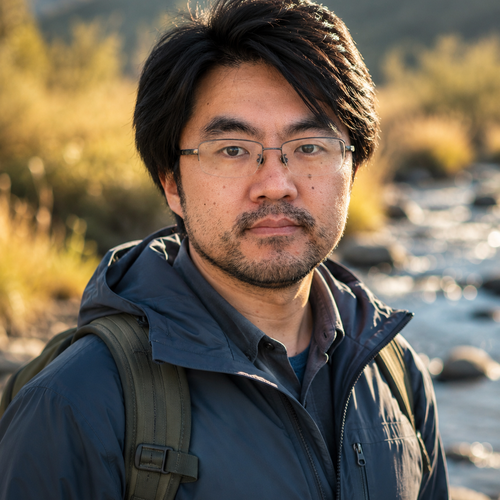
Tao Wen
These deposits form over millions of years as granite slowly weathers and breaks down. During that process, rare earth elements are released from minerals in the rock and can become concentrated in layers of weathered material, where they attach to clay and other minerals. Similar deposits are currently mined in tropical and subtropical regions of Asia. Because the southeastern United States contains extensive granite formations and experiences a warm, humid climate, scientists believe it may have comparable resources, but their locations and formation processes remain poorly understood.
The interdisciplinary research team will investigate weathered granite formations at selected research sites in North Carolina. Using field observations, laboratory experiments, subsurface imaging and computer modeling, researchers will examine where rare earth elements occur, how their concentrations change with depth, and the geological and chemical processes that control their distribution.
Bringing AI to Mineral Exploration
At Syracuse University, Wen and his team will play a key role in developing physics-informed artificial intelligence tools to support the effort.
"Physics-informed AI combines artificial intelligence with established scientific knowledge about how natural systems behave," Wen says. "Rather than asking AI to learn from data alone, we use scientific understanding to guide its analysis and keep its predictions grounded in real-world processes."
By combining different kinds of field and laboratory observations with computer models, the technology can evaluate possible explanations more efficiently, quantify uncertainty and identify areas that may warrant closer study.
"We hope to determine why rare earth elements become concentrated in some weathered granite formations but not in others, and why the depth of enrichment varies from place to place," Wen says.
A Smarter Way to Find Critical Minerals
In practical terms, the work could help make rare earth exploration more targeted. By combining AI-based analyses with field measurements and computer simulations, researchers may be able to prioritize areas for follow-up study before committing to more intensive field investigations. That could reduce costs, improve efficiency and minimize environmental disturbance.
Wen says the nine-month Phase I project is expected to produce scientific findings and a proof-of-concept framework within the award period. If the approach proves successful and is expanded through additional research, it could begin informing focused exploration efforts within several years.
The project focuses on the front end of the rare earth supply chain: identifying and evaluating potential resources. Once a viable deposit is found, mineral-bearing material must be recovered and processed to extract and concentrate rare earth elements before they can be refined into the metals, alloys, magnets and components used in electric vehicles, wind turbines, electronics and advanced manufacturing.
The methods developed may also be applied to other challenges involving groundwater, mineral resources and the movement of chemicals beneath Earth's surface. For example, they could help predict how contaminants spread through groundwater or identify areas where subsurface resources are concentrated. In both cases, integrating scientific models with field observations could enable researchers to target future measurements more efficiently.
Training the Next Generation
The project will provide valuable research opportunities for Syracuse University students working with Wen’s team. They will contribute to data analysis, computational modeling and interpretation of research results while gaining hands-on experience at the intersection of geoscience, artificial intelligence and critical minerals research.
While much of the Syracuse team's work will be computer-based, including data integration, modeling and AI development, Wen says lab members, including interested students, may also have opportunities to participate in field trips associated with the broader project. Those experiences will help them connect computational research with the geological settings and observations that inform the models being developed.
Wen's project also reflects the ambitions of A&S' Academic Strategic Plan, "Shaping the Future: Innovation, Engagement and Impact." By pairing artificial intelligence with Earth science to address a critical mineral supply challenge, the work speaks to the plan's focus on innovative technologies and environmental sustainability, while giving students the kind of interdisciplinary research experience the plan aims to expand.
For Wen, whose research combines hydrogeochemistry, environmental data science and machine learning, the project represents an opportunity to use cutting-edge AI tools to address a growing national need. If successful, the work could improve understanding of America's rare earth potential and provide a smarter roadmap for finding the critical resources that power modern technology.
Published: Aug. 19, 2026
Media Contact: asnews@syr.edu