
A Journey Into Earth’s Depths
Key Takeaways:
- Decades in the Making: A rock sample collected by Syracuse University researchers during a 2003 expedition to Papua New Guinea helped uncover new evidence about how subduction zones develop.
- Record of an Unusual Journey: Researchers reconstructed the path of a rock that traveled more than 90 kilometers (56 miles) beneath Earth’s surface, revealing a transition from warmer to colder conditions during subduction.
- Broader Implications: The findings help to improve thermal models used to understand subduction processes throughout Earth’s history.
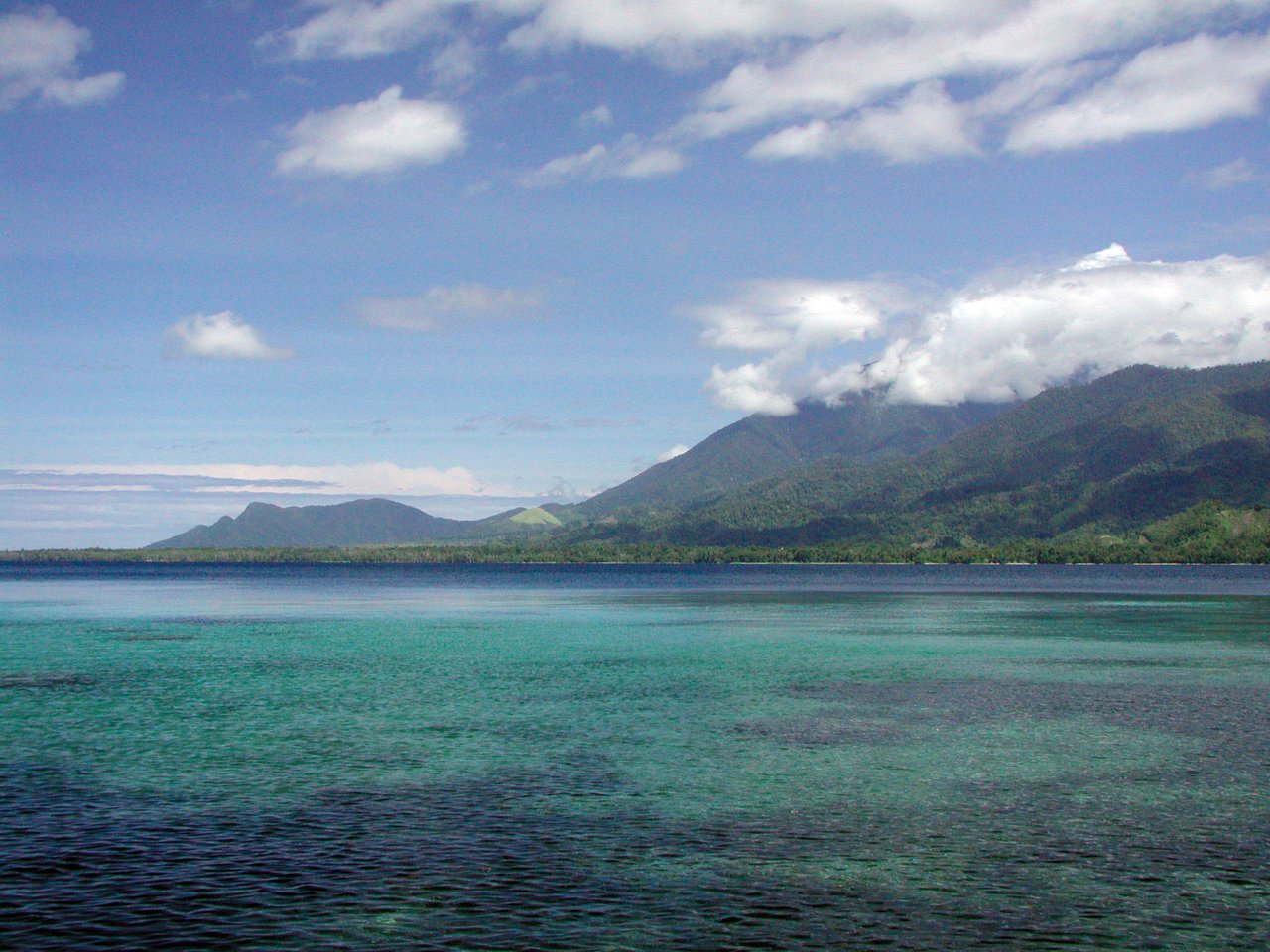
More than two decades ago, as Syracuse University's men's basketball team battled its way to the program's first national championship in 2003, another Syracuse team was pursuing a very different victory. On the remote islands of eastern Papua New Guinea, researchers collected rock samples that they hoped would help answer fundamental questions about how Earth's crust is recycled deep within the planet.
The samples continue to yield discoveries, including findings published recently in Nature Geoscience that provide new insights into the thermal evolution of subduction zones, some of the most dynamic and influential regions on Earth.
"This study was based upon a sample that Syracuse University scientists collected on an NSF-funded expedition to remote islands of eastern Papua New Guinea over two decades ago," says Suzanne Baldwin, Professor Emerita of Earth and Environmental Sciences in Syracuse University's College of Arts and Sciences (A&S) and co-author of the study. "Now, more than 20 years later, together with an international team of researchers, we designed this new project."
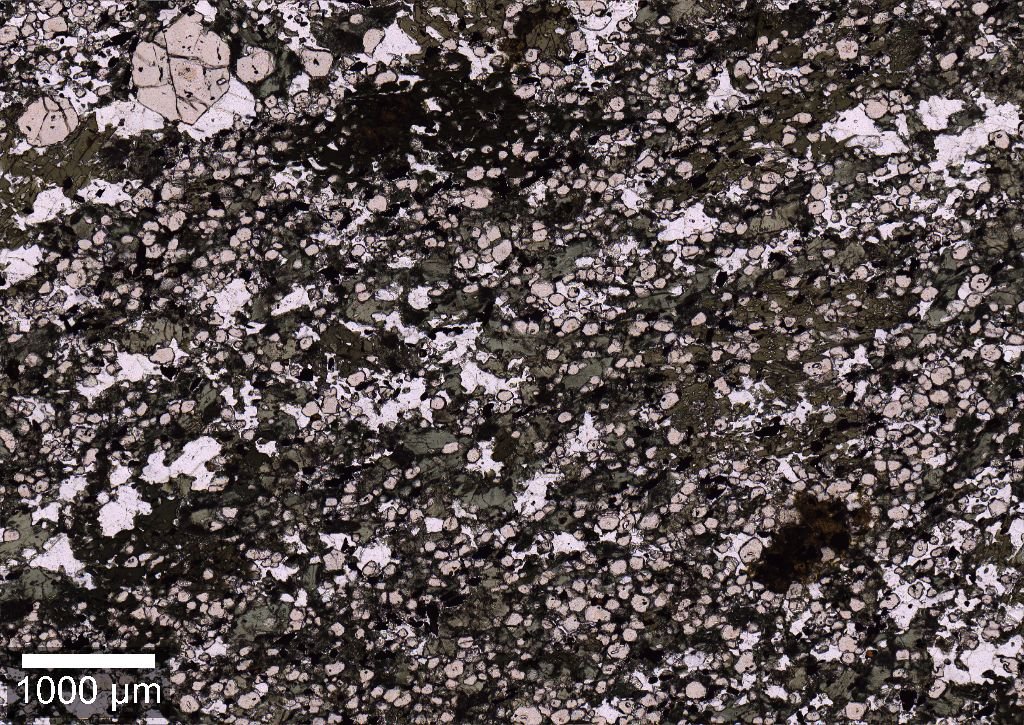
The study, led by Göttingen University in Germany, examined a rare rock known as an ultrahigh-pressure eclogite, which forms under extreme conditions deep within subduction zones, where one tectonic plate sinks beneath another.
In subduction zones, the edge of one tectonic plate slowly slides beneath another, carrying rocks from Earth's surface deep into the mantle. Over millions of years, some of those rocks are transformed by immense heat and pressure before being pushed back toward the surface, where scientists can study the record of their journey.
By combining several advanced analytical techniques, researchers reconstructed the rock's remarkable voyage from Earth's surface to depths exceeding 90 kilometers (56 miles) before its eventual return.
A Window Into Earth's Interior
Subduction zones play a central role in shaping the planet. They generate many of the world's largest earthquakes and volcanic eruptions while helping regulate Earth's long-term climate by recycling carbon and other materials deep into the mantle.
Understanding exactly how rocks move through these systems and the temperatures they experience along the way is essential for building accurate models of Earth's interior.
The new research revealed something surprising. Although the rock reached temperatures of about 800°C (1,470°F) at depths greater than 90 kilometers, evidence preserved within its minerals showed that it followed a warmer-than-anticipated path during the early stages of its descent before transitioning to cooler conditions.
Because the minerals studied record the conditions the rock experienced during transport to mantle depths, the findings provide new clues about how subduction zones evolve and how Earth's crust is recycled back into the mantle. The results suggest that the thermal evolution of subduction zones may be more complex than scientists had previously recognized.
Reconstructing a Geologic Puzzle
The findings build upon decades of work by Baldwin and her collaborators in Papua New Guinea.
Earlier Syracuse-led research helped identify what Baldwin describes as “the world's youngest ultrahigh-pressure terrane,” a region containing rocks that have experienced extreme pressures deep within the Earth.
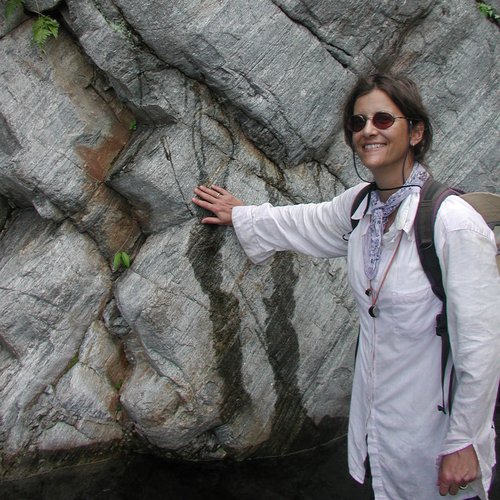
Suzanne Baldwin examining a gneiss, a type of metamorphic rock on a field expedition to Goodenough Island, Milne Bay Province, Papua New Guinea. (Courtesy: Paul Fitzgerald)
"Prior research based on our team's results laid the foundation for this project," Baldwin says. "We had discovered the youngest ultrahigh-pressure terrane in Papua New Guinea and have since worked to reconstruct the geologic and tectonic evolution."
That long-term investment created a unique opportunity to revisit key samples using sophisticated technologies that were unavailable when the rocks were first collected.
"As state-of-the-art techniques are developed, it's important to apply these to key samples to inform fundamental geologic processes such as subduction," Baldwin says.
Using microscopic mineral inclusions and advanced geochemical analyses, the team reconstructed the rock's prograde pressure-temperature history with unprecedented detail. Their results revealed that eastern Papua New Guinea rocks experienced a relatively high geothermal gradient early in their descent followed by a lower geothermal gradient at greater depths.
While geologists have previously identified rocks that record higher temperatures than expected, this study is the first to clearly document a rock’s journey from shallow to deep depths alongside a shift from relatively warmer to cooler geothermal conditions. The findings suggest several possible explanations: rocks may be heated more intensely at shallow depths than previously thought because of shearing along tectonic plate boundaries; the subduction zone may not yet have cooled to the temperatures predicted by existing models; or both processes may be at work.
"The entire pressure-temperature-time path that rocks take from the surface to extreme depths and back to the surface needs to be documented and incorporated into models of subduction zone evolution," Baldwin says.
By reconstructing that complete journey, scientists can better understand how rocks, fluids and gases move through Earth's interior, helping improve understanding of processes ranging from mountain building and volcanism to the recycling of Earth's crust. The work could also help researchers better evaluate the factors that influence earthquakes, volcanic activity and long-term geochemical processes such as Earth's carbon cycle, while shedding light on how subduction has operated over millions of years and continues to shape the planet today.
Implications Beyond Geology
The discovery has significance far beyond a single rock from Papua New Guinea. For Baldwin, the study also demonstrates the value of international collaboration and long-term scientific inquiry. A sample collected during a field expedition more than 20 years ago has now provided new evidence that may reshape how researchers think about the thermal evolution of subduction zones.
"This approach can be applied to ultrahigh-pressure rocks globally," Baldwin says. "But the research requires an international team of collaborators working together to make such discoveries using a multidisciplinary approach."
As scientists continue refining tools capable of reading the histories preserved within Earth's rocks, samples collected decades ago may continue revealing new secrets about the forces that shape the planet beneath our feet. Unlike a championship game, discoveries in geology aren't constrained by a final buzzer.
Original publication: Schönig JS et al (2026). “Geothermal gradient change during subduction recorded by ultrahigh-pressure eclogite.” Nature Geoscience 2026. DOI: 10.1038/s41561-026-02110-1
Published: Oct. 7, 2026
Media Contact: asnews@syr.edu