
Have You Ever…Held a 70-Million-Year-Old Fossil?
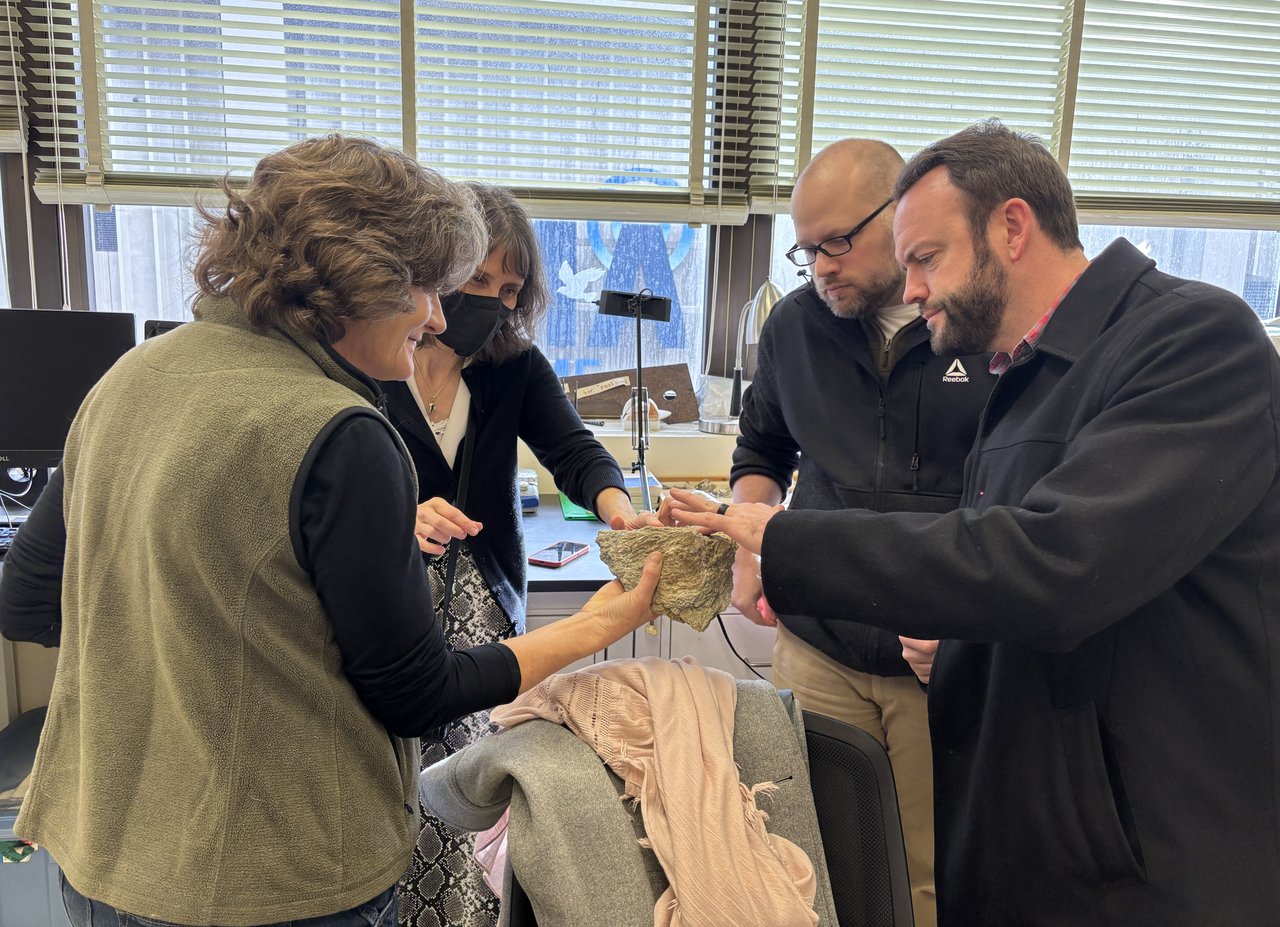
Ever wonder what’s happening in the classroom down the hall or the lab two buildings over? We do too, and we’re doing something about it.
The A&S communications team is making its way across the College, into labs, offices, archives and classrooms, to meet our accomplished colleagues and introduce them to you. With hundreds of faculty and staff across dozens of departments and centers, there’s no shortage of remarkable people and projects to discover.
Recent stop: The paleontology lab of Linda Ivany, professor of Earth and environmental sciences.
Ivany is a paleoecologist and paleoclimatologist, a scientist who studies ancient ecosystems and how organisms interacted with each other and their environments millions of years ago. Using fossil evidence preserved in shells, bones and rock, she and her students reconstruct the living conditions of the past, shedding light on how life on Earth has responded to dramatic environmental change.
What we found: A lab filled with fossils arranged across tables, shelves and even in 150-year-old glass-front collection cabinets originally from Harvard University. These fossils serve as a window into ancient life and the climate conditions in which they lived. Highlights included a newly donated dinosaur bone that students were helping reconstruct, trays of ancient marine invertebrates, and a behind-the-scenes look at the tools and techniques Ivany’s team uses to extract climate and ecological data from specimens collected around the globe.
Fun fact: The lines on a seashell work kind of like the rings inside a tree. As a mollusk grows, it lays down new layers of shell with each one forming a visible line or ridge. The chemistry of the shell across those growth lines can reveal clues about the past, such as changing water temperature and food availability over their lifetimes. In other words, seashells are tiny time capsules holding a record of the environments they’ve lived through.
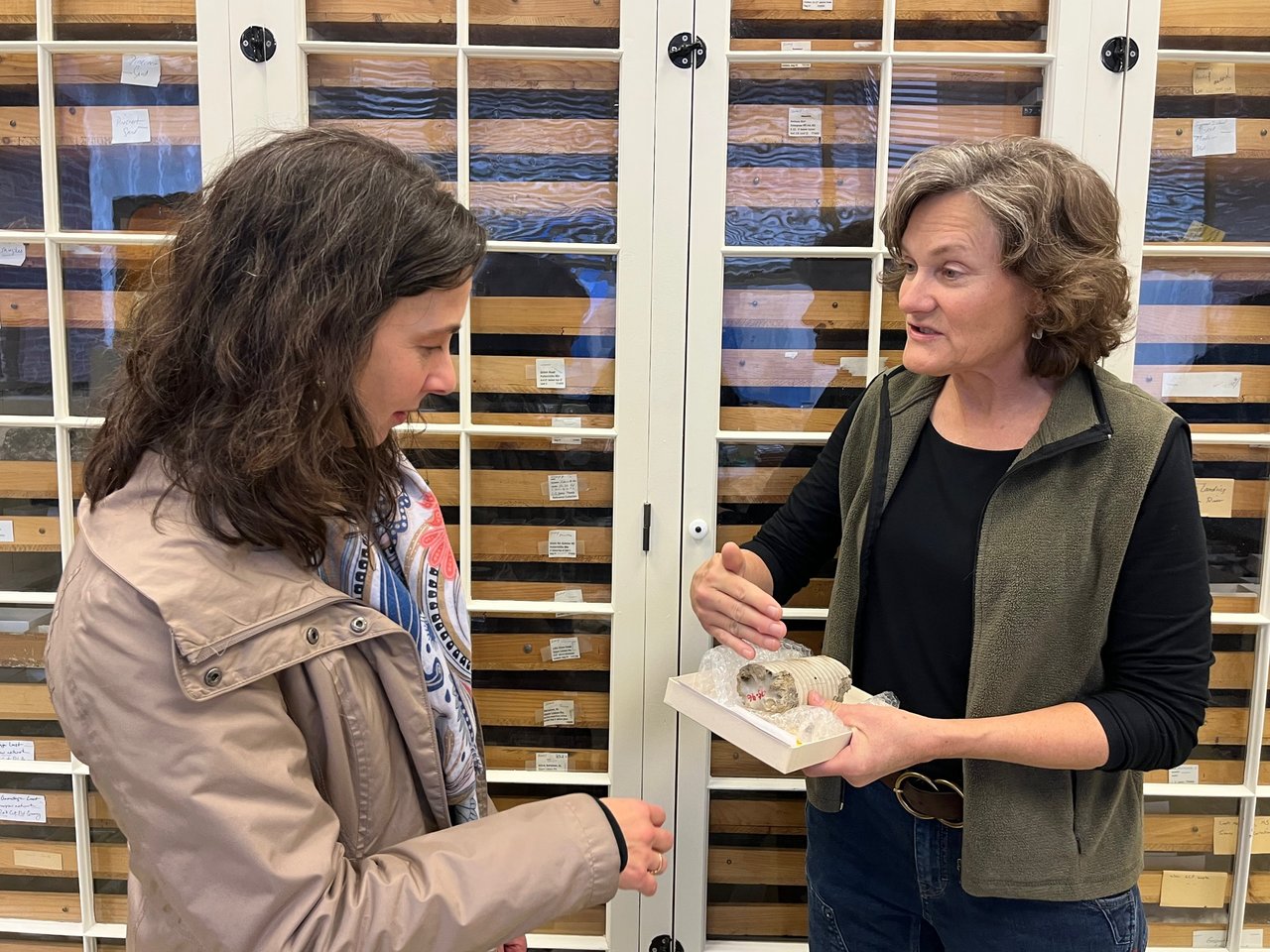
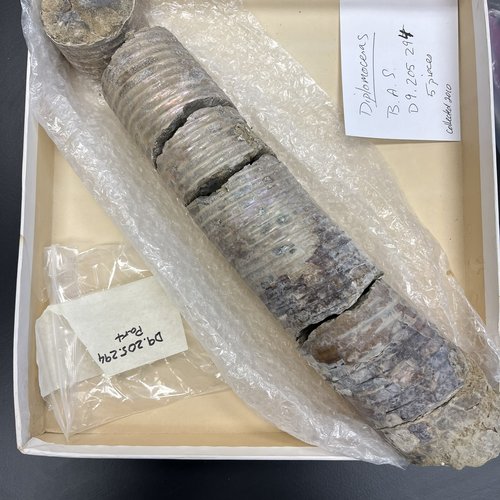
A fossil specimen of the ammonite Diplomoceras, a marine shelled cephalopod related to modern squid and octopuses that lived off the coast of Antarctica during the Late Cretaceous period (approximately 83–66 million years ago).
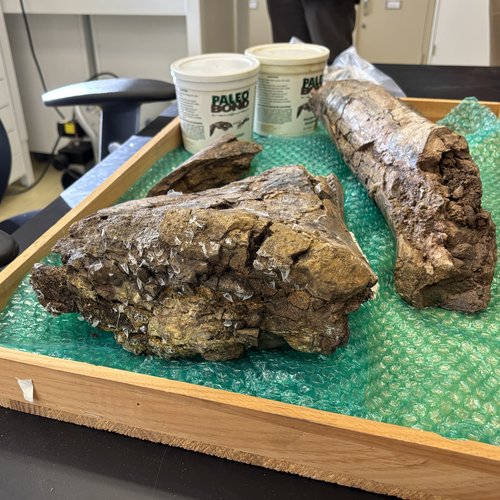
Ivany’s collection includes a recently donated dinosaur limb bone, likely from a hadrosaur.
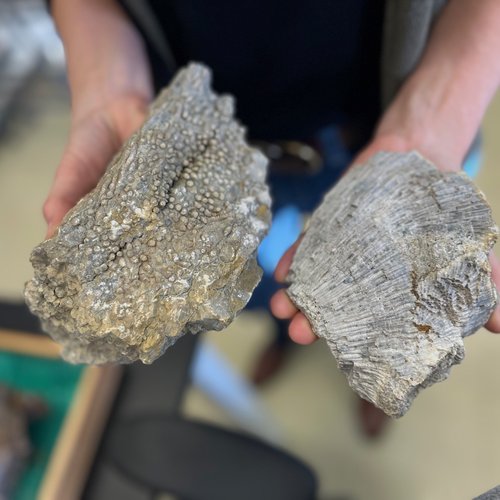
Ivany holds 400-million-year-old fossil corals from New York State, at a site she is beginning to work on with undergraduate student Zoe Power '28.
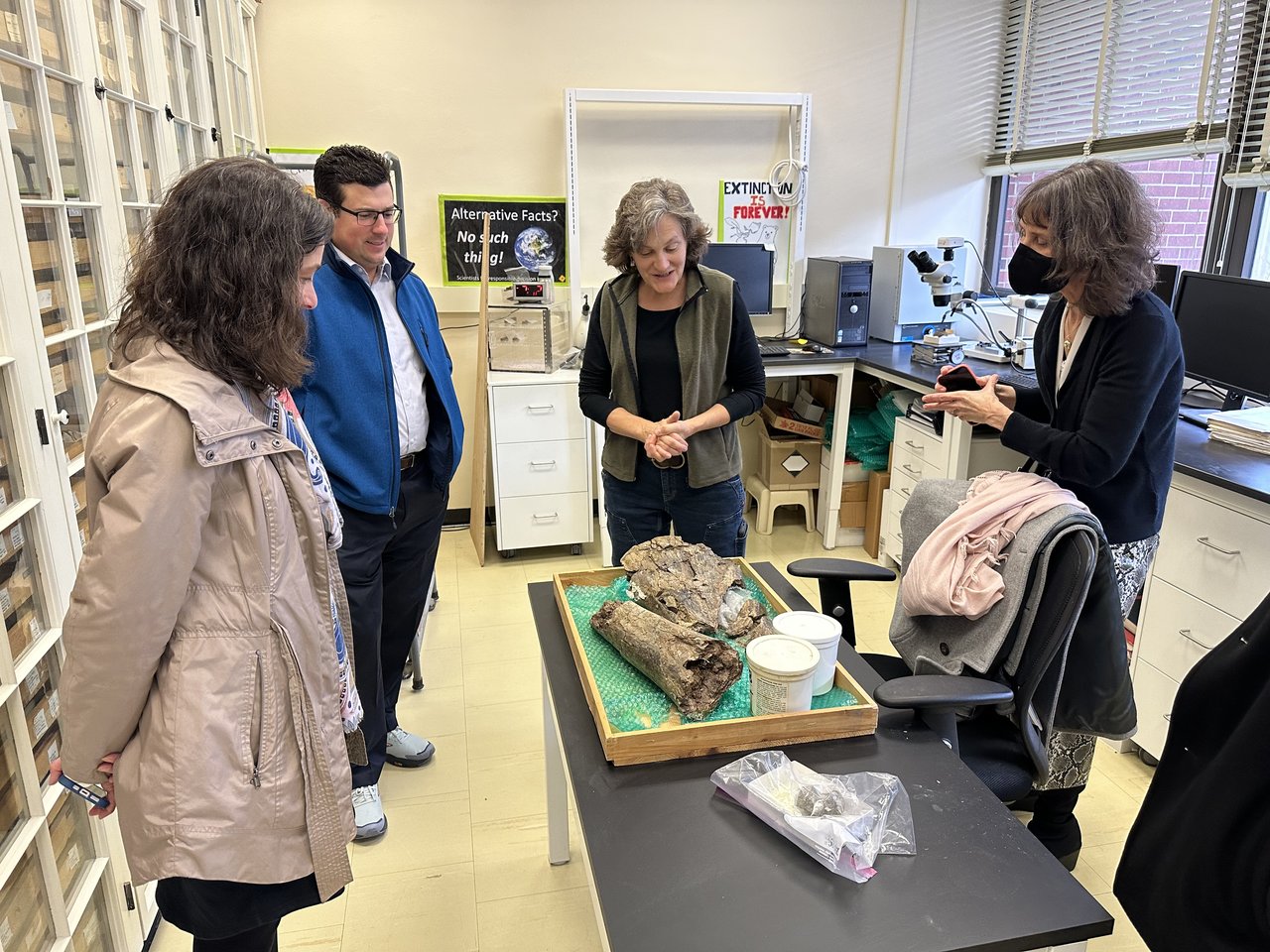
During the tour, Ivany walked the team through decades of fieldwork and discovery, from the coast of Antarctica to the shores of the Gulf Coast, and shared how the paths taken by her former students reflect the broad reach of paleontological training. The conversation sparked story ideas and deepened the team’s appreciation for the scientific work happening in A&S.
The A&S communications team spotlights faces and spaces across the College. Where should we visit next? What faculty or staff member do you think your colleagues should read about? Reach out through our contact form for consideration.
Published: Nov. 18, 2025
Media Contact: asnews@syr.edu