
Indigenous Perspectives on the Nation’s Founding
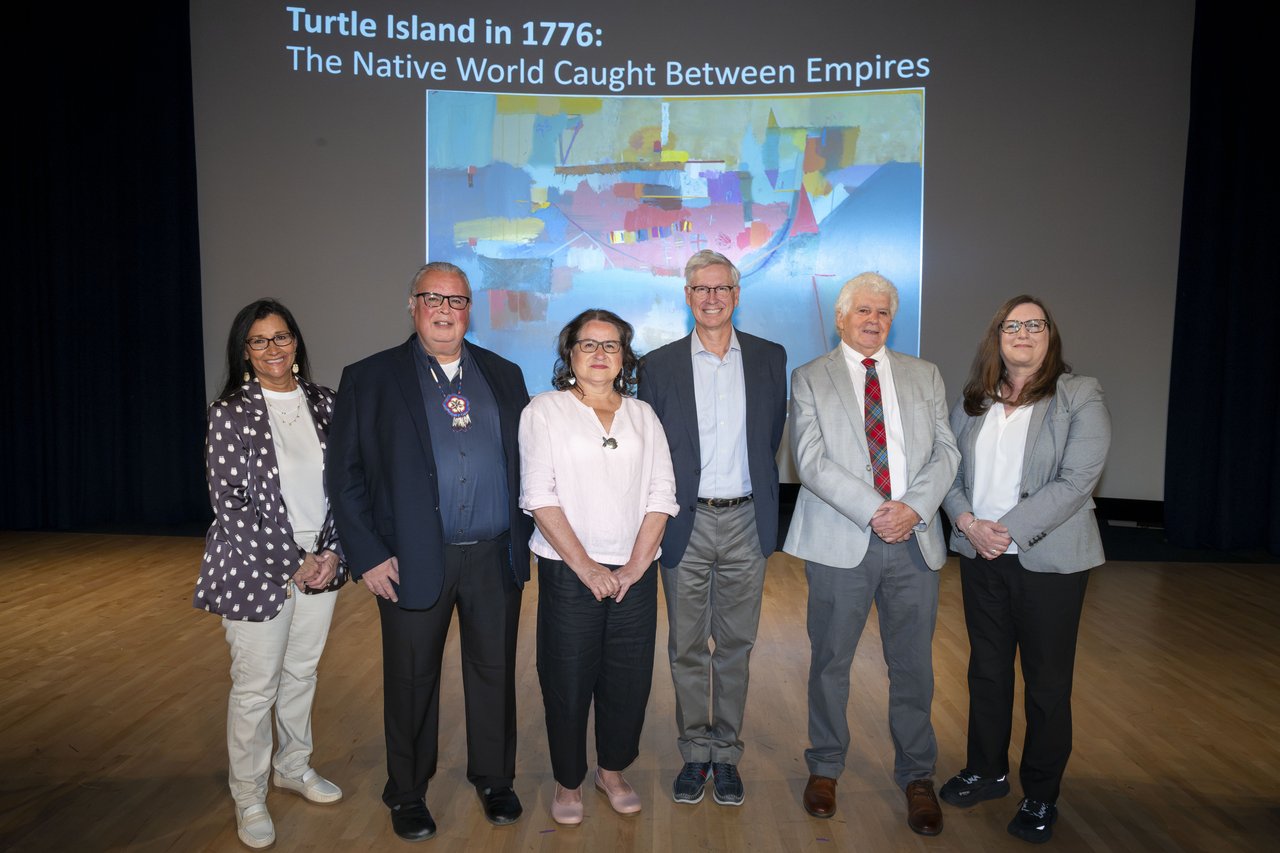
As the United States celebrates the 250th anniversary of its founding, historians and scholars are working to broaden public understanding of the Revolutionary era by centering the perspectives of Indigenous peoples whose nations were deeply affected by the conflict. Among them is Scott Manning Stevens, an associate professor of Native American and Indigenous Studies and English at Syracuse University’s College of Arts and Sciences (A&S), who recently participated in a Smithsonian symposium presented as part of Our Shared Future: 250, the Institution's nationwide initiative commemorating the 250th anniversary of the United States.
A citizen of the Akwesasne Mohawk Nation, Stevens is director of the Center for Global Indigenous Cultures and Environmental Justice and the Native American and Indigenous Studies program in A&S. His research focuses on the colonial history of the Northeast, Native material culture, Indigenous sovereignty and the history of ethnographic collecting.
Titled “Turtle Island in 1776: The Native World Caught Between Empires,” the symposium, held at the National Museum of the American Indian in Washington, D.C., brought together a distinguished group of Native and non-Native scholars to explore Indigenous experiences during the Revolutionary era. They examined how Native Nations across North America, referred to by many Indigenous peoples as Turtle Island, navigated relationships with competing colonial powers while maintaining sovereignty, diplomacy and cultural continuity during a period of profound political change.
Stevens was among a select group of invited speakers that included prominent scholars Philip J. Deloria (Harvard University), Brenda J. Child (University of Minnesota), Colin Calloway (Dartmouth College) and Nadia Dean (author and filmmaker). Stevens’ presentation, "Between Empires: The Haudenosaunee and the Revolutionary War," explored the complex political, diplomatic and military decisions faced by the Haudenosaunee Confederacy during the American Revolution.
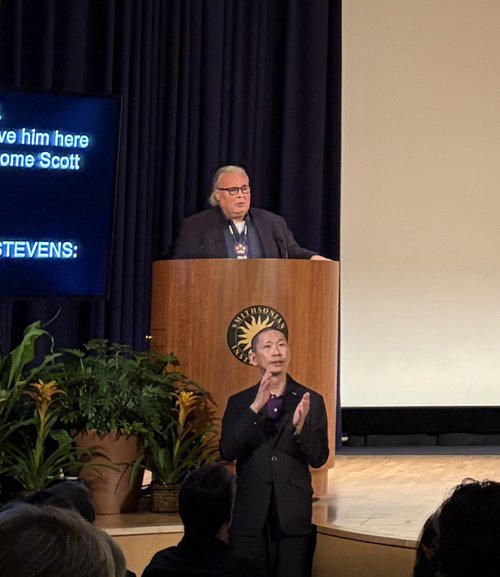
Reflecting on the opportunity to contribute to a national conversation about the nation's founding and the role of Indigenous peoples in that history, Stevens said, “Such events are important because they create opportunities to share Indigenous perspectives on history with audiences beyond academia and encourage a broader understanding of the many peoples whose experiences shaped this country's founding.”
His participation in the Smithsonian symposium builds on his longstanding record of public scholarship focused on bringing Indigenous histories into public conversation. Stevens recently contributed an essay to American Indian Magazine, published by the Smithsonian’s National Museum of the American Indian, examining how Native Nations navigated the far-reaching consequences of the American Revolution. Drawing on historical research and Indigenous viewpoints, the essay highlights how communities such as the Haudenosaunee, Shawnee and Cherokee adapted and endured despite warfare, displacement and political upheaval.
Stevens is helping ensure that Indigenous histories remain central to the conversation about the nation’s origins. Through both his Smithsonian symposium presentation and his writing for American Indian Magazine, he continues to highlight the experiences of Native Nations whose resilience, diplomacy and sovereignty shaped the past and continue to inform the present.
Published: Sept. 16, 2026
Media Contact: asnews@syr.edu