
Uncovering Hidden Interactions That Shape Fertility
Key Takeaways:
- A New Frontier in Fertility Research: Syracuse University biologists have received a National Institutes of Health (NIH) grant to investigate how proteins in the female reproductive tract influence sperm function and fertility.
- Beyond Sperm and Egg: The research focuses on the molecular interactions between sperm and the female reproductive environment, an area of reproductive biology that could reshape our understanding of fertility.
- Potential for New Treatments: Findings may help scientists develop improved diagnostic tools, infertility treatments and non-hormonal contraceptives in the future.
Infertility affects roughly 1 in 6 people worldwide, often bringing significant emotional, physical and financial challenges, according to a World Health Organization report. Yet many of the biological processes that determine whether fertilization succeeds remain poorly understood.
Steve Dorus and Scott Pitnick, professors of biology in Syracuse University's College of Arts and Sciences (A&S), have been awarded a five-year, $1.6 million grant from the Eunice Kennedy Shriver National Institute of Child Health and Human Development (NICHD), part of the National Institutes of Health, to investigate how the female reproductive tract directly influences sperm function and fertility. This research is being conducted in close collaboration with Mariana Wolfner, Goldwin Smith Professor of Molecular Biology and Genetics and a Stephen H. Weiss fellow at Cornell University.
This NIH-funded research program explores an emerging scientific concept known as sperm-female interactions, or SFIs. While reproductive biology has traditionally focused on sperm, eggs and reproductive organs as largely separate systems, scientists increasingly recognize that the interactions between sperm and the female reproductive environment play a critical role in successful fertilization.
“Resolving the molecular basis of these interactions holds tremendous promise for expanding our understanding of fertility,” Dorus says.
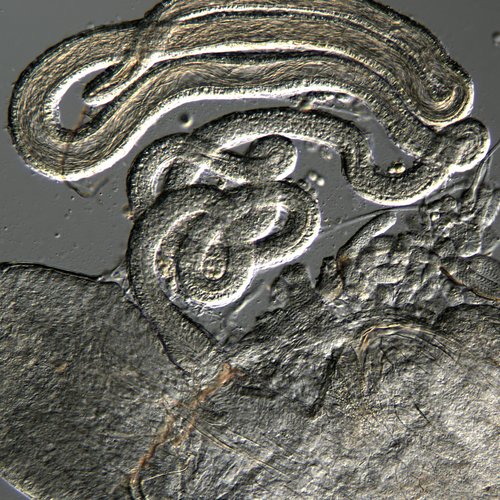
Drosophila melanogaster sperm coiled inside a female's specialized sperm-storage organ, where they participate in molecular interactions with female-derived molecules prior to fertilizing an egg. The image was featured on a 2022 cover of Proceedings of the National Academy of Sciences. (Image courtesy: Scott Pitnick)
Looking Beyond Traditional Models
After sperm enter the female reproductive tract, they encounter a complex environment that helps determine whether they survive, gain the ability to fertilize an egg and ultimately contribute to a successful pregnancy. Scientists know these interactions are essential, but the molecular mechanisms behind them remain largely unexplored.
The team has already made an important discovery using Drosophila, commonly known as fruit flies, a widely used and powerful model organism that accelerates the study of biological processes that are shared across the animal kingdom. Their earlier studies revealed that sperm undergo significant molecular changes after entering the female reproductive tract.
One of the most surprising findings was that proteins produced by females begin associating with sperm almost immediately after mating. During long-term sperm storage in the reproductive tract, these female-derived proteins account for nearly 20% of the sperm's protein composition.
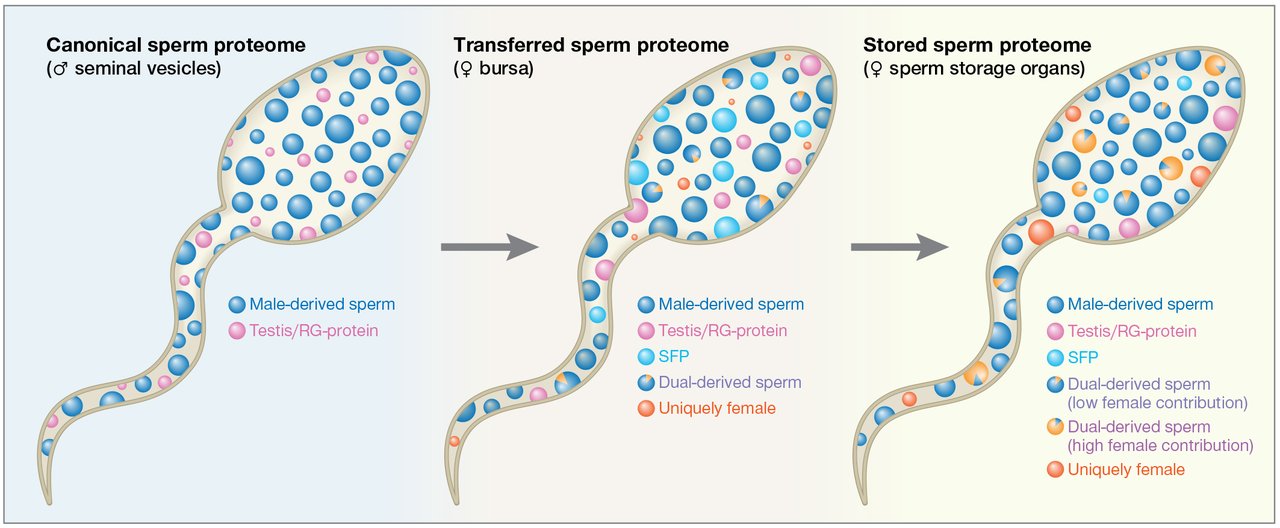
The proteins appear to be closely connected to metabolic pathways that contribute to the generation of cellular energy, suggesting that female contributions may support sperm survival, function and fertilization potential during the critical period between insemination and fertilization.
Advancing Fertility Science
The new NIH-funded project will build on those discoveries by identifying the specific female metabolic proteins that associate with sperm and determining how they affect fertility outcomes.
Dorus and his team hope to better understand how these molecular interactions influence sperm performance, viability and reproductive success. The findings could provide new insight into why fertility problems occur and reveal biological pathways that have previously gone unnoticed.
“By identifying the molecular factors that influence sperm performance after mating, we hope to uncover biological mechanisms that may help explain some forms of infertility that currently have no clear cause,” says Pitnick.
Because many fundamental reproductive processes are shared across species, discoveries made through this work could ultimately help scientists view human fertility in new ways. A deeper understanding of how sperm and the female reproductive tract work together may lead to new approaches for diagnosing infertility, allowing clinicians to identify problems that current tests cannot detect. It could also help researchers design more targeted fertility treatments that address the molecular causes of reproductive challenges.
At the same time, the work may contribute to the development of innovative contraceptives that operate by influencing sperm-female interactions rather than relying on traditional hormonal methods.
By uncovering how the female reproductive tract actively shapes sperm function, this research will help redefine how scientists think about reproduction and has the potential to unlock new solutions for infertility while advancing a broader understanding of one of biology's most fundamental processes.
Published: Aug. 3, 2026
Media Contact: asnews@syr.edu