
A Cooperative Approach to Reproductive Success
Key Takeaways
- Cooperation at the cellular level matters: Sperm in many species work together in coordinated groups to improve reproductive success.
- Evolution repeatedly tests this strategy: Sperm cooperation has emerged, disappeared and re-emerged numerous times over hundreds of millions of years.
- Rewriting a rule of evolution: The study shows cooperation and competition aren't opposing forces but complementary strategies that repeatedly shape reproductive success across the tree of life.
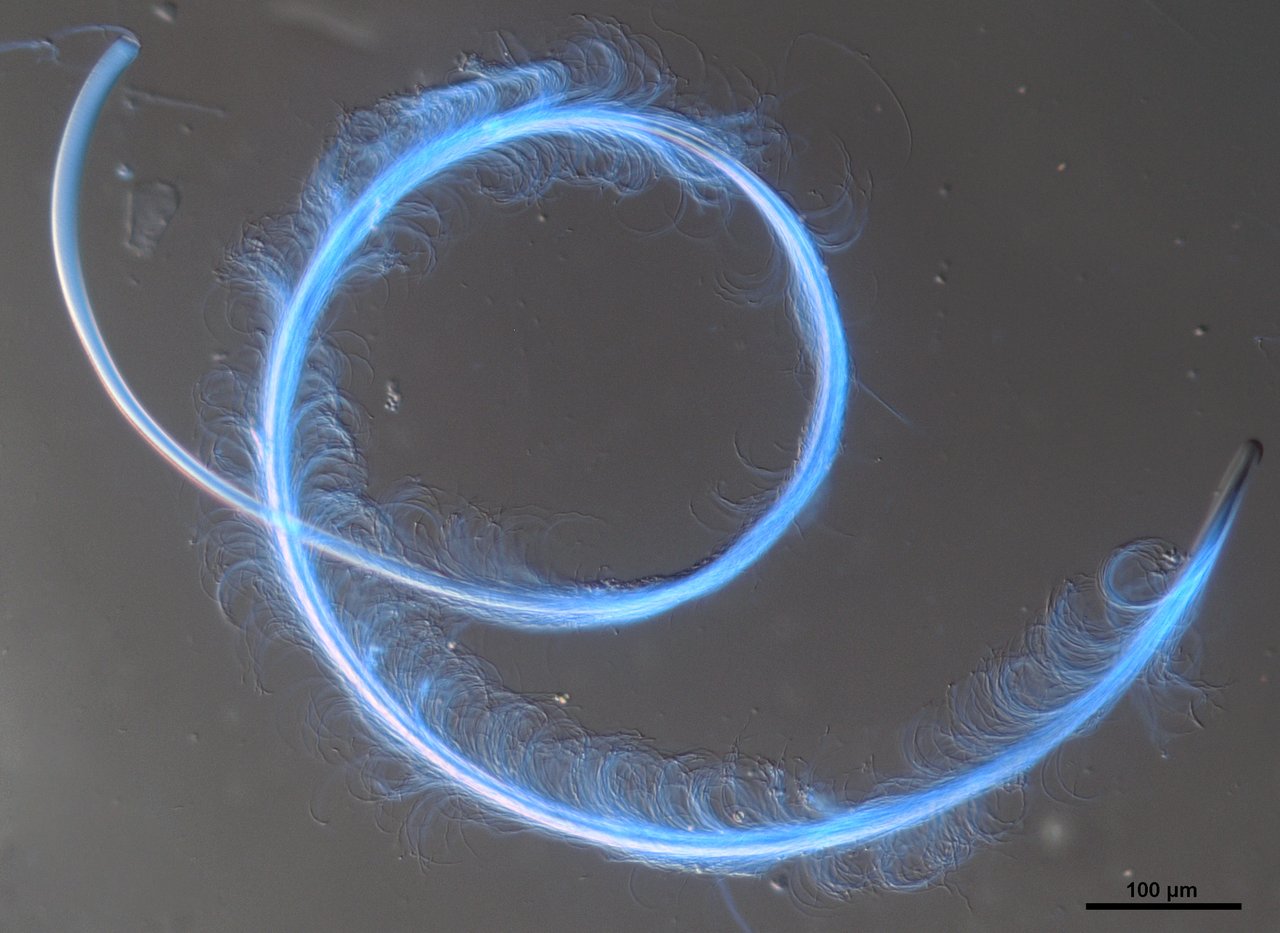
Fertilization is often imagined as a frantic race, with millions of sperm competing for a single prize. But new research by a team of evolutionary biologists from Syracuse University, University of Siena, Italy, and University of Szeged, Hungary, reveals a more surprising reality, where success can depend less on competition and more on cooperation.
The group focused their study on organisms called arthropods, a large and diverse part of the animal kingdom that includes spiders, crabs, insects and centipedes. The scientists explored instances throughout history where arthropod sperm worked together in coordinated groups, forming structures to improve their chances of reaching and fertilizing an egg. This process, known as sperm conjugation, is reshaping what researchers thought they understood about reproduction and evolution.
A Different Way to Win
To visualize sperm conjugation, think of a coordinated team of rowers. Although first described more than a century ago, the phenomenon was long assumed to be rare. The team’s new findings, published in Nature Communications, suggest it is widespread across arthropods and has evolved repeatedly over time.
“Fertilization is often viewed as a competition among individual sperm, but in many species we see cells working together in ways that can influence reproductive success,” says Steve Dorus, professor of biology at Syracuse University’s College of Arts and Sciences (A&S) and co-author of the study.
In numerous species, this coordination depends on sperm-associated material (SAM), a membrane-bound substance that can bind sperm together or form external structures that organize them into groups. Researchers believe SAM may have played a key role in the origin of sperm conjugation, first evolving as a way to package or protect sperm.
Alone, a sperm cell faces a complex and demanding journey through the female reproductive tract. Together, grouped sperm may gain advantages in movement, coordination or function, turning reproduction into a team effort rather than a solo race.
That insight challenges long-standing assumptions about fertility. Instead of focusing solely on the performance of individual sperm, researchers must now consider how collective behavior influences reproductive success.
Watch the video below to see sperm conjugation in action.
Evolution’s Experimentation Lab
Part of what makes this discovery so striking, according to the research team, is evidence of how often sperm conjugation has arisen, and disappeared, throughout evolutionary history. It first appeared hundreds of millions of years ago and has been gained and lost many times across species. In fact, this study found that the ancestor of all insects had conjugated sperm.
To uncover these patterns, the researchers conducted a large-scale comparative analysis of sperm form across arthropods, drawing on decades of published studies. By comparing sperm traits across hundreds of diverse species and mapping them onto an evolutionary family tree, the team reconstructed when different forms of sperm cooperation likely evolved and how often they were lost or regained over time.
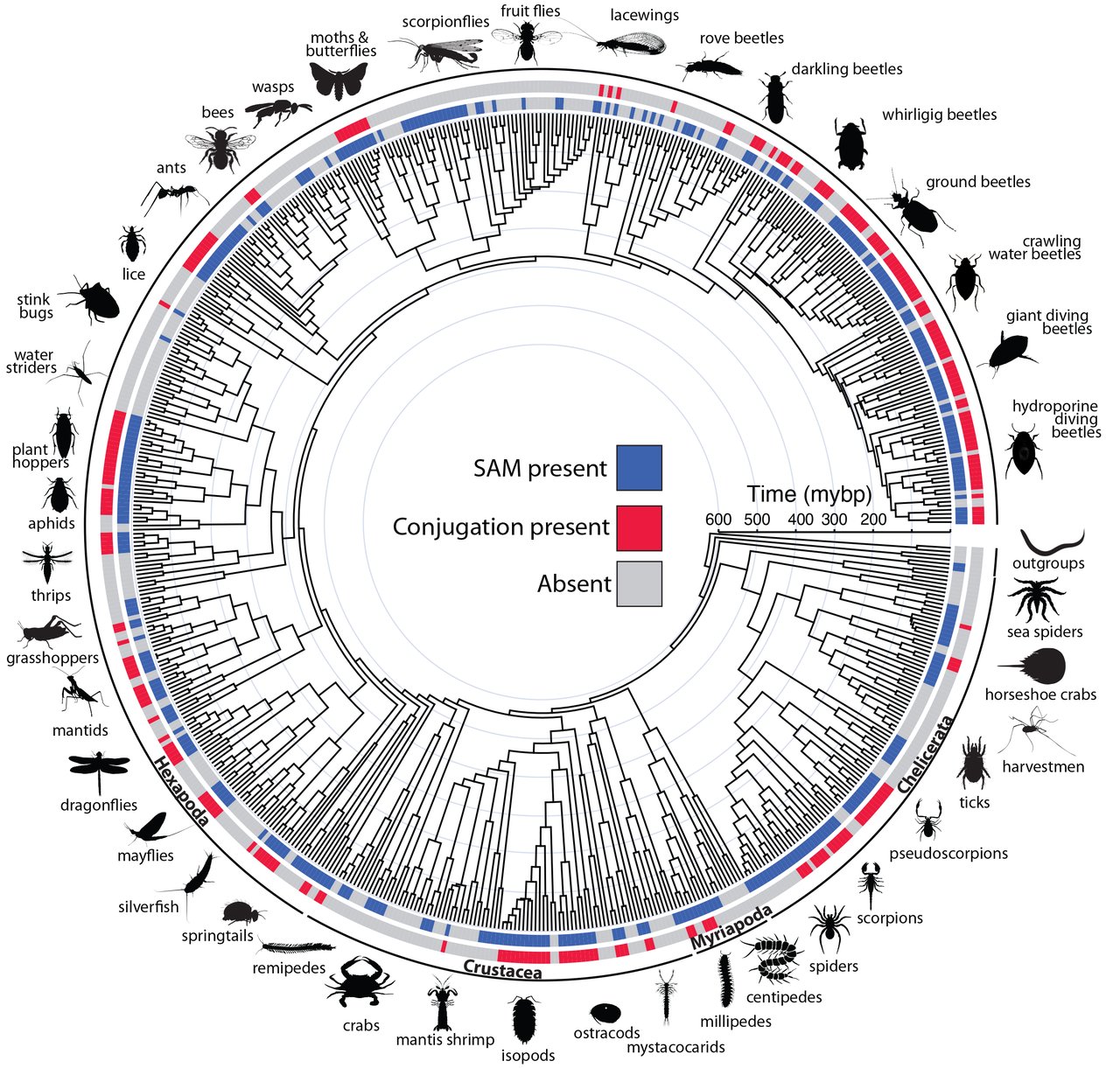
“Evolution has effectively run the same experiment over and over again across different groups of arthropods,” says R. Antonio Gomez, postdoctoral scholar in A&S’ Department of Biology and lead author of the study. “That allows us to see not only when sperm cooperation emerges, but also when it disappears and reappears under different evolutionary conditions.”
For the study's authors, that pattern highlights evolution's trial-and-error nature.
“Sperm are the most rapidly evolving cell type,” says Scott Pitnick, Weeden Professor of Biology in A&S and senior author of the study. “They are shaped by the unique challenge of operating outside the body in the complex environment of the female reproductive tract.”
Why It Matters Beyond Biology
Whereas the research is rooted in evolutionary biology, its implications extend far beyond it. For example, these findings could reshape how scientists think about fertility across the animal kingdom. Fertilization, Pitnick explains, is more like an obstacle course than a simple race, and it involves complex interactions between sperm and the female reproductive tract. Understanding how sperm cooperate or rely on shared structures could reveal new approaches to human reproductive challenges.
The work is also opening new avenues for pest control. Researchers are exploring how sperm conjugation and SAM might be used to disrupt reproduction in harmful species. This includes the invasive spotted lanternfly, a growing agricultural threat in New York and other eastern states.
Unlike other species, lanternfly sperm do not form cooperative groups. Instead, each sperm is encased in a thick coating of SAM.
“Their sperm are highly unusual,” Pitnick says. “They do not have conjugation, but each individual sperm is completely embedded in this material, and we do not even know how they are motile.”
How these sperm actually function remains a mystery, but this unusual biology may offer an opportunity. If SAM is critical to reproduction, disrupting it could provide a highly targeted control strategy.
Future Directions
One question remains especially fundamental: Why does sperm cooperation evolve in the first place?
Current hypotheses suggest that cooperation might improve movement or help deliver important molecules to specific locations within the reproductive tract. But testing those ideas is difficult, in part because sperm behave differently on glass slides, where they are easily observed, than they do in the complex environment of the female body.
Future research aims to address that gap by observing how sperm groups function inside reproductive systems and by identifying the specific advantages or trade-offs of working together.
A New Perspective on Cooperation
The team’s findings highlight an important biological insight, showing that cooperation and competition are not opposites but partners. Even at the microscopic level, success often depends on striking the right balance between the two.
“What makes this pattern so fascinating is that evolution keeps arriving at similar cooperative solutions in very different groups and across vast expanses of time,” says Dorus. “These examples remind us that cooperation can be just as important as competition in shaping biological success.”
By uncovering how tiny cells collaborate to overcome challenges, scientists are gaining new insights into evolution, reproduction and the hidden strategies that sustain life. In doing so, they are helping fill a long-standing gap in understanding how complex reproductive traits evolve and diversify over hundreds of millions of years.
Citation: Gomez, R.A., Dallai, R., Mercati, D., Sinka, R., Dorus, S., Pitnick, S. Pervasive convergent evolution of sperm conjugation across the Arthropoda tree of life. Nat Commun (2026). https://doi.org/10.1038/s41467-026-73950-z
Published: July 24, 2026
Media Contact: asnews@syr.edu