
Is Writing Enough?
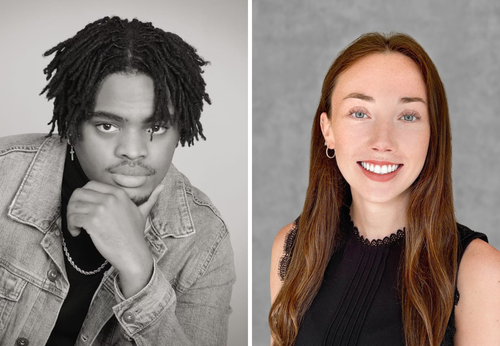
Editor’s Note: The following article was written by Camren Wyche (left), a double major in writing and rhetoric and communication and rhetorical studies, and Drew Murphy (right), a double major in writing and rhetoric and psychology. They are editors of Mend, a publication centering people impacted by the criminal legal system.
The ability to write and share our ideas is often taken for granted. We rarely stop and ask, is writing enough?
This question was asked and answered in January 2026 during a Humanities Center Syracuse Symposium event on the theme of creativity with Dr. Moira Marquis, Manager of Higher Education Partnerships at the Petey Greene Program, and Johnny Page, Director of Reentry for the Illinois Department of Human Services. For incarcerated writers, who face numerous barriers to writing and education, there are no easy answers.
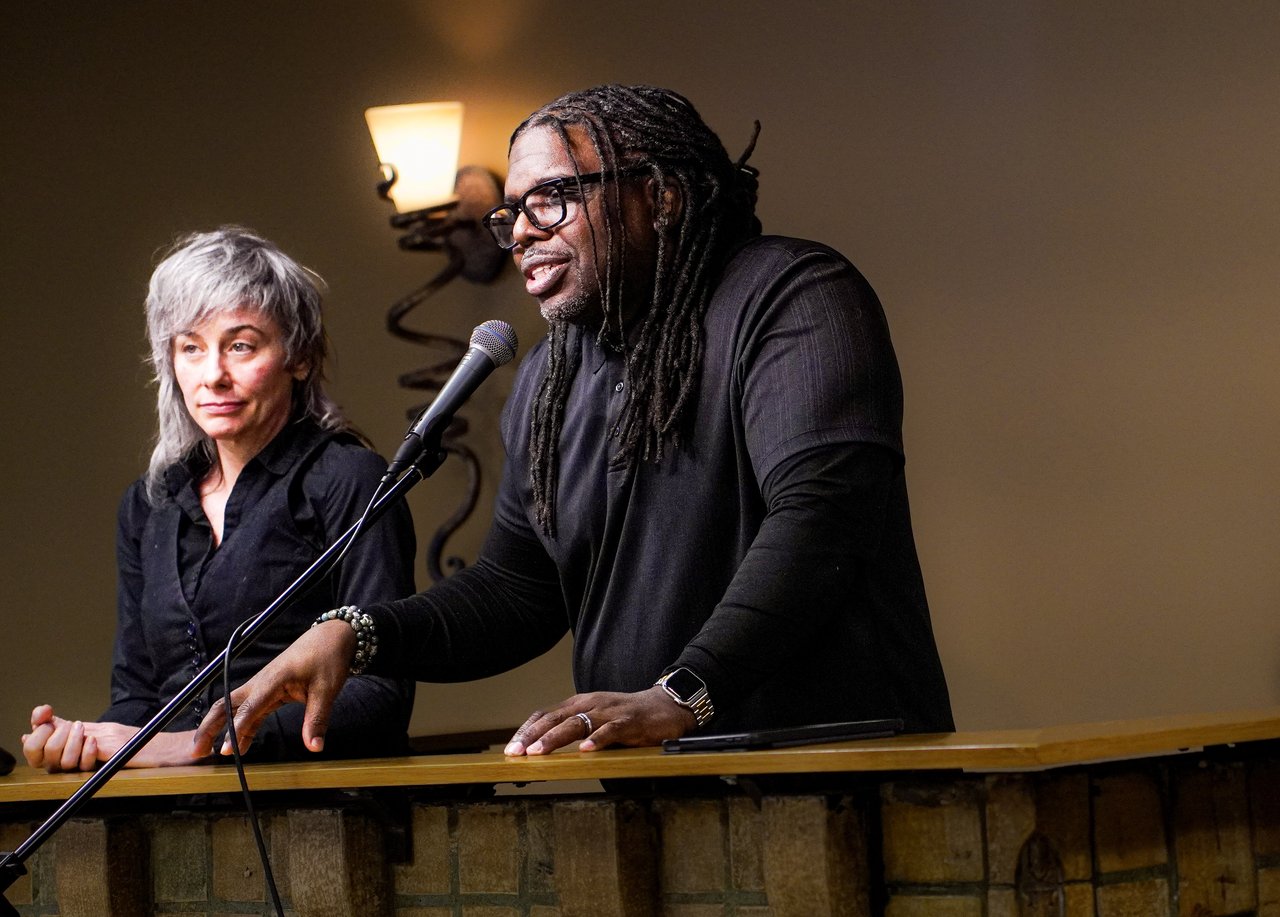
As interns in the Department of Writing Studies, Rhetoric and Composition, and editors for Project Mend, we believed in writing’s ability to name and heal harm. What we had never fully considered was just how unevenly that power is distributed, or how easily it can be restricted, especially within carceral spaces.
Page sees himself as a storyteller. He met Patrick W. Berry, an associate professor of writing and rhetoric at Syracuse University and founder of Project Mend, in a writing class while he was incarcerated and a student with the Education Justice Project, a network of incarcerated students, educators and formerly incarcerated individuals who are committed to just futures.
Page grew up on the Southside of Chicago, where gang culture was not an abstract idea but a daily presence. He describes this period of his life as one that ultimately slowed him down, interrupting the future he wanted. He previously served as Executive Director of ConTextos Chicago, where he advanced programs centered on storytelling, healing and leadership development for those most impacted by violence and incarceration.
“I began this work in carceral settings,” explains Page, “and I continue it in those same spaces, with people who are often spoken about, yet rarely spoken with, and almost never invited to author their own narrative.” For Page, writing is something he instinctively turns to as a form of survival. He shares his story and the stories of others, often to challenge assumptions made about those impacted by the criminal legal system. Two of Page’s poems will be featured in the 2026 issue of Mend.
But sometimes writing fails to reach others, as Marquis, Founder of Prison Banned Books Week, expert on prison censorship, and author of the forthcoming book Thought Threats, reminds us. Suspected contraband is often cited by prison officials to justify restricting reading materials. Marquis recounted stories of books being returned with no rationale.
The rationales for preventing writing, if any are provided, are different from those for reading materials. Officials may raise concerns that incarcerated authors will gain status or earn money; however, the fact remains that prison officials have long used censorship to deny access.
Reading is an impetus for writing, which becomes an impetus for voice; voice is dangerous to a system that doesn’t want to be scrutinized. This is something Page and Marquis stressed at a time when our freedoms are being challenged. During a podcast session with CODE^SHIFT, they discussed the challenges incarcerated people face every day to build connections.
Reflecting back on the opening question, is writing enough? Marquis’ first instinct was to say “no” or at least “not always.” Page agreed, saying, “sometimes.”
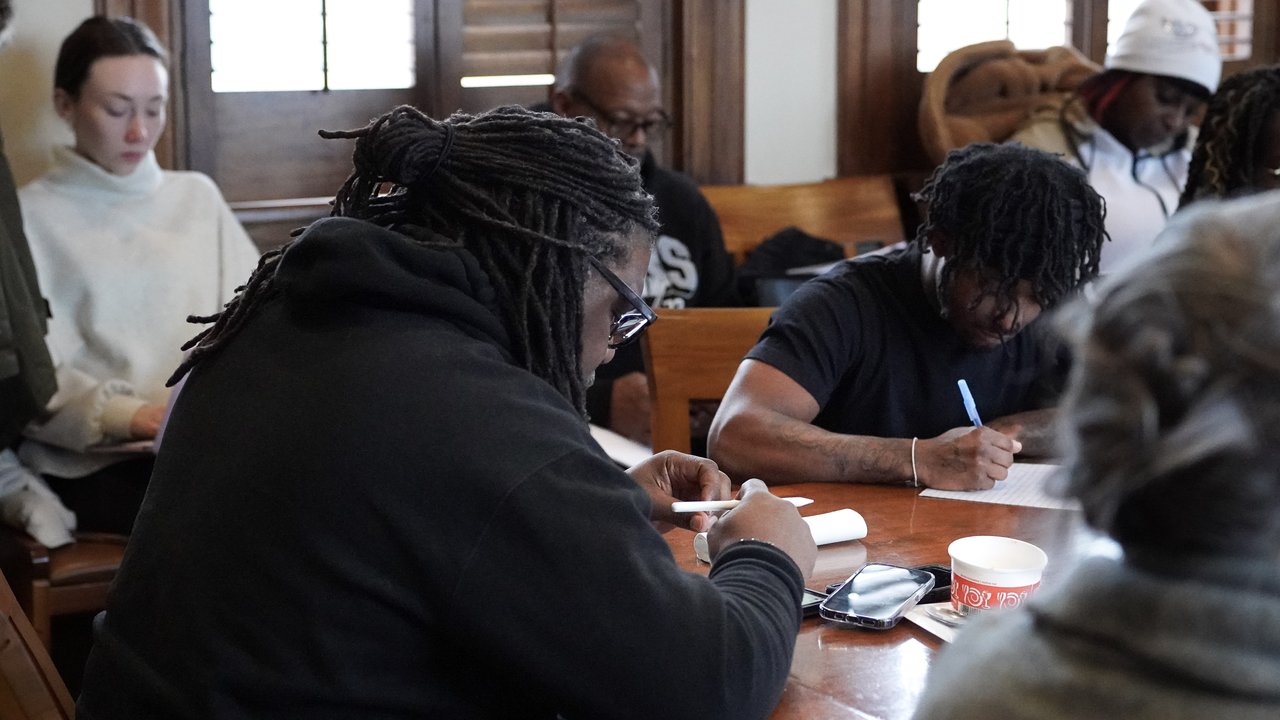
During a workshop the next day entitled “The Sentences that Create Us,” we began the session reflecting on a time when we felt judged—and how many of us carry the weight of such experiences. The workshop title was inspired by the 2022 PEN America book The Sentences That Create Us: Crafting A Writer’s Life in Prison (edited by Caits Meissner), providing attendees an opportunity to consider the stories they carry.
Page and Marquis’ visit served as a reminder that in order to make change, we must continue to push the boundaries and question the systems and assumptions we often take for granted. We are deeply grateful for their visit and look forward to working together to create more opportunities for storytelling.
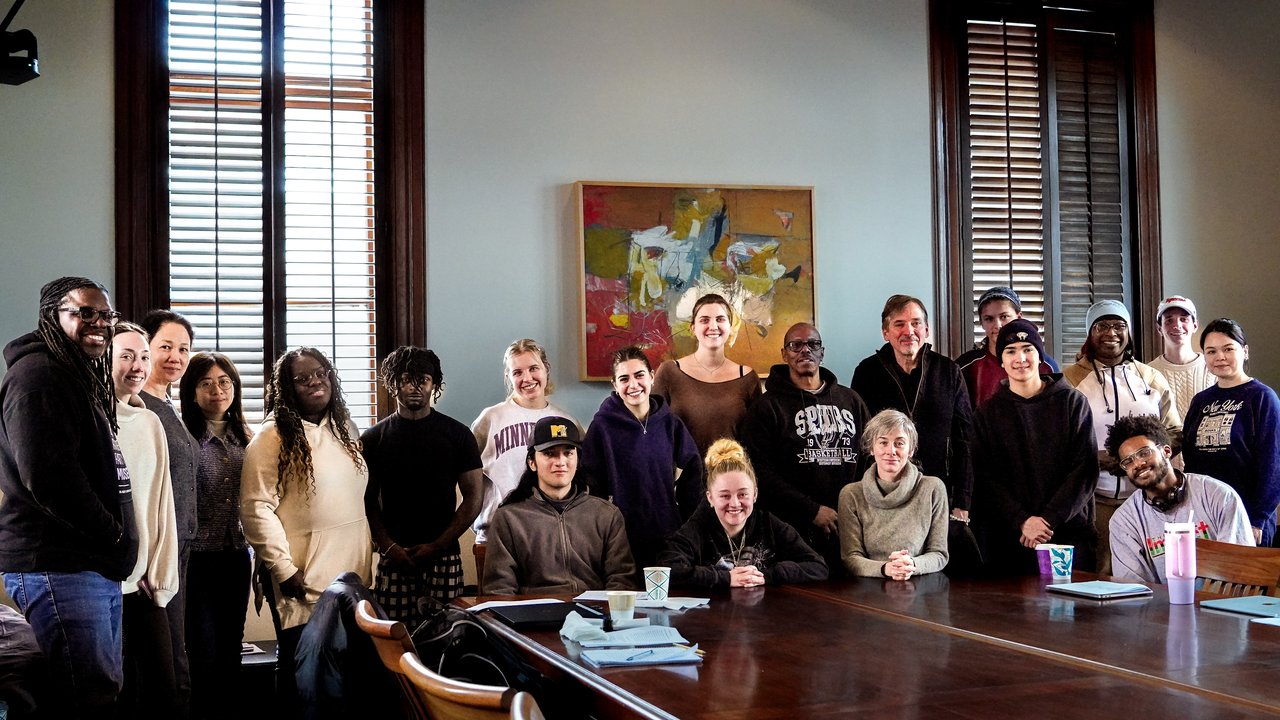
Along with the Humanities Center and Project Mend, this event was supported by the YMCA of Central New York—Downtown Writers Center, CODE^SHIFT, Humanities New York, the Center for Community Alternatives, the Engaged Humanities Network, and the Department of Writing Studies, Rhetoric and Composition.
Published: Feb. 23, 2026
Media Contact: asnews@syr.edu