
Supporting International Students
Six years ago, Ling LeBeau and Steve Schaffling saw an opportunity to address limitations for international students in traditional academic advising methods. Together, they created an extensive support system from scratch that helps international students thrive from day one at Syracuse University.
"Nothing like this exists," LeBeau said during a recent appearance on the Beyond the Quadcast podcast. "We did lots of research in this country and in the world. We just found only a couple of references—other universities—maybe they did a couple initiatives, but not comprehensively."
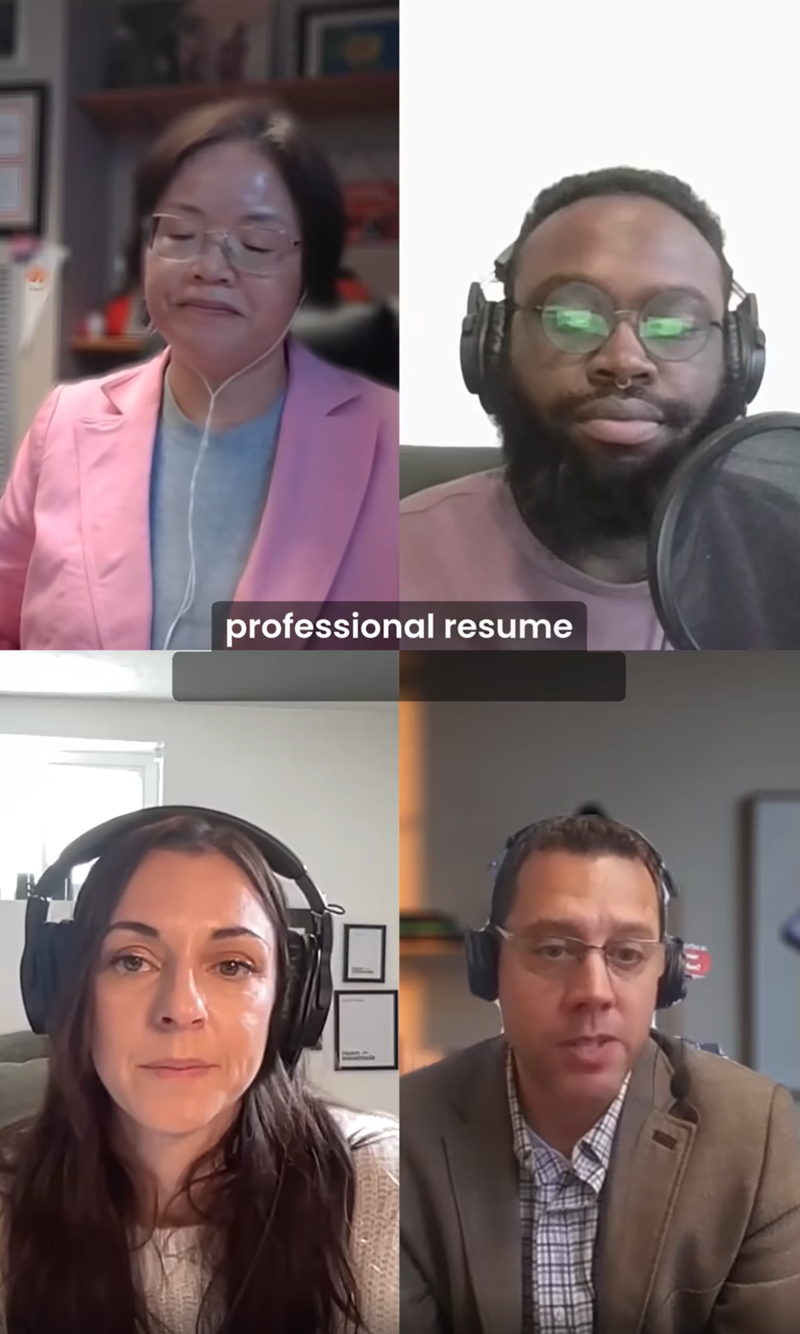
LeBeau, top left, and Schaffling, bottom right, appear on the Beyond the Quadcast podcast.
LeBeau, director of international student success for the College of Arts and Sciences and Maxwell School, and Schaffling, assistant dean of student success, created something different. Instead of treating international support as purely transactional—visas, immigration paperwork, basic orientation—they embedded it directly into the office’s complete academic and career advising program.
The approach worked. In fall 2022, the first-year retention rate for international students in A&S | Maxwell hit 91.5 percent—the highest since 2010. In 2024, the Office of Student Success received the Senator Paul Simon Spotlight Award for Campus Internationalization from NAFSA: Association of International Educators, one of the field's most prestigious honors.
This month, LeBeau and Schaffling were again recognized as leaders in their field as they appeared on two podcasts—Beyond the Quadcast and Adventures in Advising—sharing their methods with higher education professionals nationwide.
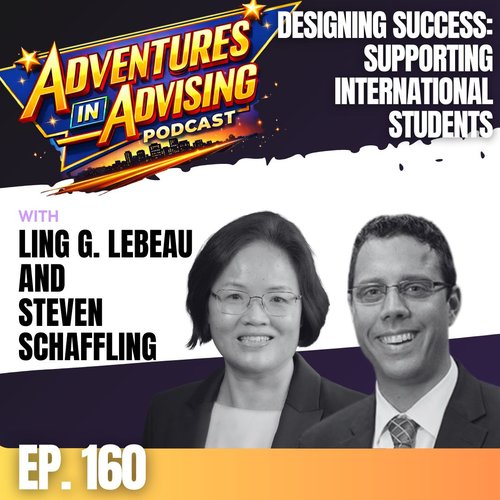
LeBeau and Schaffling appeared on the Adventures in Advising podcast.
The model has five pillars: pre-arrival onboarding starting in May, peer mentoring, advisor training, academic intervention and strategic communication. Behind each is a simple philosophy—meet students where they are and give them the tools they need before they know they need them.
"It's not enough anymore to be able to say what five courses you need next semester," Schaffling said. "It's about taking a sort of human capital approach. What skills are we helping the students build as they work with us?"
Here's what that looks like in practice for all undergraduates. Advisors work with roughly 250 students each, handling both academic planning and career development in the same conversation. The office completes 14,000 one-on-one meetings annually for about 5,000 students, plus 2,000 programming interactions and 600 to 700 alumni connections meetings. The alumni connections program recently surpassed 2,100 meetings between students and alumni.
CareerReady starts first semester. By the end of sophomore year, more than 1,000 students have completed professionally reviewed resumes. The office uses AI tools for resume feedback and mock interviews.
Communication happens on students' terms. The office uses WeChat for Chinese students and WhatsApp for others, LeBeau explained. Two-way texting is also available and a weekly departmental newsletter boasts an 85 percent read rate. Parents get regular updates, too.
"We look at parents as our partners," LeBeau said. "We'll work together to help their students succeed."
Every incoming international student gets a peer mentor—not as an option, but as standard practice. About 30 upper-class students serve as mentors each year, working with new students from May through December. They earn course credit instead of pay. Selection happens through group interviews that assess collaboration and genuine care for others, not just grades.
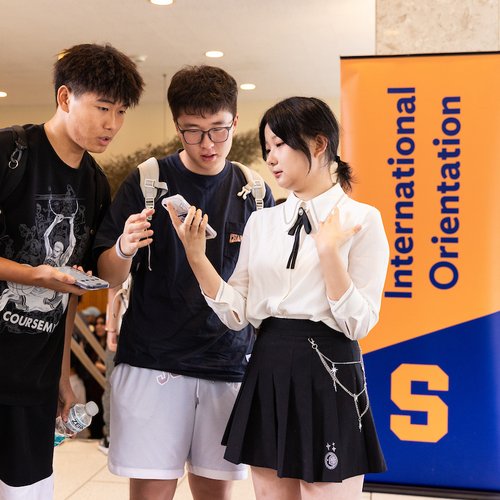
The University hosts International Student Orientation each semester.
"Every single summer, I have examples where students like their mentors so much, they even travel to their mentor's country to meet them," LeBeau said.
The work has consistently drawn national attention. LeBeau and Schaffling were featured in a March 2023 Chronicle of Higher Education article and published in Academic Advising Today.
Schaffling sees the transformation as part of redefining what advising can be. When he arrived seven years ago, he was the only doctorate holder in the office. Now, thanks to his encouragement, there are two full doctorates and five staff pursuing Ph.D.s.
National Recognition
LeBeau was also recently appointed to the editorial board of Insight Into Academia, a leading higher education publication that has served the community for over 50 years. In her role, she will contribute strategic insights, thought leadership and guidance on editorial direction.
The 17-member board comprises nationally recognized educators and administrators whose collective expertise strengthens the publication's role as a trusted source for advancing best practices, innovation and collaboration in higher education.
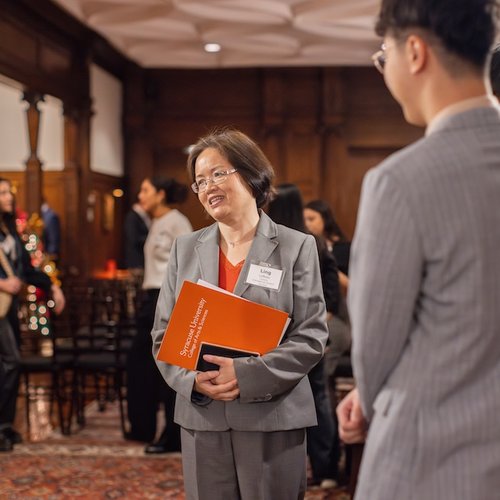
LeBeau meets with students at an international student event.
Supporting Undecided Students
The integrated advising model extends beyond international students. The office developed a one-credit course, Strategies for Career Success, specifically for undecided first-year students. The course has helped drive retention rates to 93 percent for undecided students—compared to a historical average of 86 percent. The program helps students build resumes, create LinkedIn profiles and understand professional networking before the end of their first year.
Published: Feb. 3, 2026
Media Contact: asnews@syr.edu