
Religion Professor Jim Watts Recognized for Singular Contributions to the Study of Scripture
When you think about analyzing scripture, you probably think about interpreting a text’s meaning. Jim Watts, professor in the Department of Religion, agrees that a scripture’s semantic content is crucial, but finds, after decades of study, that it is only one-third of what gives a text status. Scriptures drive some (not all!) religious traditions around the world—and yet, crucial components of their study are missing.

Jim Watts
After conversations in the 2000s with his former student, now colleague, Dorina Parmenter '09 Ph.D. (religion), it became clear that people ritualize religious texts not just by pouring over their interpretation, but also by accentuating their physical forms and performing their contents. Watts’ research raises a fascinating question: Is there more to a scripture than its words?
In his The Three Dimensions of Scripture (downloaded over 21K times on SURFACE alone), Watts lays out his theory: scriptures are ritualized not just in the semantic dimension, but also in iconic and expressive dimensions as well. The iconic dimension concerns the ways religious texts operate in a physical sense, distinguished, for example, by gilded pages, illumination, or ornate covers. The expressive dimension, for its part, helps elevate a text’s status when its contents are memorized, collectively recited, or put to artistic ends—such as being sung in hymns or acted out in plays. When consistently enacted together, Watts argues, these three dimensions transform a text into Scripture.
This new, more dynamic way of thinking about religious texts inspired Watts and Parmenter to launch the Iconic Books Project in 2001, surveying iconic texts across periods, cultures, and religious traditions. They recruited an interdisciplinary team of collaborators through three symposia in 2007, 2009, and 2010. The products of this collaborative research project have been published in the journal Postscripts and in seven volumes in a book series of essays published by Equinox.
The project’s success led Watts, Parmenter, and a third co-founder to establish the Society for Comparative Research on Iconic and Performative Texts (SCRIPT) in 2010. Still thriving today, SCRIPT fosters discourse about the social functions of texts that exceed their semantic meaning. The society sponsors programming at existing scholarly meetings and at colleges and universities across the globe.
Much the same way that Watts’ groundbreaking thinking shaped the trajectory of his scholarship, and the field of textual ritualization, it has also invigorated his teaching. Watts’ Bible class interprets what the Bible says while also giving students firsthand opportunities to touch, observe, and read historic texts through field trips to the Special Collections Research Center. In an increasingly digital age, these experiences invite the students to recognize the central place of a text’s materiality in its history. Watts’ distinctive attention to the importance of the physicality of scripture thus flows from his scholarship into the classroom.
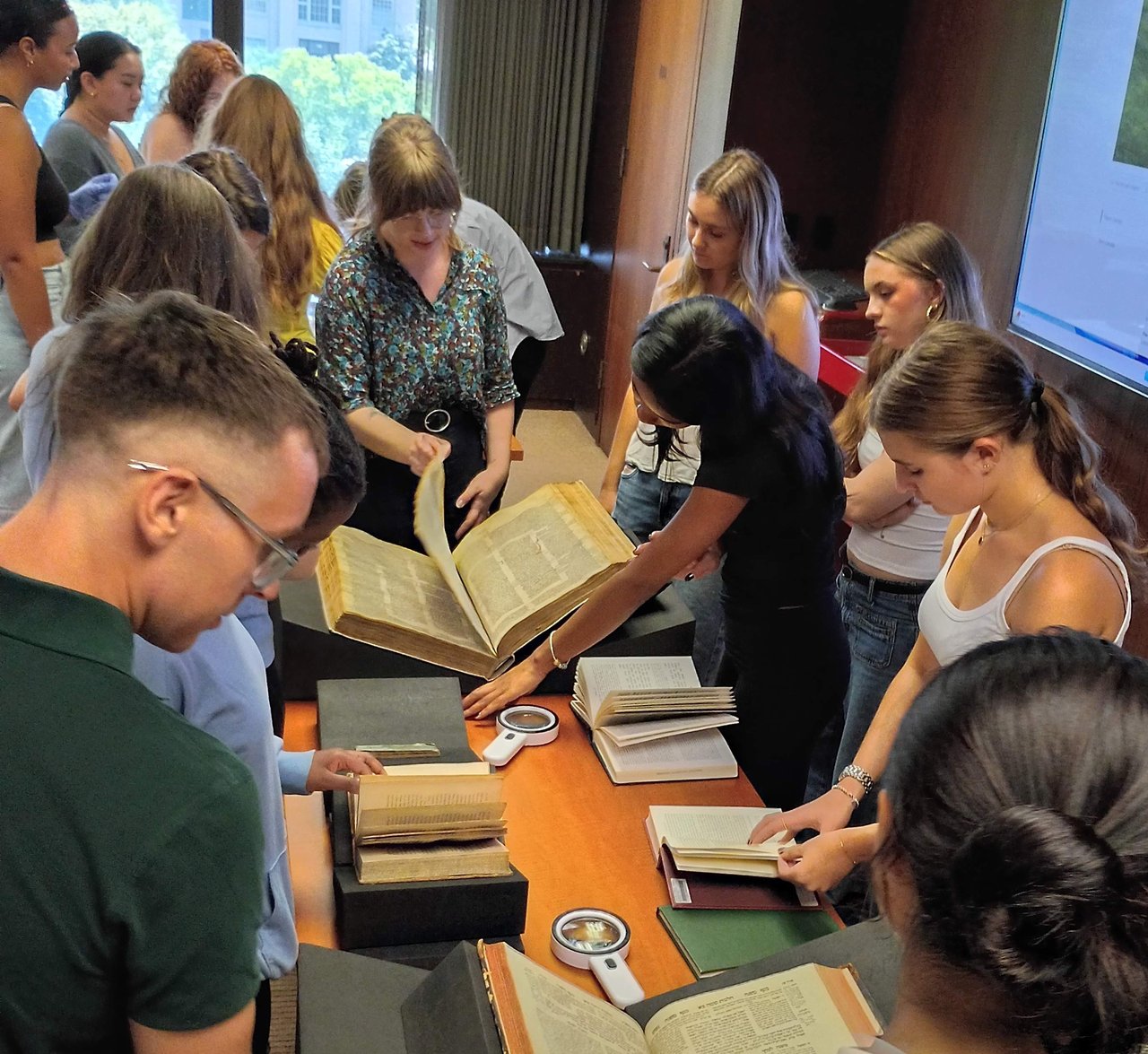
In an activity meant to mimic ancient textual transmission, students transcribe a damaged biblical passage. Even in English, the words can be impossible to make out, providing firsthand experience of the critical and creative decisions involved in preserving scripture across generations.
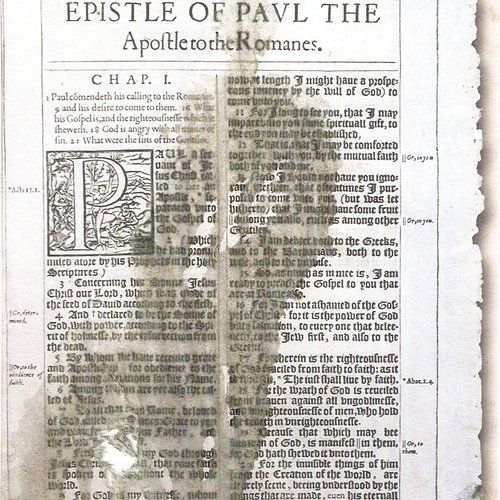
Copy of a page from the King James Bible used for a scribal exercise.
Watts’ career demonstrates the continued relevance of studying religion from an academic perspective. For Watts, scripturalization actually extends beyond religious texts to include cultural juggernauts like the U.S. Constitution, revealing how communities come to invest texts with special significance. Through Watts’ research, religious studies illuminates broader questions of authority and the fundamental ways people create, preserve, and transmit meaning.
In November, Watts’ career-long work illuminating the importance of the Iconic and Performative dimensions of scripture was recognized in a SCRIPT session titled “Celebrating the Work and Legacy of James W. Watts in the Study of Iconic Books and Texts” at the American Academy of Religion and Society of Biblical Literature annual meeting. This event brought together papers inspired by Watts’ work, currently being prepared for publication, alongside a video featuring more than 30 colleagues and former students reflecting on his impact on their scholarship and lives.
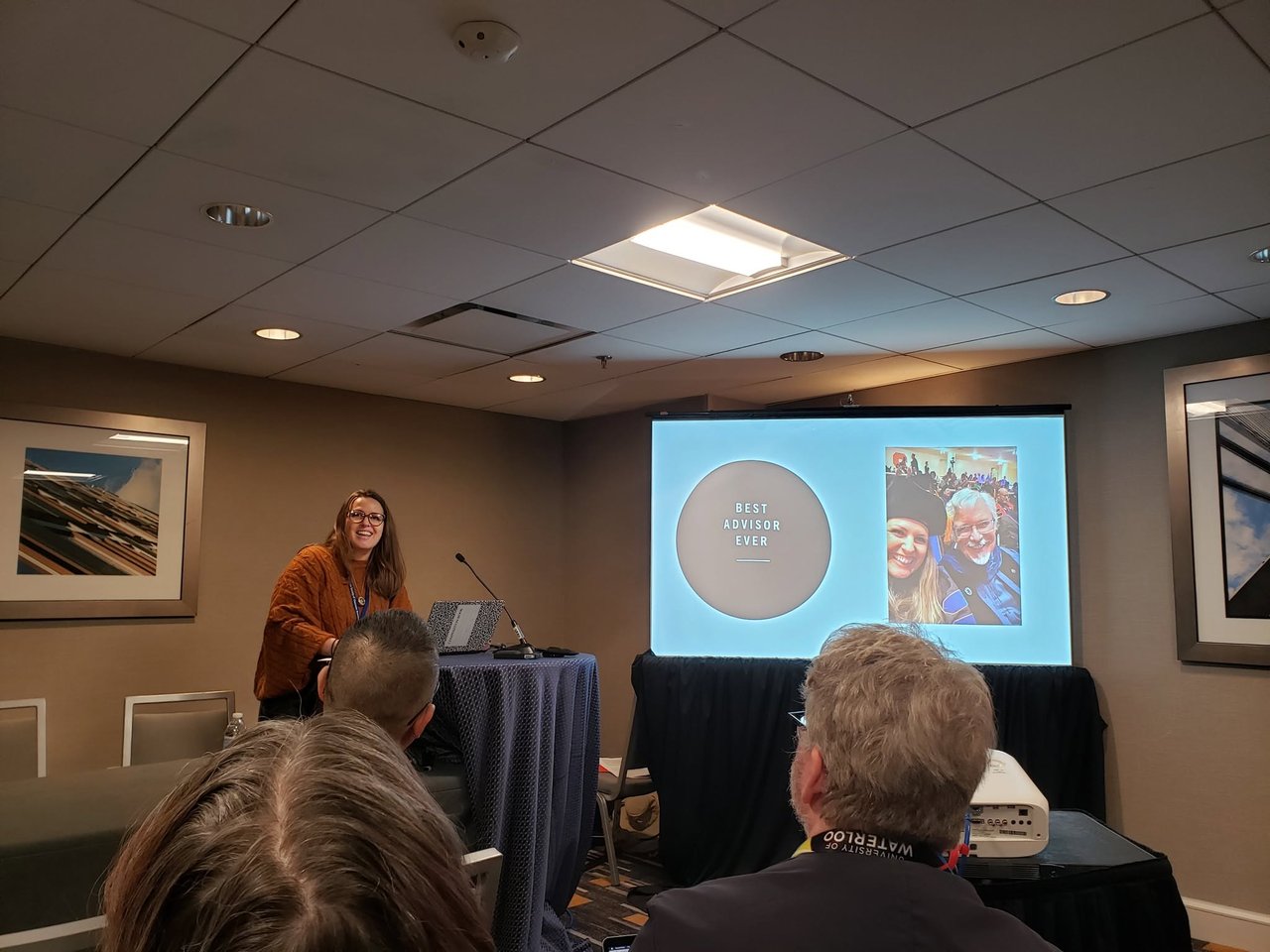
Beyond his groundbreaking work with SCRIPT, Watts also specializes in biblical texts in their ancient Near Eastern and later Jewish and Christian contexts. A career-long project, his third (and final) volume of a historical commentary on the book of Leviticus is currently in press. Watts has been invited to give talks, workshops and keynotes around the world at institutions like Trinity College Dublin, The University of Oslo and Harvard.
In a rather “meta” fashion, Watts’ observation that texts acquire power through community engagement is now enacted in his own legacy. The study of textual interpretation prior to Watt’s scholarship mostly focused on what a text means rather than how that meaning is sustained, felt, and embodied. His canon of ideas continues to take on new life through the community of people who carry it forward.
Published: Oct. 9, 2026
Media Contact: asnews@syr.edu