
Healing the Sacred
Editor's Note: The following article was written by Jess Willsbrough, a Ph.D. student and communications coordinator in the Department of Religion.
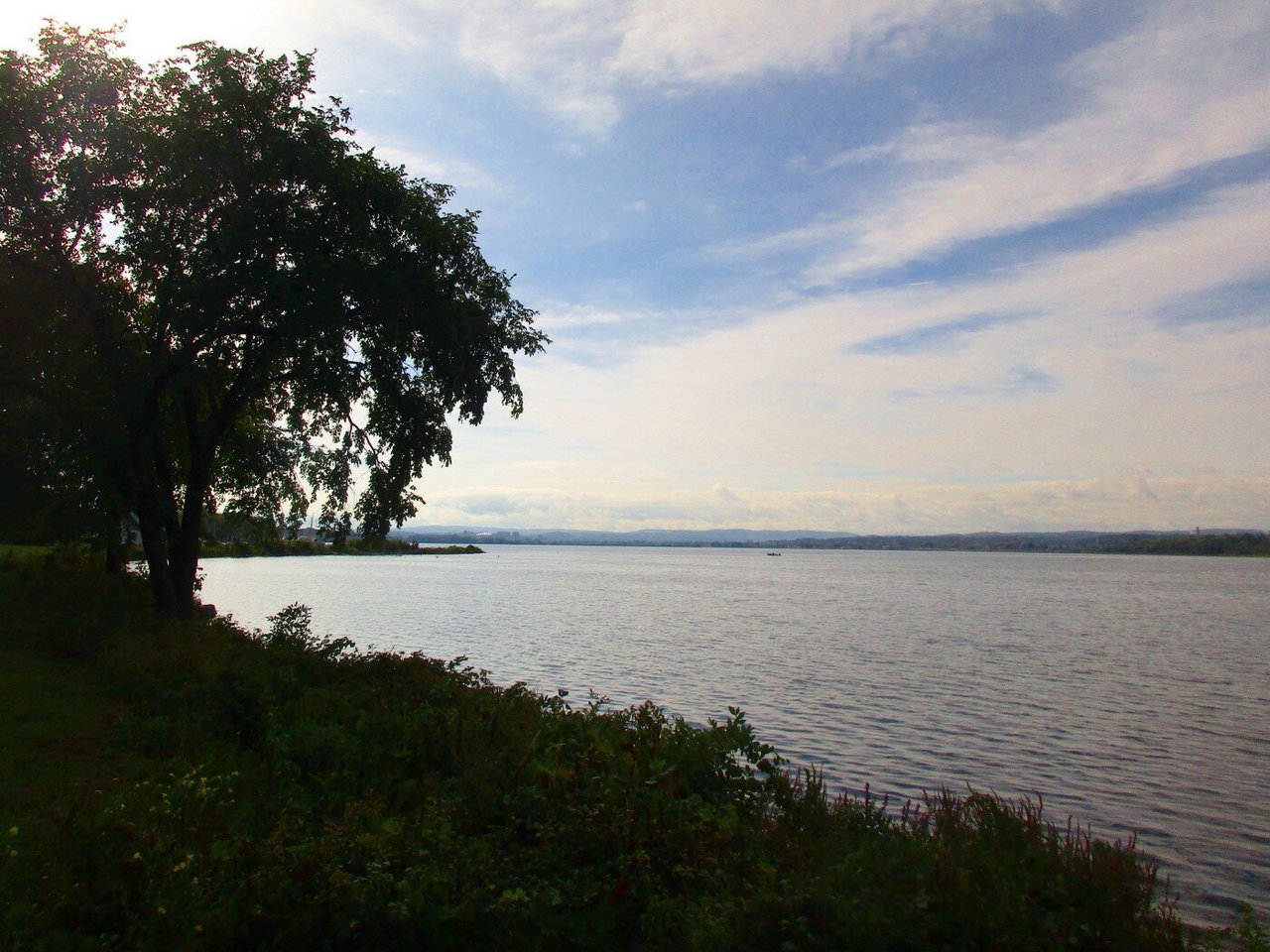
Onondaga Lake is notorious for being one of the most polluted lakes in the United States. Due to its history of industrial pollution, the lake contains harsh chemicals, excess sediment, and leeching wastebeds. Anyone in Syracuse knows that the lake isn’t safe to swim in (not since 1940).
What’s less well known is that Onondaga Lake is also the birthplace of democracy in the West. Centuries ago, on the shores of the lake, the Haudenosaunee hold that the Peacemaker brought together the Seneca, Cayuga, Onondaga, Oneida, and Mohawk Nations. These warring nations accepted the message of peace (Skä·noñh), laid down their arms (literally burying the hatchet), and formed the Haudenosaunee Confederacy on values of peace and cooperation.
Onondaga Lake’s waters hold histories in tension—Indigenous peacemaking and industrial destruction, caretaking and corporate abuse, reverence and disregard. It is here, at these vital intersections, where SU Department of Religion alumn Adam DJ Brett (Irish-American Ancestry) is doing his part to change how the lake will be understood and engaged in the future.
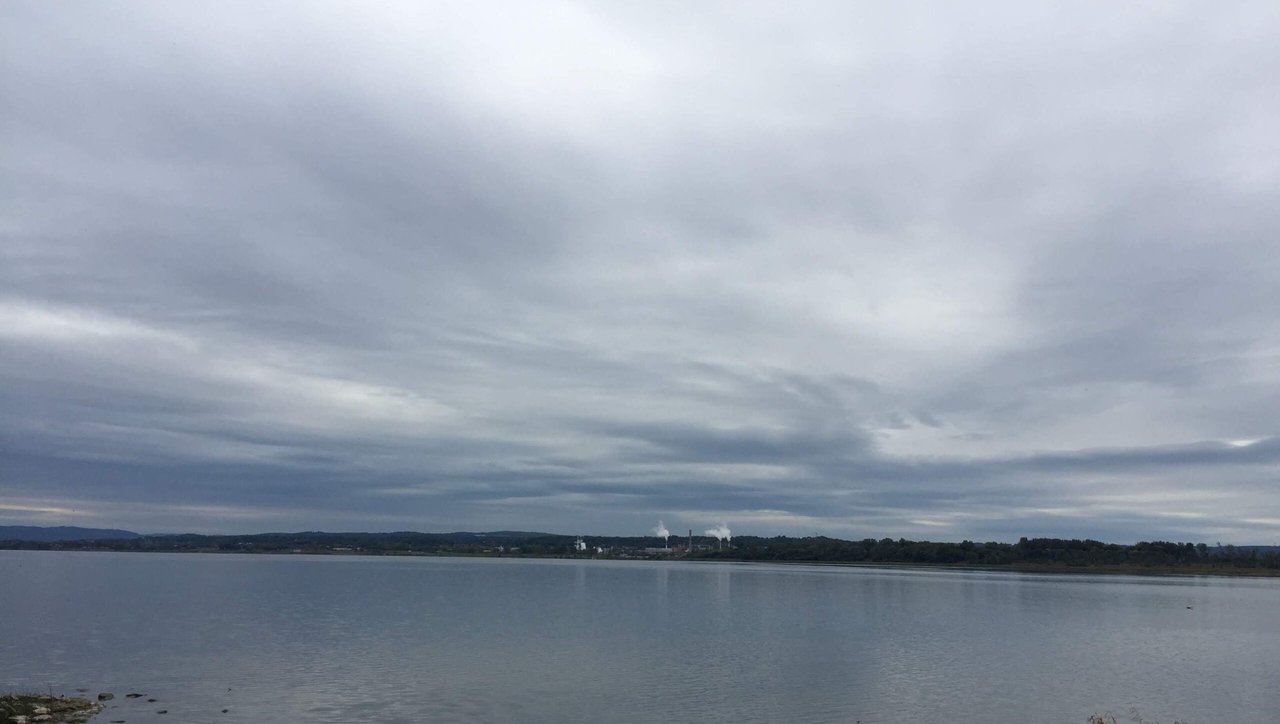
In keeping Onondaga Lake’s legacy of cooperation, Brett does not work alone. The podcast Healing the Sacred: Restoring Onondaga Lake through Story, Ceremony, and Public Scholarship is a co-produced with Betty Hill (neé Lyons) (Onondaga Nation Snipe Clan) and Patricia Vogt (Onondaga Descent). The podcast will be created in collaboration with AILA (the American Indian Law Alliance), where Brett works full time as an international research associate. This Indigenous-led organization “works with Indigenous nations, communities, and organizations in our struggle for sovereignty, human rights, and social justice for our peoples.” Healing the Sacred will weave together Haudenosaunee voices, histories, and ceremonial life as it shares ongoing efforts to restore Onondaga Lake as a site of spiritual, legal, and ecological importance. The podcast aims to help give back some of what has been taken away.
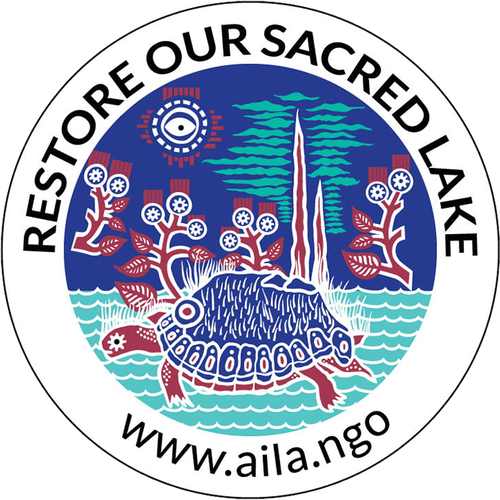
An illustration of a turtle in water surrounded by plants growing around and on top of it, petitioning to “Restore Our Sacred Lake.” (Courtesy of AILA)
Healing the Sacred will form a vital bridge between scholarship and public culture. The podcast aims to bring the stories of Indigenous relationship to Lake Onondaga to those who may think of it differently.
In 1613, the Two-Row Wampum agreement was made between the Haudenosaunee and Dutch newcomers in what is today Albany. The original treaty—intended for all future generations—pledged that both parties would commit to friendship and peace. The “two rows” of purple beads represent two canoes moving parallel in a shared river, where “Neither… will try to steer each other’s vessel as we travel side by side down the river of life.” With Healing the Sacred, Brett, Hill, and Vogt mean to practice the living treaty of the Two-Row Wampum. Brett received the American Academy of Religion’s inaugural Public Scholarship grant to support in this effort.
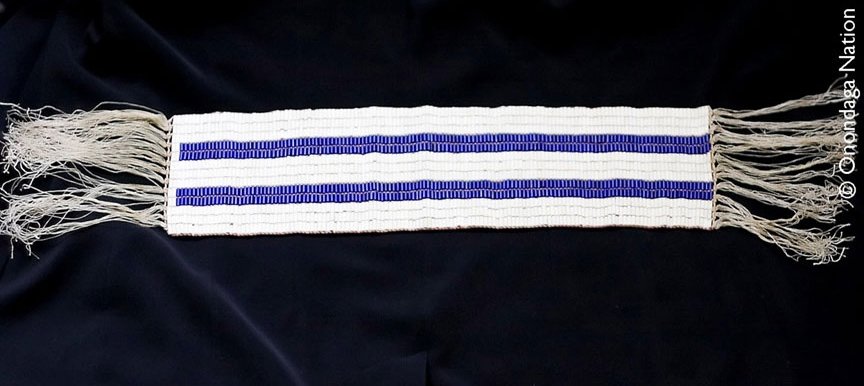
This commitment, symbolized by the fact that the two purple rows run off the end of the belt, was shown to last forever. But the pollution, possession, and mistreatment of Onondaga Lake make clear that the treaty has not been upheld. A project like Healing the Sacred cannot give this painful history a happy ending. It is, nonetheless, a reminder that the treaty was never intended to end, and a sign of renewed commitment to peace at, for, and with the Lake. The histories of disregard and exploitation in our past do not have to be our future.
Sources:
https://commons.lib.jmu.edu/ijr/vol9/iss1/2/
https://onondagalakehistoricalecology.weebly.com/
https://zach-krahmer-onondaga-lake.vercel.app/
https://doi.org/10.31261/rias.13185
https://papers.ssrn.com/sol3/papers.cfm?abstract_id=5890242
Published: Nov. 4, 2026
Media Contact: asnews@syr.edu