
A Summer of Discovery: Jay Zemel Fellowship Opens Doors for Physics Students
Last summer marked the inaugural year of the physics department using the Jay Zemel endowment fund to support undergraduate physics majors learning and conducting research in our labs.
Zemel '49, G'53, G'56 strongly believed in hands-on learning. Before he passed away in 2023, he established the Zemel Undergraduate Research Experience Endowed Fund with a $1.5 million gift. After months of preparation, 10 physics majors joined eight faculty members for a summer of discovery across multiple research areas.
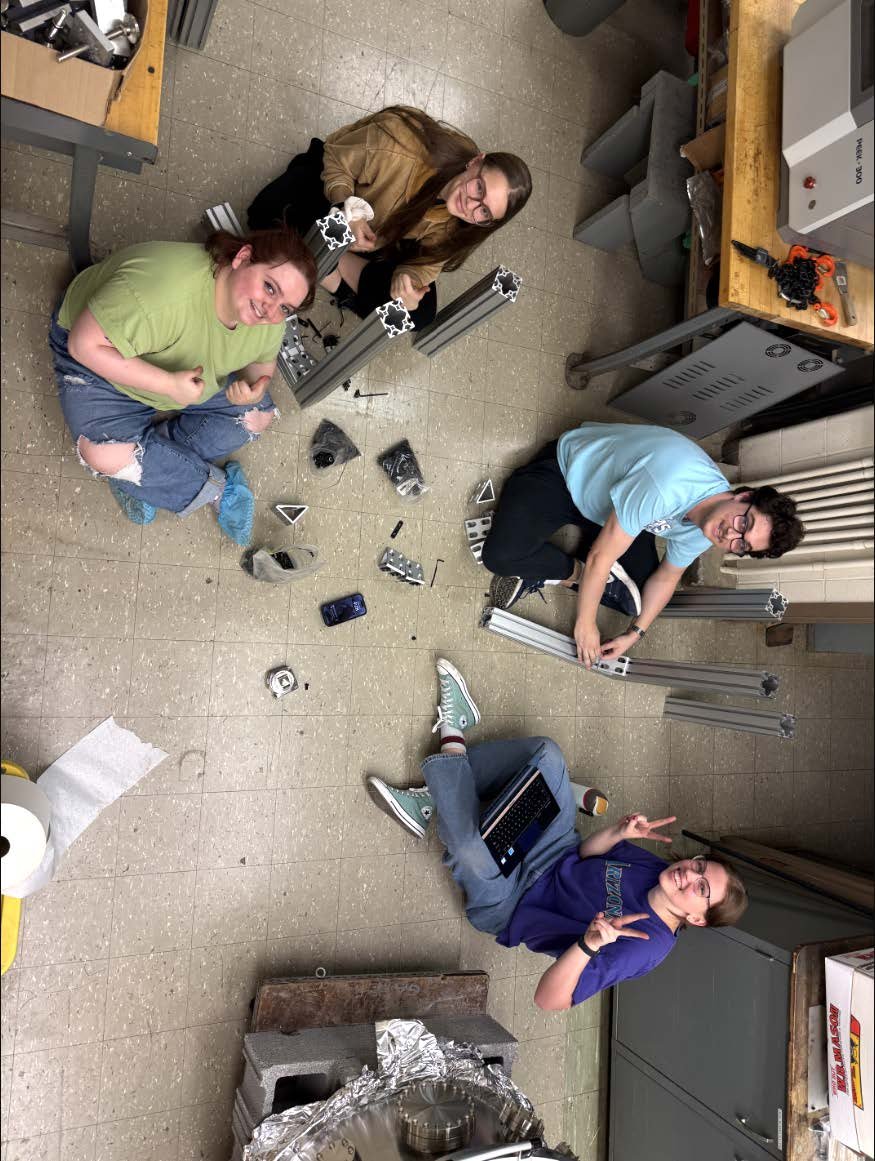
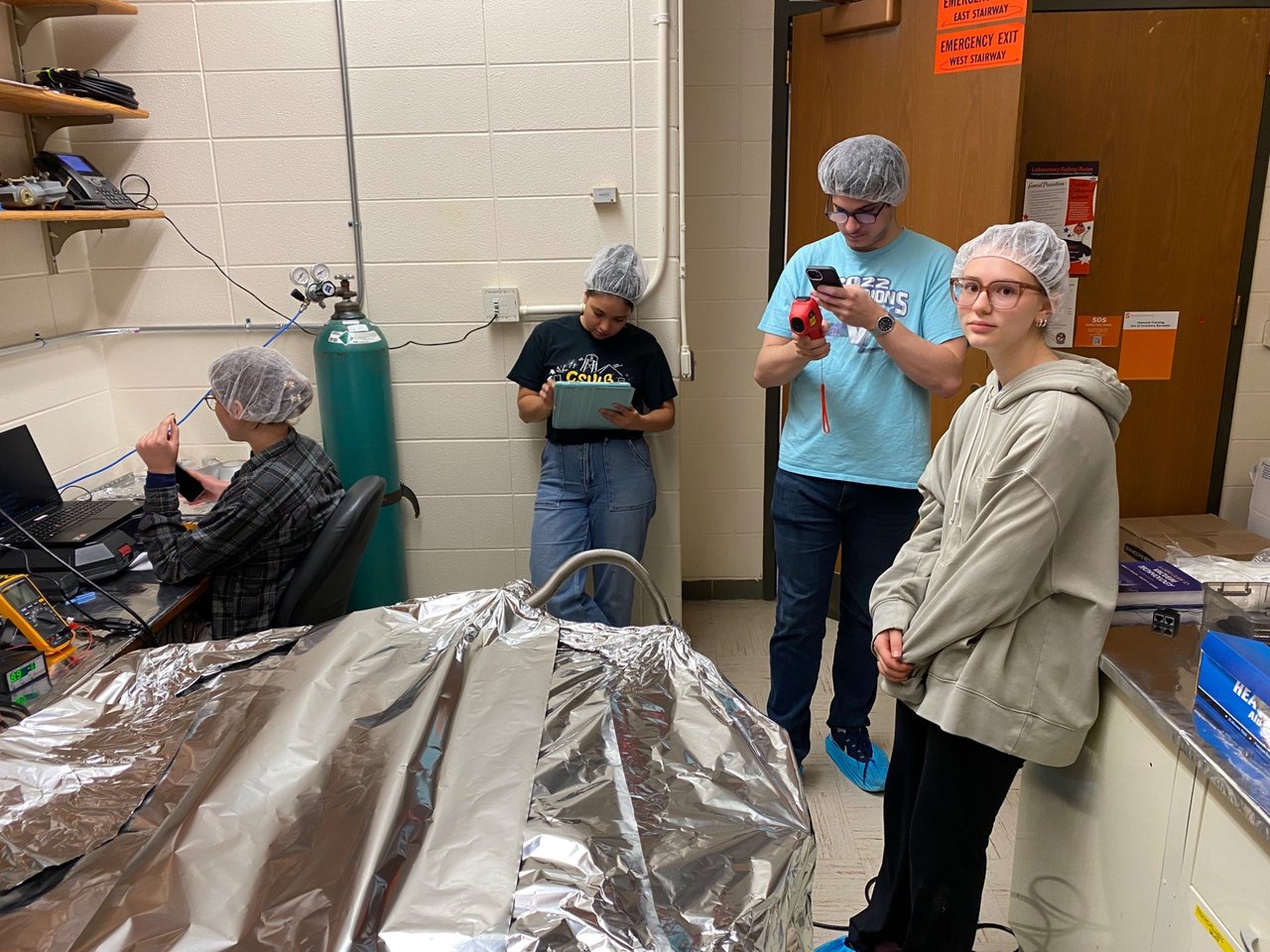
In the Gravitational Waves Lab, Ella Burr and Carter Halpin worked with Professor Craig Cahillane building a world-record 1 MW laser cavity. Abigail Torres explored Bayesian inference in gravitational-wave data with Professor Collin Capano, while Jada Garofalo—now a Ph.D. student in our program—evaluated lunar-based observatories for detecting neutron star binaries with Professor Alex Nitz.
Several students focused on Soft Matter Biophysics. Paul Chen and Victoria Li imaged cell shapes and movements in early embryos to understand tissue development. Eadin Block developed a mechanical metamaterial capable of performing simple computations, work that will form his senior thesis. Laci (Elaysia Joh-Net Jackson-Johnson) made such significant contributions to research on microtubule organization that she earned co-author status on the manuscript Ph.D. student Julia Bourdeau is writing. Ianne Veta analyzed temperature dependence in protein nanopore sensors with Professor Liviu Movileanu and continues this work today.
In particle physics, Filip Savkovic investigated materials for high-precision silicon pixel tracking detectors at CERN's LHCb accelerator, working with Professors Marina Artuso and Ray Mountain.
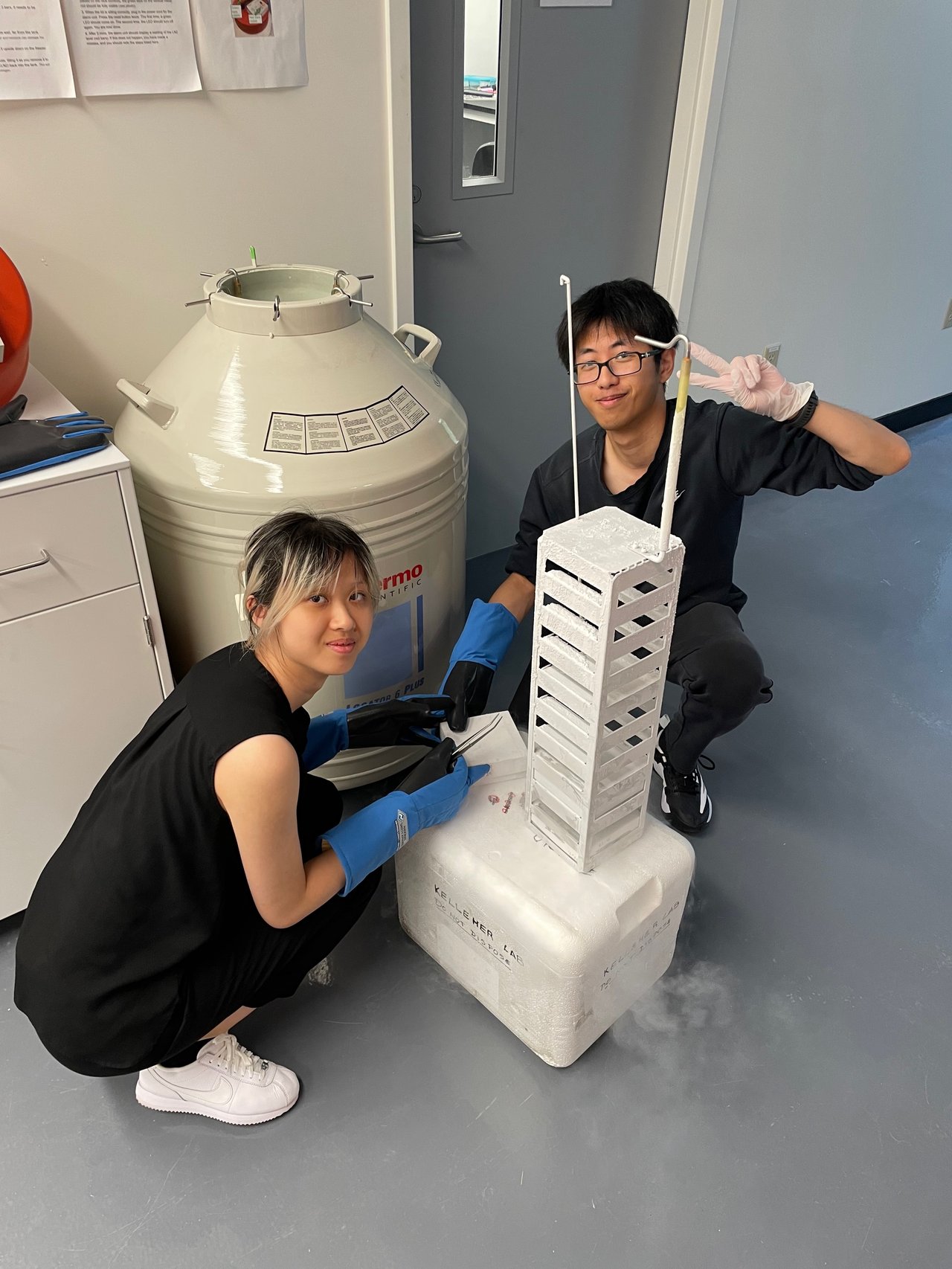
Professor Colm Kelleher, who mentored Victoria and Paul this summer, explained: "Mentoring undergraduates means giving them direct access to real scientific problems and expecting them to engage with those problems seriously. It's not about giving them a scripted set of tasks; it's about helping them learn how to think, troubleshoot, and make decisions in an environment where the best approach isn't known in advance."
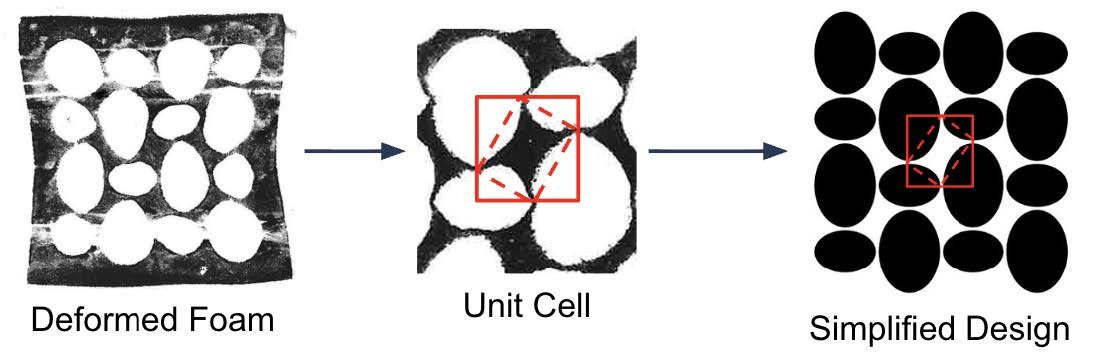
Eadin Block's research illustrates how breakthroughs often come from unexpected places. While testing foam prototypes, which he explained is a faster alternative to the eight-hour 3D printing process, one repeatedly tested sheet deformed in an unexpected way, but it matched exactly what he was trying to achieve with his elastic materials. By studying that deformed foam's geometry and simplifying the design, he successfully created a bistable sheet capable of switching between two stable configurations.
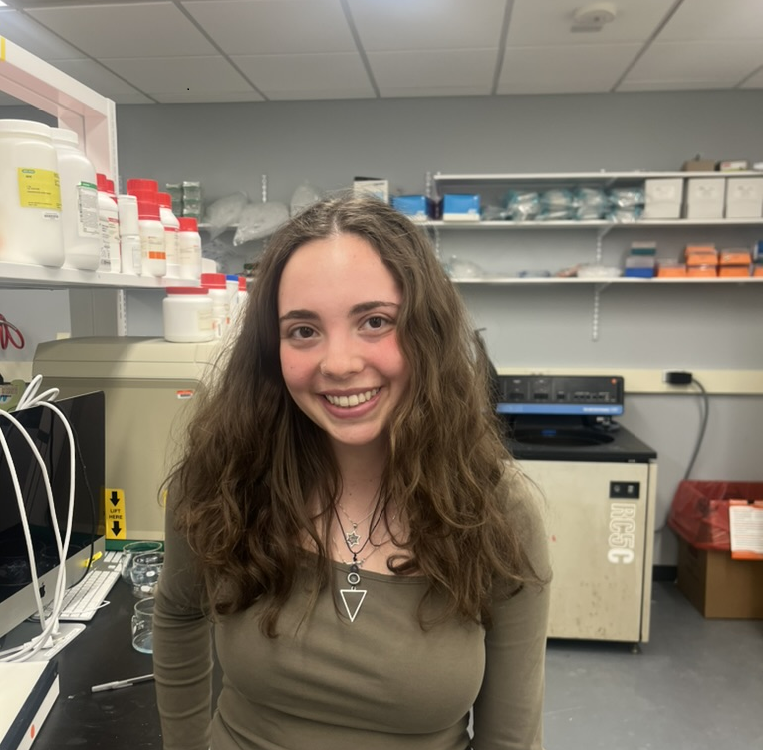
Ianne Veta reflected on how this experience is shaping her future. “My research required a greater sense of independence that I had not experienced in classroom learning. This was my first experience in a biology-related discipline and has since inspired me to pursue a pre-health track. Discovering how small-scale science in an interdisciplinary environment can truly benefit healthcare made me realize I wanted to gain a direct role in improving the lives of those around me.”
This summer, 10 students learned what it really means to do science—asking questions without known answers, troubleshooting when experiments don't work and experiencing those breakthrough moments that make it all worthwhile. Jay once wrote: "Syracuse Physics was and still is a vast entryway to the future." Thanks to his generosity, that door opened for these students this summer, and it will keep opening for many more to come.
Published: Dec. 5, 2025
Media Contact: asnews@syr.edu