
The Art of Translation
In an increasingly interconnected world, the ability to understand cultures beyond our own has never been more important. One of the most powerful ways to achieve that knowledge is through literature and cultural work. Accessing the stories, texts and art that reflect the daily lives and values of people across the globe makes one world legible to another and offers the potential to bridge divides.
Enter the translator, an artist who makes creative yet critical judgement calls. Something misunderstood is that translation involves more interpretation rather than a one-to-one exchange of words. It requires an interdisciplinary approach and deep cultural knowledge, whether that be immersing yourself in Caribbean Spanish sociolinguistics, researching 19th-century whaling vocabulary or delving into Greek mythology to translate a passage about the Milky Way Galaxy. Such answers can’t be found in the dictionary or Google Translate.
Hear About Creativity in Translation
Syracuse Symposium, the Humanities Center's annual public events series, is organized around a theme. This year's theme is "Creativity," and the March 26 "Creativity in Translation" events are among its featured programs.
First, A&S professor Sevinç Türkkan will facilitate a workshop (register here) on the creative, linguistic and cultural challenges of rendering Arabic into English. Laura Fish, acquisitions editor at SU Press, will also discuss the legal and practical aspects of publishing translated works. Later, at 6 p.m., Palestinian author Ibtisam Azem — whose novel "The Book of Disappearance," published by SU Press, was longlisted for the 2025 International Booker Prize — will join her translator, Sinan Antoon, for a bilingual reading from the original Arabic and its English translation, followed by a conversation on writing and translating. This event is free and open to the public.
Humanities Center Director Vivian May notes, “These timely events reveal the care and expertise translation requires. They also foreground an important novel and bring together its author and translator for a rare discussion about storytelling, memory and navigating the art and politics of translation.”
Experts’ Invisible Artistry
A&S faculty members Türkkan, Ana Mendez-Oliver and Lauren Surovi work across different languages, time periods and forms — literary fiction, opera, Renaissance scholarship — but each demonstrates that translation is among the most important yet underappreciated intellectual arts in the humanities in the world today. They agree that, if done well, this invisible work is rarely recognized for what it actually involves.
Surovi put it another way, borrowing a quote from Israeli writer Etgar Keret: “Translators are like ninjas. If you notice them, they’re no good.”
A Prisoner’s Story
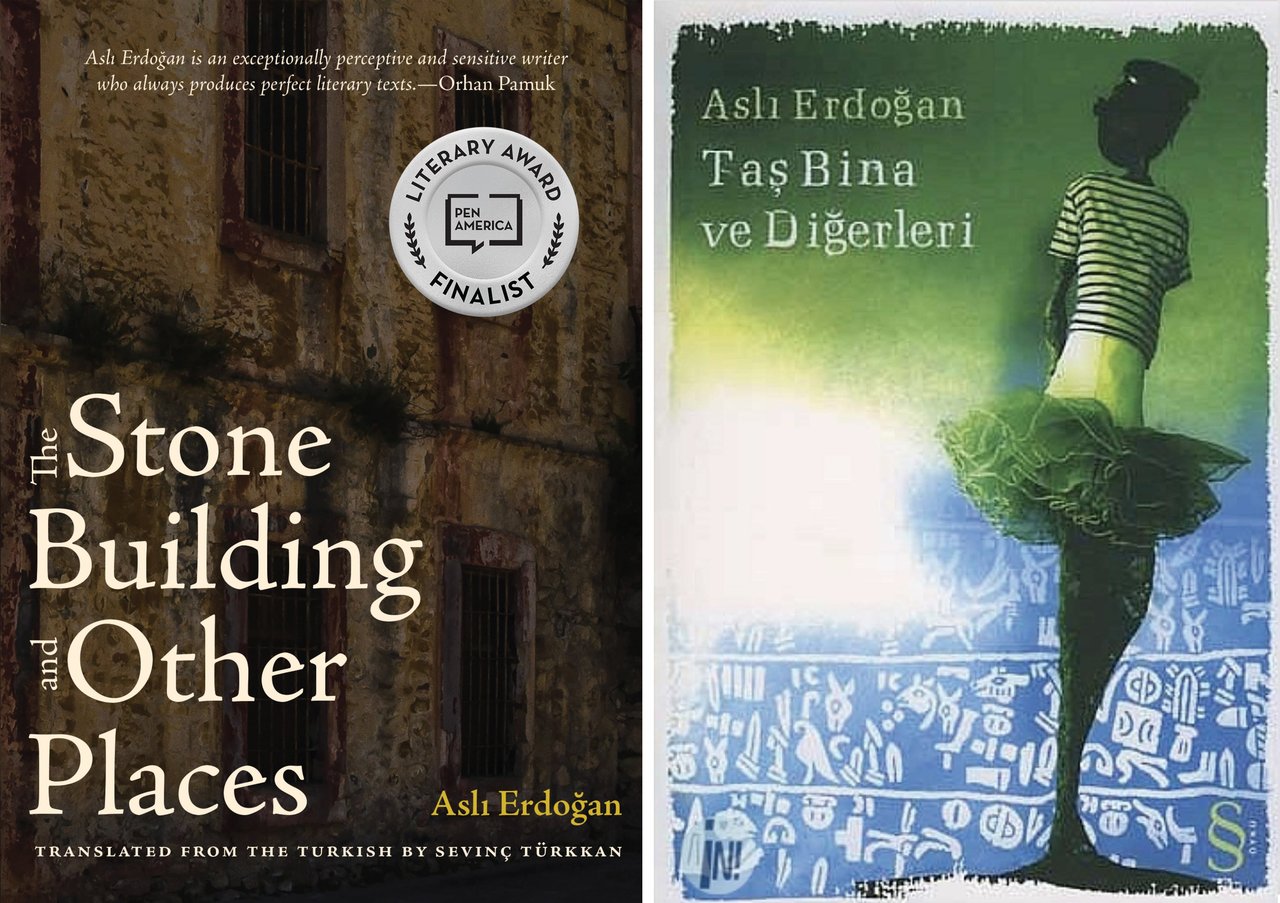
Türkkan, an associate teaching professor in the Department of Writing Studies, Rhetoric and Composition, did not set out to publish a translation. She began translating “The Stone Building and Other Places,” a collection of three short stories by the Turkish author and human rights activist Aslı Erdoğan out of curiosity. She had no contract, no publisher and no deadline, but was teaching Erdoğan’s fiction and wanted to make it accessible to her students.
That all changed when the Turkish government arrested Erdoğan in 2016 and imprisoned her.
“I went out of my way to talk to publishers and say, this work is important,” Türkkan says. “Nobody will know about this writer if we don’t get it into English.”
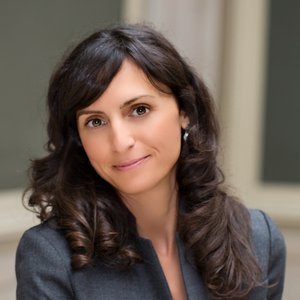
Sevinç Türkkan
City Lights publishers accepted the translation. When “The Stone Building and Other Places” appeared on shelves in 2018, it was a finalist for the PEN Translation Award. Erdoğan, still under a travel ban, could not travel to Amsterdam to accept a European Cultural Foundation award the book had earned. Türkkan went in her place and read Erdoğan’s acceptance letter before the audience.
“As the translator, I really was also her agent,” Türkkan says. “Working on her behalf, advocating on her behalf, receiving awards and reading her acceptance letter.”
The translation itself required months and months of intense work and careful thought around every decision—three months to produce a single version of the book followed by an eight-month revision. Sometimes, a successful day meant translating a single paragraph.
For example, Turkish uses a single third-person pronoun — “o” — where English requires he, she, it or they. In Erdoğan’s novella, that ambiguity is intentional. Türkkan had to decide, sentence by sentence, whether to clarify or preserve it. In another instance, she opted to leave “abla,” the Turkish word for “sister” in place as “a little reminder that this is an English translation from the Turkish language."
A passage involving the Milky Way and the zodiac resisted every direct approach. Eventually, Türkkan turned to Greek mythology to find English language capable of matching the original’s poetry. Erdoğan later told her the English translation was the most poetic version of her books.
“I was like, ‘I passed the test,’” she says. “I see the translation as the metaphor of the original. I never claim that my translation is the last word on this book. I would like to see more translations of it. The sum total of multiple translations can help us understand the original better."
Türkkan advocates for broader recognition of translators’ contributions and says translators should be credited as co-writers of the books they translate. She notes that translations account for roughly 2.7 percent of all books published in the U.S. each year. In Turkey, that figure is 85 percent. Unfortunately, she notes, only a small handful of colleges in the U.S. offer programs to train translators.
Türkkan was born in Bulgaria and moved to Turkey with her family when she was 11. Growing up, she was caught between two languages. In Bulgaria, her parents spoke Turkish to her at home to counter the Bulgarian she was absorbing everywhere else. When the family moved to Turkey, they switched and started speaking Bulgarian at home.
She never felt fully comfortable in either language. She spoke Turkish with a Bulgarian accent and Bulgarian with a Turkish accent, while her Turkish name marked her as an outsider in Bulgaria.
Türkkan started learning English at age seven in Bulgaria, ironically from a French instructor her mother hired. She describes this as her "mom's legacy," as her mother believed that "language meant life" and wanted her children to have "multiple lives." Later, Türkkan lived in Germany during her graduate program, picking up yet another “life.”
Interpreting Culture
Mendez-Oliver, an assistant professor of Spanish and Hispanic literatures and cultures, has been the Metropolitan Opera’s principal Spanish translator for 14 years. Mendez-Oliver came to the role through an existing partnership between the Met and Columbia University's Department of Latin American and Iberian Cultures, where she was completing her Ph.D. A colleague already working with the Met brought her in after the opera house sought trained translators to replace a previous subtitler whose work had drawn audience complaints.
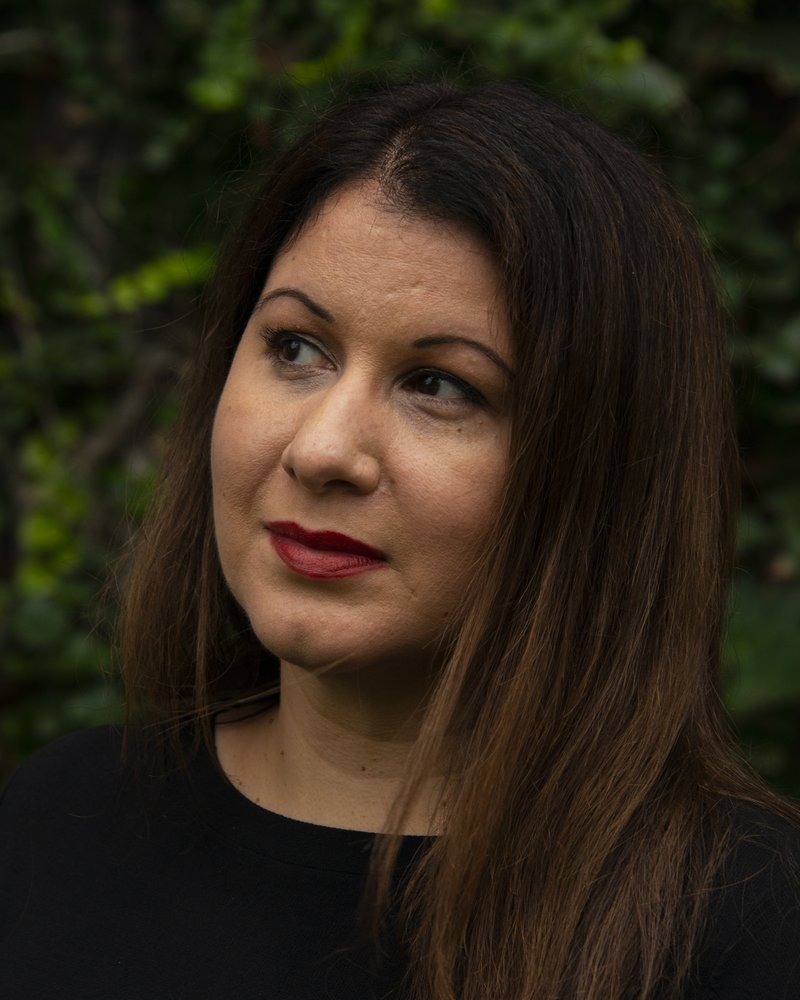
Ana Mendez-Oliver
Each opera presents its own research challenge. To translate “Porgy and Bess,” Mendez-Oliver studied Spanish sociolinguistics to find a dialect that could approximate the phonetic qualities of Southern Black vernacular in English, eventually settling on Caribbean Spanish. For “Moby Dick,” she took a Spanish-language tour of a whale museum in Nantucket — whaling has no deep tradition in the Hispanic world — to build the necessary vocabulary. Last season’s “Grounded,” an opera about a female Air Force pilot, required research into 21st-century aerial warfare terminology.
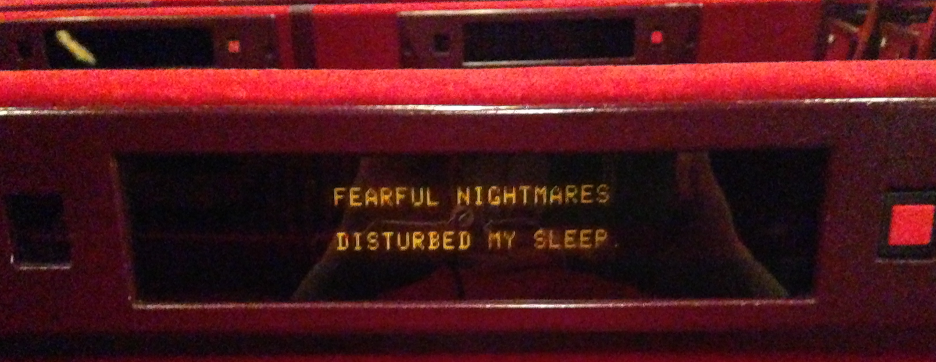
Opera subtitles carry a major constraint: 38 characters per line, two lines per title. English tends to be more compact while Spanish takes more space. In a scene from Giuseppe Verdi’s “Don Carlos,” a letter describes a meeting spot near a fountain shaded by a tree. The line fit easily in English, but not Spanish. Mendez-Oliver decided to cut the tree. The fountain reappears in later supertitles; the tree doesn’t.
“The fountain was the main piece,” she says. “The tree just happens to be there — and they can look at it on stage.”
Her subtitles reach audiences in 10 countries through the Met’s HD Live broadcast series, which requires a Spanish that works across regions — from Spain to Argentina. Mendez-Oliver also pushes back when the Met’s choices don’t serve her audience. When productions of “Carmen” and “La Forza del Destino” shifted to “Roma people” in place of “Gypsies,” she argued the Spanish equivalent — gitanos — was too culturally embedded to substitute. The Met deferred to her judgment.
“I talked to a student the other day and she said, ‘Oh wow, I didn't know it was so complex.’ You're interpreting text and you're interpreting culture,” Mendez-Oliver says. “Is it a word for word? No, that would be a Google Translate translation. It takes a lot of research to understand each text. Where is it coming from? What is the period? What is the new production? It's a full task and art form that you develop and you keep improving for years.”
Part Linguist, Part Time-Traveler
Surovi’s relationship with translation began as an undergraduate at Syracuse University, where she has since returned as assistant teaching professor of Italian and Italian language program coordinator. She studied with Beverly Allen, a professor emerita and prolific literary translator, and requested an independent study on the art of translation as part of her Italian degree.
“I was so fascinated by this work of bridging worlds through language,” Surovi says. “Translation has been a part of my life ever since.”

Lauren Surovi
Her specialty is Italian Renaissance literature and culture, which means every translation involves two kinds of transformation: linguistic and historical. “You have to become part historian, part philologist, part time-traveler,” she says. Her work with Pietro Aretino, a Renaissance author known for sharp wit and bawdy wordplay, makes that challenge concrete. Aretino’s double-entendres often involve terms that don’t appear in a standard dictionary. Surovi has spent hours tracing the etymology of single words simply to understand the joke before she can begin rendering it in English.
“Understanding humor across languages and centuries is perhaps the hardest aspect of this type of work,” she says.
Surovi, who co-authored a textbook on Italian reading and translation, uses a deceptively simple example to show students how deeply language reflects culture. Italian has no native word for “privacy.” The modern Italian term is simply “la privacy,” borrowed from English. Historically, the concept of individual solitude — free from communal life — was less central to Italian culture. The language had no need for the word.
“Language reflects and describes lived experience,” she says. “This sort of tension between reality and our ability to describe it highlights the cultural mediation necessary in the art of translation.”
Published: March 20, 2026
Media Contact: spgrogan@syr.edu