
Stay Aware of Juvenile Hawk Activity on Campus
Members of the Syracuse University community may notice more red-tailed hawks around campus this summer as seven young hawks from three nesting pairs have successfully fledged and begun exploring the University and surrounding neighborhoods.
Campus is currently home to three red-tailed hawk pairs: Cliff and Ensley on South Campus; Sarah and Jesse, whose territory includes the western portion of main campus, SUNY ESF and Oakwood Cemetery; and Oren and Ruth, whose territory includes the northern and eastern portions of main campus. This year, the three pairs collectively raised seven chicks, all of which have now left their nests and are learning the skills they need to survive on their own.
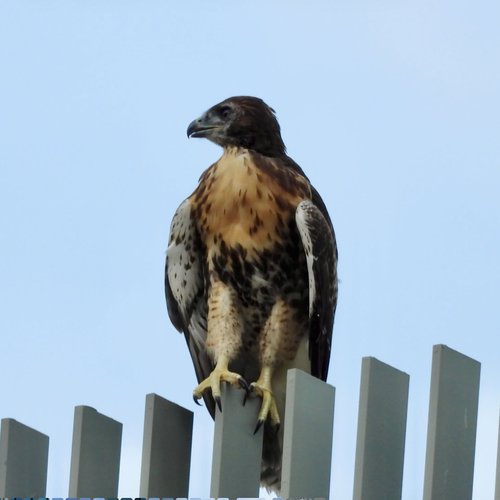
JS5, the offspring of resident hawks Sarah and Jesse, perches on the SUNY ESF Gateway Center roof after successfully fledging from the pair’s nest atop Syracuse University’s JMA Wireless Dome. (Photo by Anne Marie Higgins)
As fledglings mature into juvenile hawks, they remain dependent on their parents throughout the summer. During this critical learning period, the young birds can be seen in a variety of locations around campus. Juvenile hawks often perch on trees, rooftops, ledges, gutters and windowsills. They may also spend time on the ground while practicing hunting and developing their flight skills. Loud screeching is common as juveniles call to their parents for food and attention.
How to Safely Observe Hawks
As hawk activity increases over the summer, the campus community is encouraged to give the birds plenty of space. It is normal to see a juvenile hawk standing or walking on the ground, pouncing on sticks or insects, or resting in unusual places while it gains confidence and strength. Do not assume a grounded hawk is injured or unable to fly. In many cases, the bird is simply learning and may walk or fly away after a few minutes. Under no circumstances should anyone attempt to touch or handle a hawk.
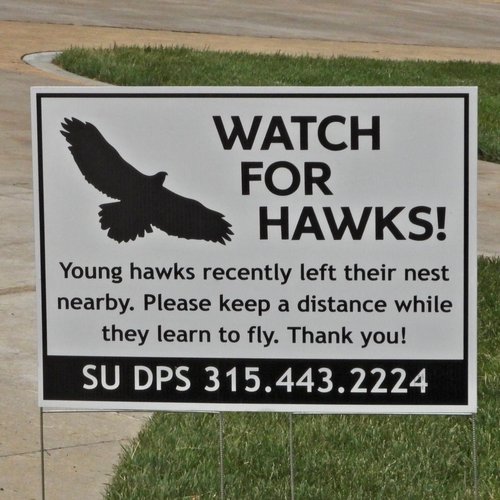
Signs around campus remind community members to be aware of hawk activity.
Staying Alert and Reporting Concerns
One of this year's fledglings, JS6 (the sibling of JS5 and offspring of Sarah and Jesse), was recently found injured near the JMA Dome and was transported to licensed wildlife rehabilitator Cindy Page for emergency, supportive care before being transferred to Cornell University’s Janet L. Swanson Wildlife Hospital for evaluation and treatment.
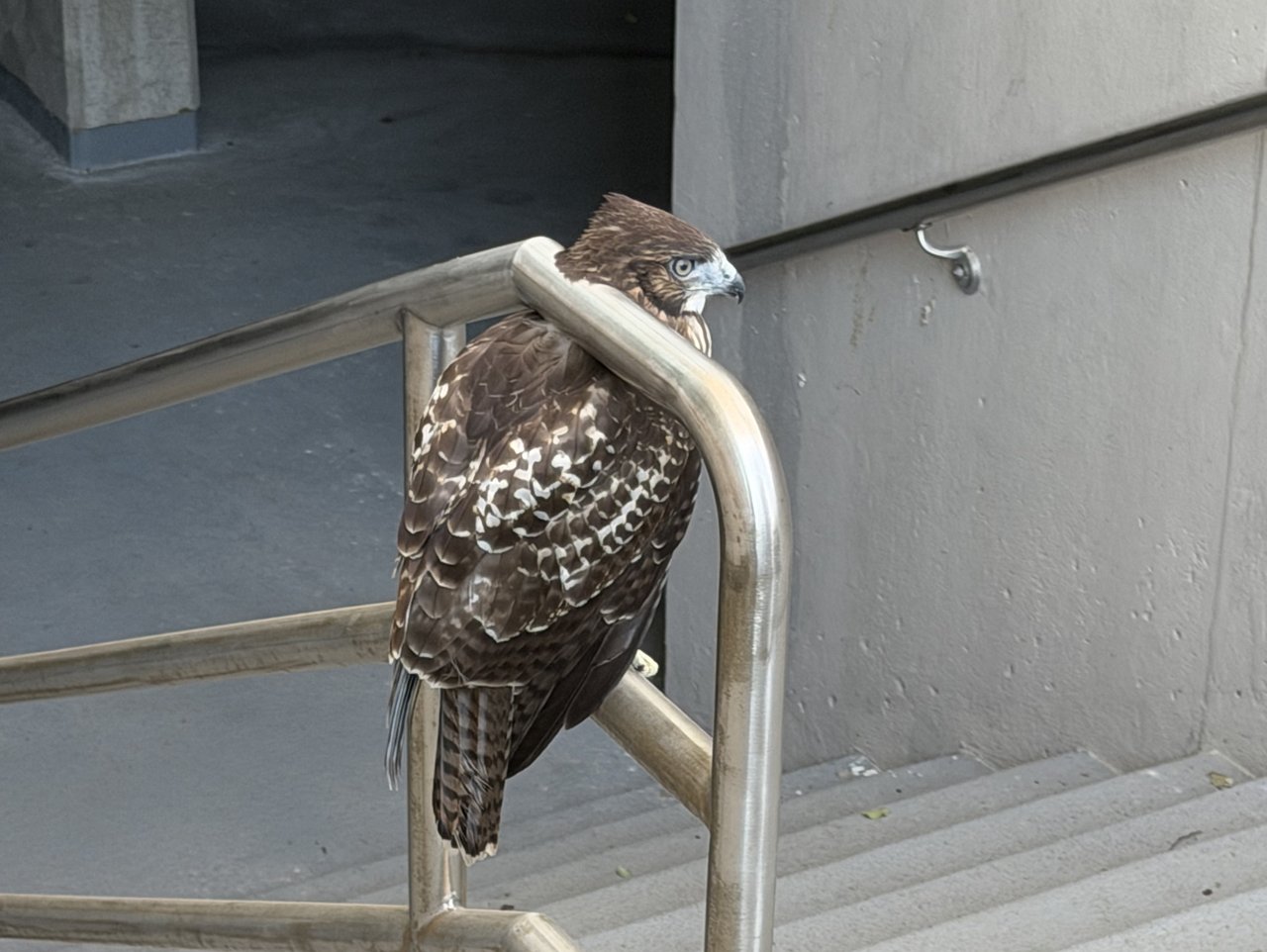
The incident serves as a reminder of the importance of staying observant and reporting wildlife that appears injured or in distress. Prompt action by community members can help ensure that birds requiring assistance receive appropriate care.
If you encounter a bird that appears sick or injured, contact Syracuse University Public Safety at 315-443-2224.
For additional coverage, visit the Red-tailed Hawk Tales Facebook page.
Published: July 2, 2026
Media Contact: asnews@syr.edu