
Simulated Disaster Training on Campus
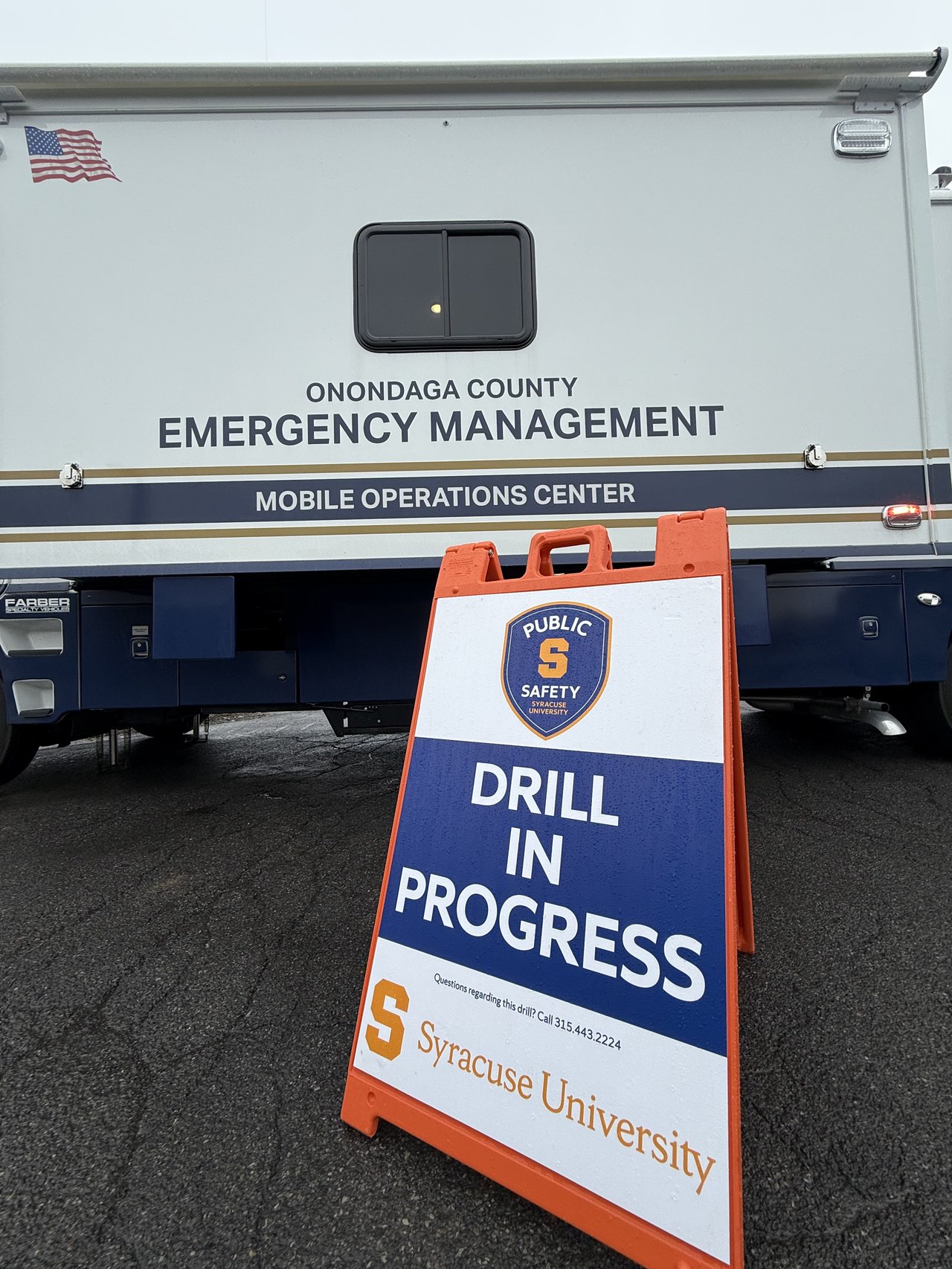
When a mock chemical hazard call came in on South Campus last month, forensic science students from the College of Arts and Sciences (A&S) were granted a rare opportunity to watch and learn.
The New York National Guard's 2nd Weapons of Mass Destruction Civil Support Team (CST) conducted a multi-day training exercise at Syracuse University from March 31 through April 3, bringing together five agencies to simulate a coordinated chemical, biological, radiological and nuclear response. For students in the College’s Forensic and National Security Sciences Institute (Forensics Institute), the exercise became an uncommon window into the world their coursework is preparing them for.
"This offered an exceptional opportunity for students to connect what they have learned in their courses to a real-world scenario," says Kathleen Corrado, Forensics Institute executive director. "Including communications, sample identification and collection, working with hazardous materials, and use of analytical field equipment that mirrors what they have used in their laboratory courses."
The exercise, coordinated by SU's Emergency and Environmental Risk Services (EERS) division in partnership with A&S, is among the first times a live chemical, biological, radiological and nuclear (CBRN) field exercise has also served as an academic platform. Over two site visits — on March 31 and April 2 — students observed multi-agency incident command coordination, CST personnel collecting samples in full chemical proximity protective suits, and a mass-casualty decontamination corridor erected and operated by Syracuse Fire Department's HazMat Response Team. All training used simulated materials only.
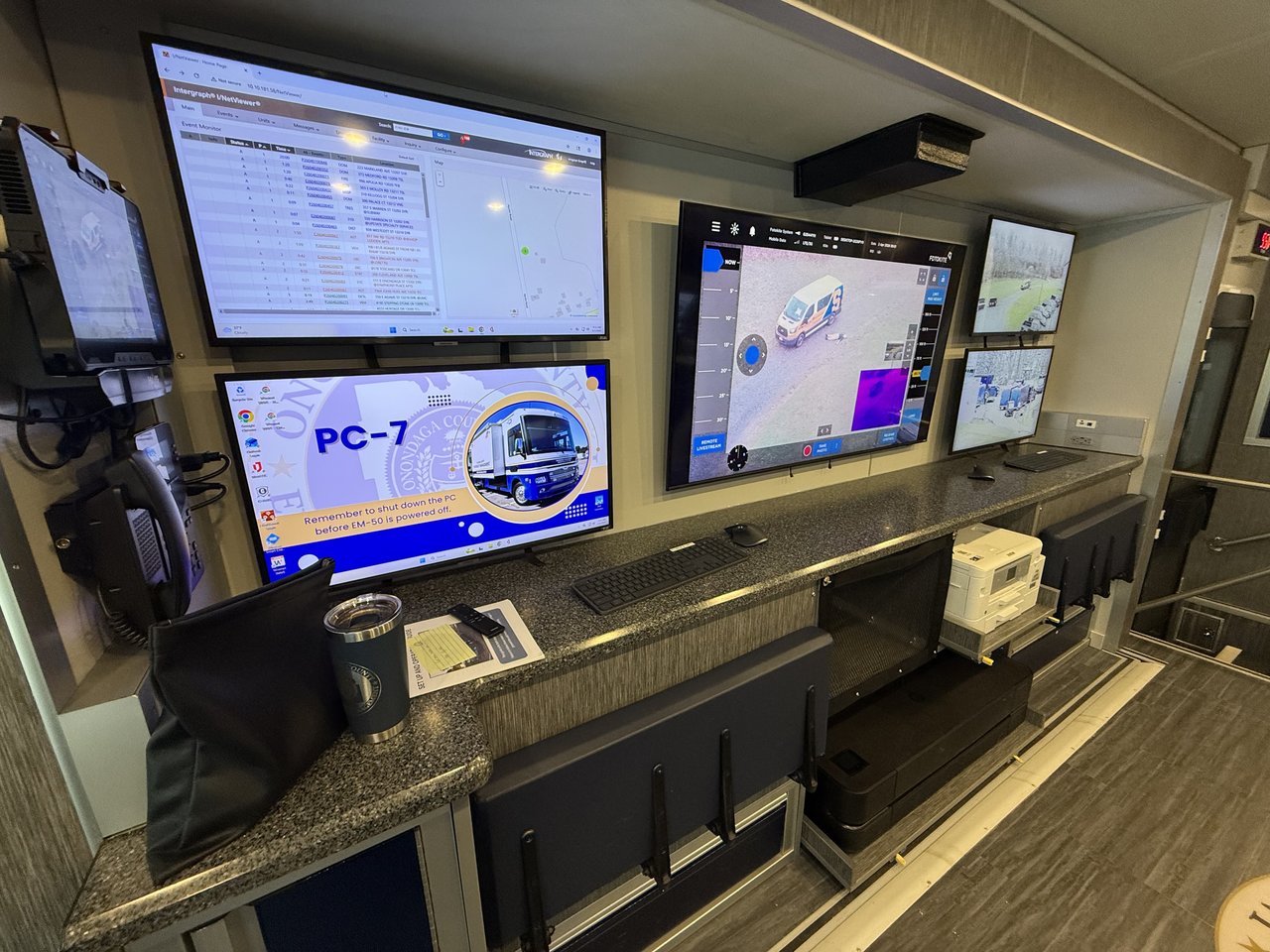
Joseph Hernon, Syracuse University's associate vice president for emergency and environmental risk services, says the setting offered students something a classroom cannot replicate.
"When students step onto a scene alongside the New York National Guard's 2nd Weapons of Mass Destruction Civil Support Team, the Syracuse Fire Department HazMat unit, and Onondaga County Emergency Management, they're not just observing. They’re experiencing the actual tempo, communication and decision-making of a real CBRN response," Hernon says. "That exposure is irreplaceable."
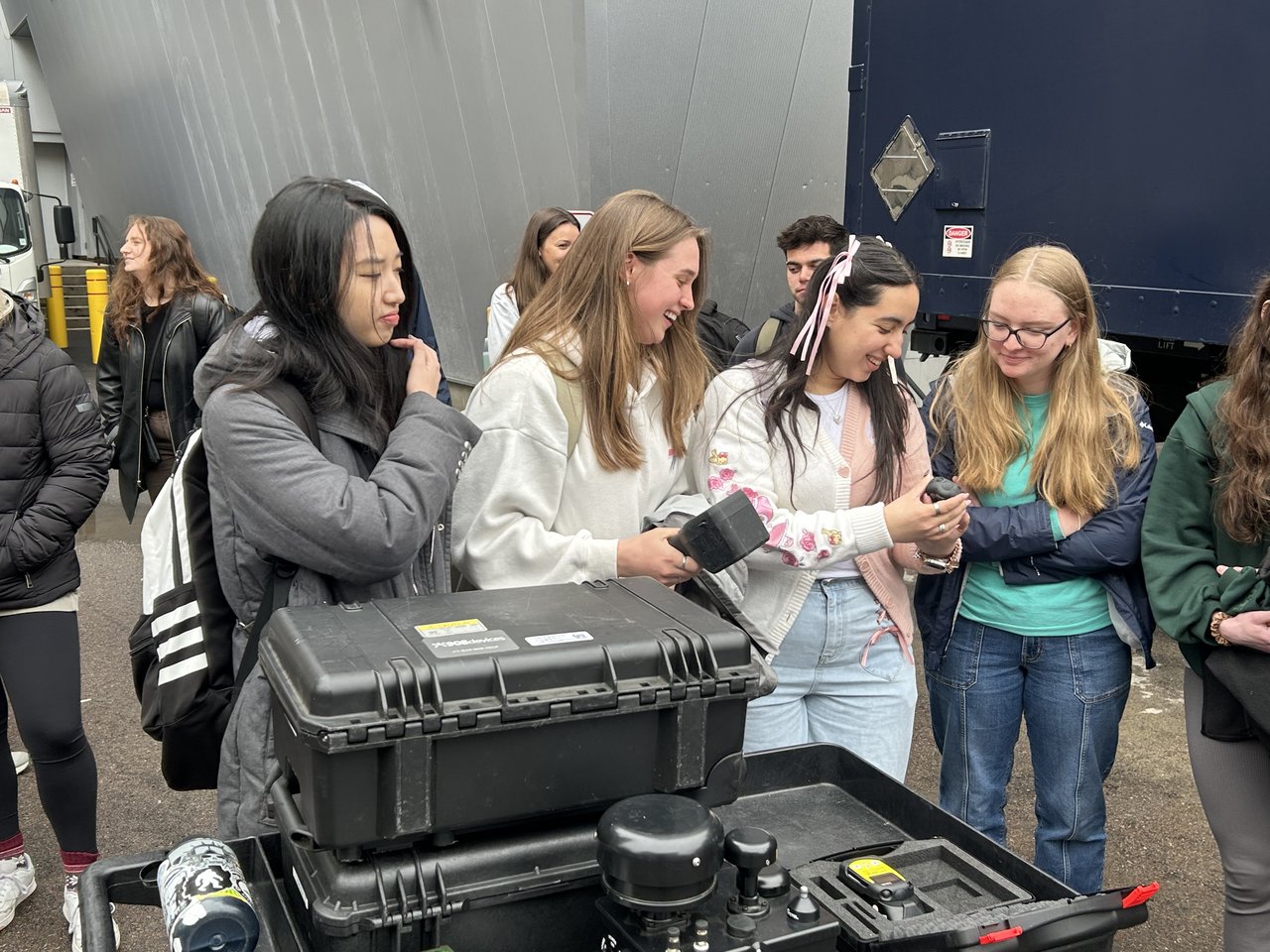
Between the site visits on South Campus, the civil support team hosted a seminar in Lyman Hall for forensic science and other A&S students and faculty. The session covered their mission, demonstrations of portable detection equipment and a question-and-answer period.
Kevin Early, a master's student in forensic science, says seeing the team's analytical instruments in a field context reframed what he had learned in the lab.
"I really enjoyed seeing all of the scientific equipment that is employed and all of the differing applications of the machinery in the field," Early says. "The mobile lab was so cool — I didn't think that a GC-MS (gas chromatography–mass spectrometry) would be effective in a mobile capacity, so that was interesting."
Hernon hopes students left with a clearer sense of where their skills fit within a larger system.
"What I hope students took away is a sense of professional context, and an understanding of where their skills fit within a much larger response system, and a recognition that the work they're learning to do has real-world stakes," he says.
Corrado says the partnership opened students' eyes to career possibilities at the intersection of forensic science and national security, and that the CST is eager to continue the collaboration. "The members of the 2nd WMD-CST were clearly excited to share their expertise and experiences with our students, and they look forward to continued collaborations in the future."
Published: April 21, 2026
Media Contact: asnews@syr.edu