
Remembering a Scholar Who Bridged Languages, Cultures and the African Diaspora
The College of Arts and Sciences (A&S) mourns the loss of Janis A. Mayes, associate professor emerita of African American Studies, whose distinguished career as a scholar, teacher and mentor left a lasting impact on Syracuse University. A member of the A&S faculty for nearly four decades, Mayes was recognized for advancing the study of Black literature across languages and cultures while inspiring generations of students through her teaching and mentorship.
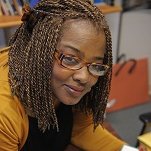
Janis A. Mayes
Mayes joined A&S’ Department of African American Studies (AAS) in 1982 and remained at the University until her retirement in 2020. She earned a Ph.D. and M.A. in French Studies from Brown University and a bachelor's degree in French Literature from Fisk University. Before arriving at Syracuse, she taught at the University of Texas at Dallas and held Fulbright appointments in Côte d’Ivoire and Senegal.
Mayes specialized in Black Francophone and Anglophone literature, literary translation and the study of the African diaspora. Her research explored how literature, language and culture move across borders, leading her to develop the theory of Trans-Atlantic translation, or "sALT," which emphasized translation as a creative and intellectual process rooted in analysis, memory and lived experience.
Among her many scholarly contributions were the bilingual anthology A Rain of Words: A Bilingual Anthology of Women's Poetry in Francophone Africa and numerous books, essays, articles and translations that made African and African diaspora literature more accessible to English-speaking audiences. Her work earned recognition from organizations including the African Literature Association, the Toni Morrison Society and the broader international literary community.
In the classroom, Mayes was known as an innovative teacher who expanded Syracuse University's African American studies curriculum. She developed courses examining African, Caribbean and African American literature, Black feminist thought, Toni Morrison's writings and Black cultural life in Paris. She regularly advised undergraduate and graduate students and served on numerous master’s thesis and doctoral dissertation committees across disciplines.
One of her most enduring contributions was the creation of Syracuse University’s Paris Noir Summer Study Abroad Program in 2001. The five-week experience immersed students in the history, literature, art and contemporary culture of the African diaspora in Paris. Over nearly two decades, the program provided transformative educational opportunities for hundreds of students, many of whom credited the experience with shaping their professional and personal development.
Mayes also provided extensive service to the University and her profession. She served as director of undergraduate studies for AAS and twice as its interim chair; helped shape departmental and University initiatives; and played leadership roles within the African Literature Association, including as president. She contributed to numerous scholarly journals, editorial boards, professional organizations and international conferences throughout her career.
Her achievements were recognized through numerous honors, including Syracuse University's Outstanding Service Award, the Lottie B. Wilson Outstanding Teaching Award, the Trailblazer Award from the Office of Alumni Development and Multicultural Affairs and the Founder's Award from the Toni Morrison Society. She also received Fulbright and National Endowment for the Humanities distinctions, reflecting the international impact of her scholarship.
Colleagues, students and alumni remember Mayes for her intellectual rigor, generosity, global perspective and steadfast commitment to student success. Read reflections from her colleagues and former students below:
Gwendolyn D. Pough, Interim Chair, African American Studies and Women and Gender Studies; Associate Dean of Strategic Initiatives, College of Arts and Sciences
I don’t think there is a more beloved professor in the College or the University than Dr. Janis A. Mayes. I remember during her retirement celebration there were countless student testimonials, and each one spoke to what a tremendous impact Dr. Mayes had on them. Whether it was in her always fully enrolled classes on black women writers or her groundbreaking study abroad program, Paris Noir, Dr. Mayes curated learning experiences that left her students changed for the better. She cared deeply about her students and the field of African American Studies. Her retirement left a giant hole in the College, and her passing will be felt by the numerous alumni who learned so much from her. As a Black woman professor at Syracuse University, I know that I benefitted from the legacy that Dr. Mayes paved and shaped. She made a way for those who came after her. Her legacy as a scholar, teacher, and colleague is the standard by which I will continue to measure my own impact. I can only hope to touch half the students half as deeply as Dr. Mayes has.
Danielle Smith, Professor, African American Studies
When I interviewed on campus in 2017, Dr. Mayes was among the first colleagues to welcome me to the Department of African American Studies. She invited me to the Department’s Kwanzaa Celebration, introduced me to faculty, staff, and students, and seated me beside her as we celebrated Kwanzaa and community. She later welcomed me to dinner at her home, where she had spent the day preparing yassa, a traditional Senegalese dish, and regaled us with stories of her time in Senegal. Janis made newcomers feel like valued members of the community from the very beginning.
Dr. Mayes was a vital part of the Department, and her presence shaped it immeasurably. Her intellectual strength and generous spirit live on in the many students she mentored. She was a beloved teacher, colleague, and friend, and the Department is better for the years she dedicated to it. Although she has now joined our ancestors, her influence endures in the students she taught, the colleagues she supported, and the community she helped to build. I am grateful to have known her, and I will carry with me the stories of enduring Black excellence that she taught.
Casarae Lavada Abdul-Ghani, Associate Professor of African American Literature and the Digital Humanities, Department of English, Temple University
I met Janis in 2015 during my campus interview in the Department of African American Studies at Syracuse University. I almost didn't make it due to a huge snowstorm that canceled many flights. Janis stayed on the phone with me for hours, making sure that I was okay and that I arrived in Syracuse safely. Her warmth and belief in my potential meant everything, and I am sharing this with the world because that is who Janis was—a dynamic mentor who believed in me more than I believed in myself.
Over the years, our friendship grew into a strong bond. She was more than a friend; she was my sister. She was also adamant about the longevity of Black Studies— making sure that academics after her continue to build it and carry it forth. Her Paris Noir Study Abroad program set the standard and established a pipeline for students to gain international experience. Most of all, it connected the Black American literary tradition to a broader international lens that united the Diaspora.
I will cherish our many talks, her wisdom, the gifts she always sent my children, and that unforgettable laugh. In return, I cherish the knowledge she gave me on how to navigate life. I will miss her physical presence dearly, but I know now more than ever that she will continue directing my path from the ancestral realm.
Kishauna Soljour, Assistant Professor of Public Humanities, San Diego State University
As an undergraduate student at Syracuse University, I took four different courses with Professor Mayes. In AAS 232, two students came to talk about their experience in the Paris Noir study abroad program. I will never forget hearing the Paris Noir alum share, “It changed my life, and I just want to thank Professor Mayes for showing me all of the possibilities.” At that moment, I knew I had to apply for the program.
I attended Paris Noir as a sophomore and came to understand how Dr. Mayes changed lives each summer. Throughout our time in Paris, she introduced us to Black Life in the Diaspora: from food to fashion, the arts to lessons in French, navigating the Parisian metro to salon conversations at Café de Flore with pioneering writers and scholars like James Emanuel and Pap Ndiaye. The program was transformative and Dr. Mayes invested in each student. She made time to meet with each of us to hear about our research interests, future plans, learn about our families, and encouraged us to be bold, confident in the knowledge we possessed, and remain intellectually curious. Her belief in our greatness made us all rise to the occasion.
I am so thankful that Professor Mayes created the Paris Noir program. For nearly twenty years, over 300 students were transformed by her quick wit, challenging questions, and fervent belief that we are the representation of our ancestors’ dreams. We carry her legacy with us in our commitment to keeping Paris Noir on the Move.
Published: Nov. 10, 2026
Media Contact: asnews@syr.edu