
Cool Class: Practical Crime Scene Research
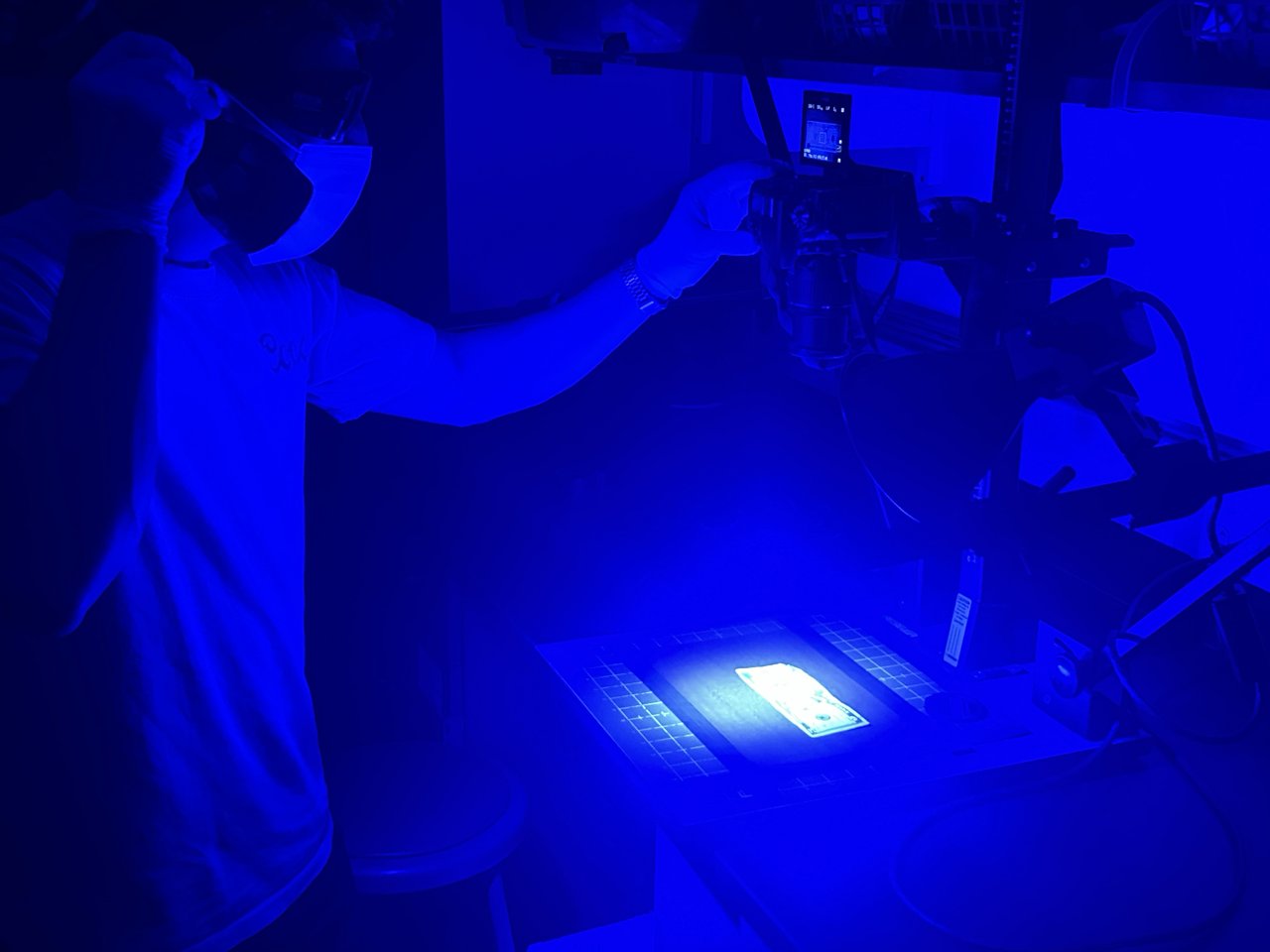
Documenting bloodstain patterns to calculate areas of origin using advanced digital tools. Illuminating latent fingerprints on U.S. currency with precision through a novel, never-before-applied method. These are the kinds of scenes typically found inside a professional forensic investigation unit, yet they are unfolding inside Room 103 of Syracuse University’s Life Sciences Complex, where undergraduate and graduate students in the College of Arts and Sciences’ Forensic and National Security Sciences Institute (Forensics Institute) are actively engaged in cutting-edge investigative work.
Taught by Professor of Practice Maria Pettolina, Practical Crime Scene Research (FSC 440/640) immerses students in the methods and experimental design used by professional crime scene investigators. Over the course of the semester, students develop original research questions, design experiments, gather and analyze data, and communicate findings in a professional, publishable format.
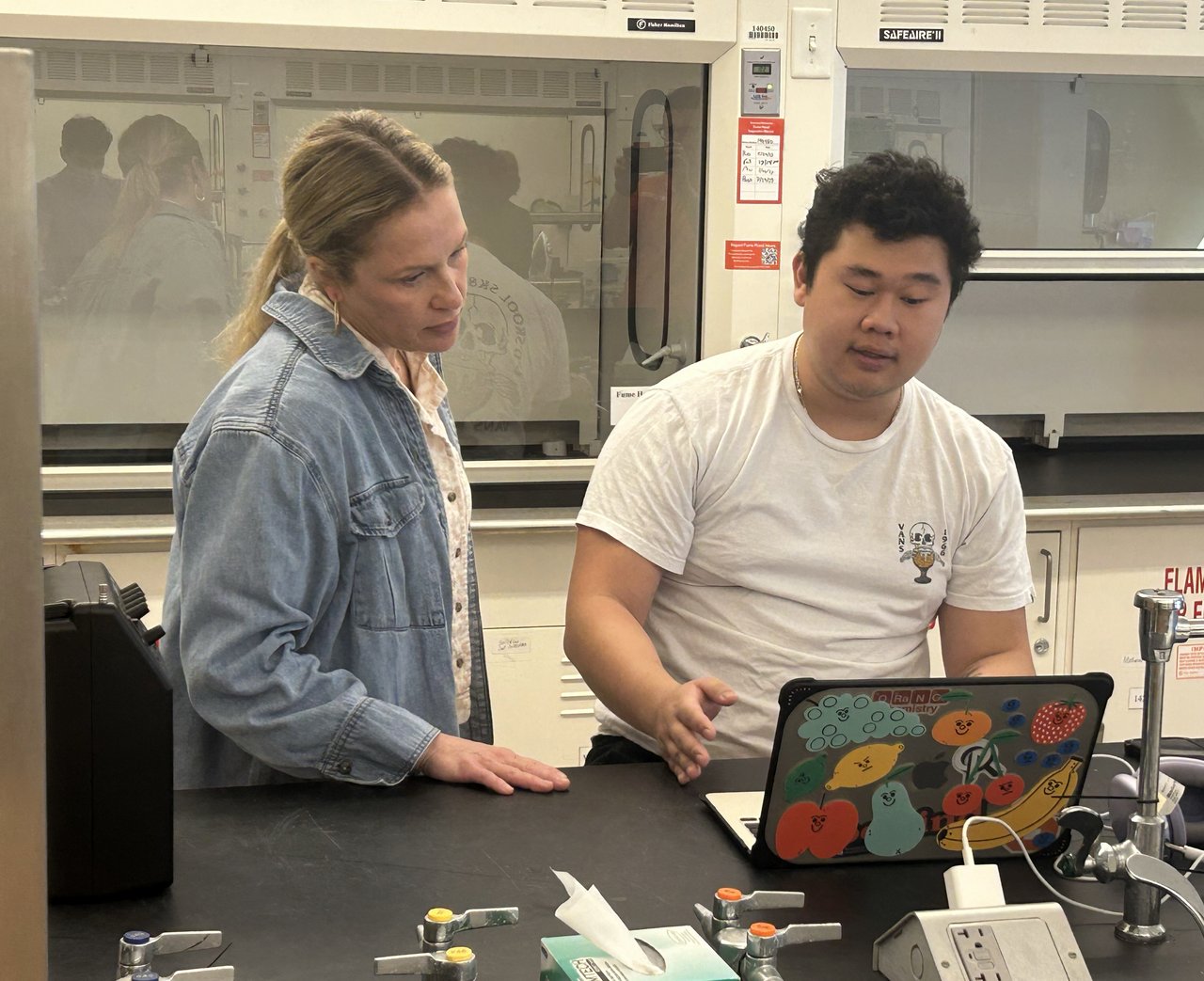
Pettolina brings nearly two decades of experience in crime scene investigation (CSI) and medicolegal death investigation to the classroom. A nationally recognized forensic expert and educator, she has worked hundreds of cases and maintains active professional networks that help shape the course’s research focus. Pettolina is currently the Vice Chair for the Organization of Scientific Area Committees (OSAC) for Forensic Science (CSI Subcommittee) and is also on committees for the International Association of Identification and the Association of Crime Scene Reconstruction.
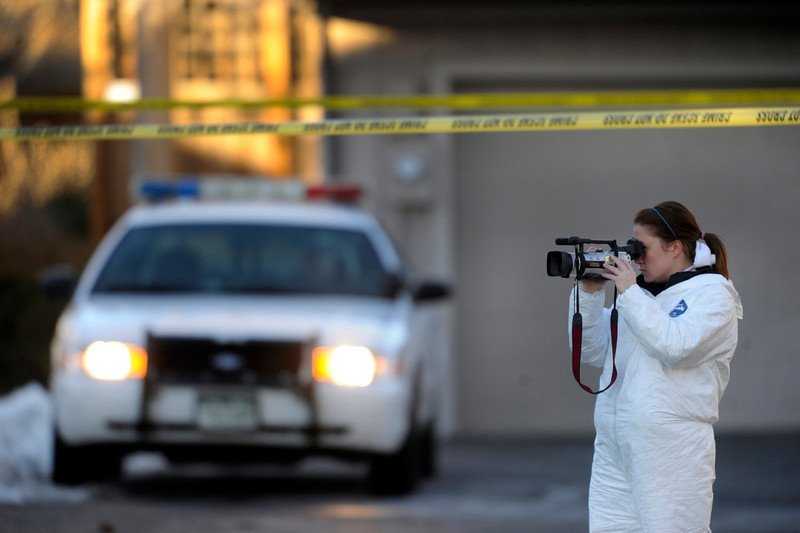
“What we’re looking for is practical research that could actually be conducted by a crime scene investigator in their own lab,” Pettolina explains. “We want students working on problems that are affecting the field right now.”
About the Class
Practical Crime Scene Research introduces students to experimental forensic research grounded in the scientific method. The course emphasizes how valid, reliable research strengthens the credibility of crime scene investigation as a discipline.
Students work through every phase of the research process, including:
- Identifying real-world forensic problems
- Conducting literature reviews
- Designing experimental studies
- Collecting and analyzing data
- Interpreting results
- Communicating findings to professional audiences
Preparing Students for Careers in CSI
Designed for students pursuing careers in crime scene investigation, forensic laboratory work, law enforcement, medicolegal death investigation and related disciplines, the course mirrors professional forensic practice.
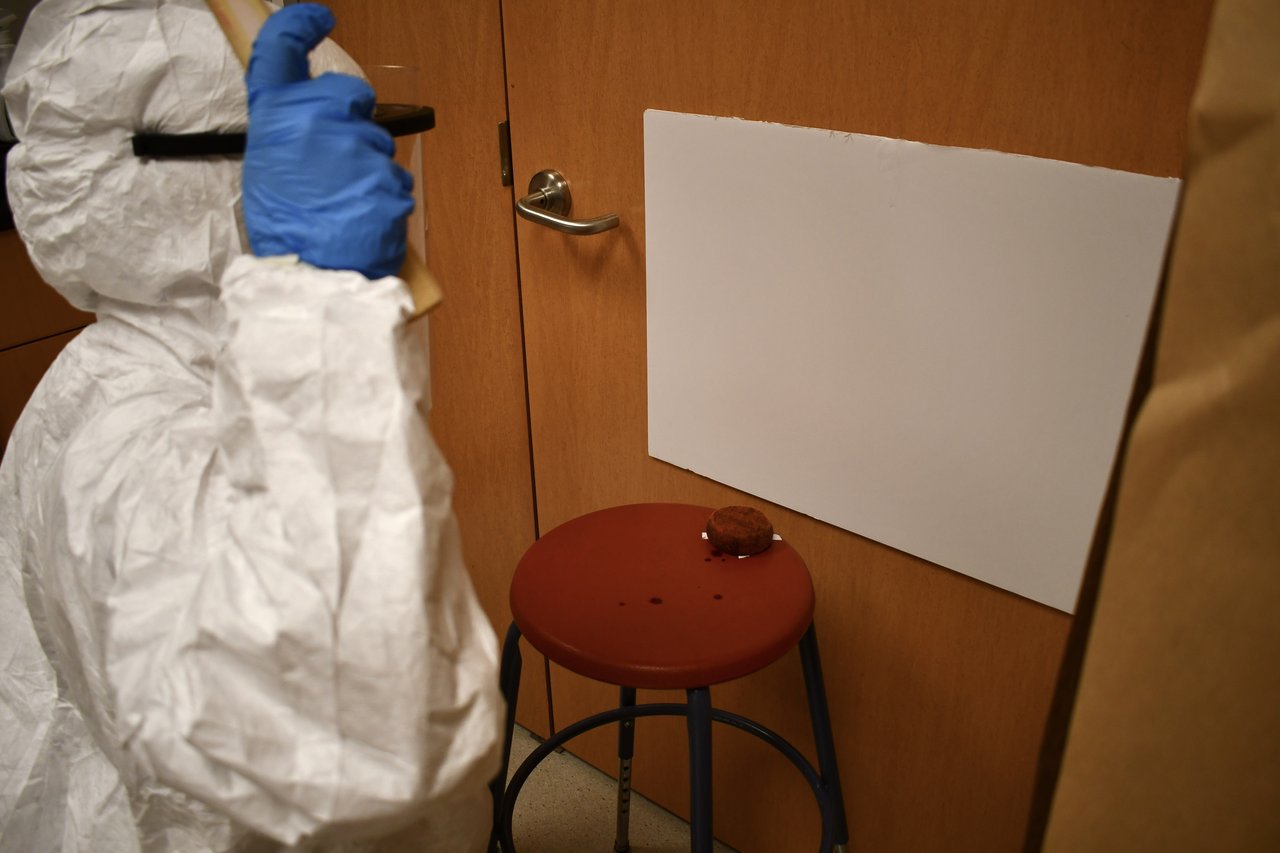
During the Spring 2026 semester, undergraduate students focused their final project on bloodstain pattern analysis, specifically studying the area of origin in impact spatter. By creating bloodstain patterns with known origins, students evaluated whether AI-assisted systems could accurately estimate where a bloodletting event occurred.
Graduate students tackled an equally pressing issue: latent fingerprint development on U.S. currency. As one of the most frequently handled objects in society, cash often carries fingerprint evidence that can be critical across a wide range of criminal investigations. Responding to requests from forensic professionals nationwide, students evaluated chemical processing methods on paper currency and explored under-researched approaches, including the application of chemical crystals in dry form rather than traditional liquid solutions. Early results showed significantly improved fingerprint recovery, research that could help inform and refine future forensic protocols.

“The graduate students were actually able to come up with a new technique that has not yet been published,” Pettolina notes. “That’s incredibly impactful for a class.”
Learn more about the students’ work in the video below:
Real Research, Real Impact
A key priority of the course is bridging academia and professional forensic practice. Pettolina regularly consults her professional networks to identify unresolved problems in the field, allowing student research to address gaps practitioners don’t always have time to investigate. Students are also encouraged to review research needs identified by OSAC, which documents and publicly shares with the forensic science community any research and development needs that arise during the standards development process.
Past student work has resulted in peer-reviewed publications, including an internationally published study on the decontamination of crime scene supplies. This emphasis on dissemination teaches students that forensic research doesn’t end in the classroom. It contributes to the safety, accuracy and advancement of the profession worldwide.
Award-Winning Course Design
In recognition of its innovative structure and impact, Practical Crime Scene Research received the 2026 SOURCE and Center for Teaching and Learning Excellence (CTLE) Award for Course-based Undergraduate Research Experience (CURE) Teaching. The award honors courses at Syracuse University that successfully integrate authentic research experiences into undergraduate education.
The recognition underscores the course’s commitment to experiential learning, professional relevance and student-driven discovery.
For students interested in combining science, critical thinking and hands-on investigation, Practical Crime Scene Research offers a rare opportunity to step into the role of a working forensic professional. The course will again be offered in Spring 2027.
Published: April 22, 2026
Media Contact: asnews@syr.edu