
Community Engagement, Professional Advantage
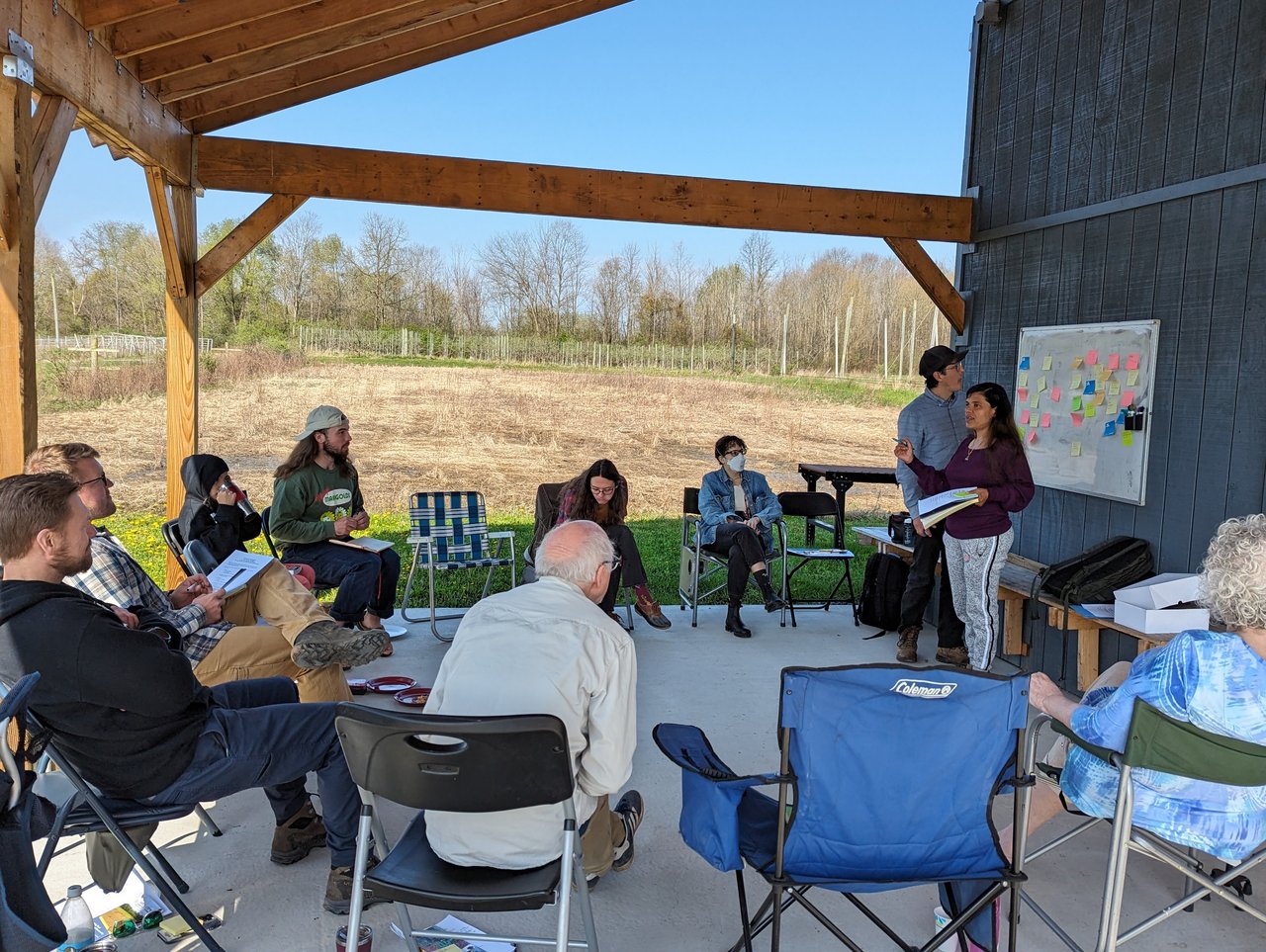
Today’s challenges ranging from public health crises to social inequities don't fit neatly into single disciplines. When scholars collaborate across fields, they combine complementary knowledge, methods and perspectives to create solutions no one researcher could achieve alone. This approach is central to the College of Arts and Sciences’ Engaged Humanities Network (EHN), where scholars, teachers, students, artists and community partners work together to serve the public good and build relationships of trust.
EHN advances participatory research through programs like Engaged Courses, which provides funding and cohort-based support for faculty integrating community engaged learning into their curriculum, and Engaged Communities, which fosters research, programming and creative projects with mutual benefit. In collaboration with the Graduate School, EHN has launched a new offering called the Public Scholarship Certificate (PSC). Open to graduate students and postdoctoral scholars in any program at Syracuse University or SUNY ESF, along with community collaborators, the PSC recognizes commitments to ethical, publicly engaged research, creative work, teaching and programming.
The PSC Advantage
The PSC was created in part to formally recognize the meaningful community-centered work of graduate students and postdocs, says Brice Nordquist, associate professor of writing and rhetoric, Dean’s Professor of Community Engagement and founding director of EHN in A&S. After recognizing that numerous graduate students across the University were interested in this type of work, Nordquist and his colleagues developed the certificate program. Launched in Fall 2025, more than 50 people from a range of disciplines have signed on to participate, demonstrating both the demand and necessity of this initiative.
"The certificate provides formal recognition for the engaged work grad students and postdocs are doing," explains Glenn Wright, Executive Director of Professional and Career Development at the Graduate School. "It says, this is academic research, not just something co-curricular they're doing on the side. And as a certificate, it's very quickly and clearly legible on a CV. You don't have to make a long argument that what you're doing is scholarly."
A Collaborative Framework
The success of the PSC relies on a strong partnership between the Engaged Humanities Network and the Graduate School. "The EHN provides content expertise and much of the required programming for the certificate," Wright notes. "The Graduate School provides outreach and a bigger tent across disciplines and programs. Both are involved in setting the overall direction. It's a great collaboration."
This interdisciplinary approach has proven particularly valuable. "The brilliant aspect of this certificate is that all graduate students and postdocs benefit from participating," says Ava Breitbeck, a Ph.D. candidate in science teaching and graduate assistant in the Graduate School. "We currently have participants from across the academic spectrum including history, English, composition and cultural rhetoric, linguistics, cultural foundations of education, science teaching and mathematics."
Breitbeck, who works alongside Wright and the Graduate School professional development team, emphasizes the importance of public engagement in today's academic climate.
"It is more vital than ever that scholars be thoughtfully engaging the public in their scholarly efforts. Even more so, the certificate leverages the expertise of community partners in helping address key questions and solve important issues in the community. This work breaks down traditional barriers between academia and the public, which can go a long way in forging productive reciprocal relationships."
PSC Structure
To qualify for the PSC, scholars must complete several key components over either a one-year or two-year cycle. Participants register to receive communications about PSC workshops, cohort meetings and additional resources. They attend at least three PSC workshops per academic year for a two-year cycle, or six workshops for a one-year completion plan. They also participate in PSC cohort meetings each semester to discuss ongoing scholarship, community connections, and successes and challenges.
A crucial element is the engagement plan, approved by a faculty mentor and reviewed by the EHN and Graduate School, which forms the basis of the student's digital portfolio. The portfolio itself showcases students’ publicly engaged work, a personal statement describing their role as a publicly engaged scholar, and a video presentation on their publicly engaged research, creative work or teaching. Students can pursue the certificate at any point in their graduate career and are welcome to continue participating in PSC activities beyond completion.
Translating Research into Action
For Amanda Ni, a doctoral candidate in mass communications at the S.I. Newhouse School of Public Communications, the PSC has provided essential structure and support for her publicly engaged scholarship. Ni's research develops a culturally responsive communication framework to examine how advocacy organizations communicate with Asian women survivors of domestic violence in the United States.
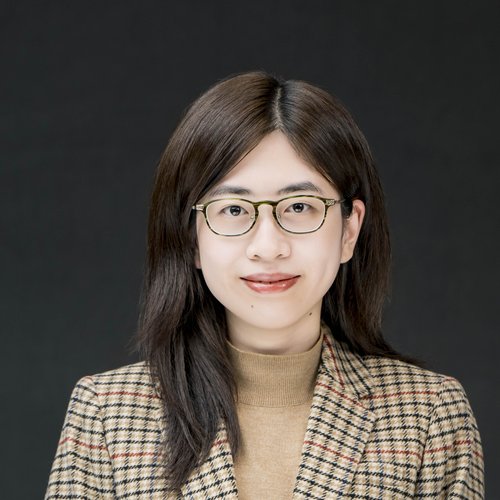
Amanda Ni
"As an Asian woman living in the U.S., I have witnessed how language, culture, racism and interactions with law enforcement create profound barriers for survivors seeking help," Ni explains. Drawing from interviews with advocates and an online survey with survivors, she proposes a framework that prioritizes trust, accessibility, mutual accountability and culturally responsive care. Her engagement plan includes sharing executive summaries of findings with organizational advocates, presenting research through culturally accessible media platforms and developing a digital portfolio to translate academic insights into actionable advocacy tools.
"The Public Scholarship Certificate program provides structured support to deepen my engagement practices and reflect on how to ethically represent the communities I work with," Ni says. "The PSC workshops and cohort meetings have given me a dedicated space to think critically about relationality, power and public knowledge-making, while learning from other publicly engaged scholars and growing as a scholar-advocate committed to justice and care."
Ni sees the certificate as instrumental to her career goals. "This certificate strengthens my ability to bridge scholarship and public engagement, which is increasingly important in both academic and advocacy settings," she notes. "It will not only help me build collaborative, interdisciplinary research projects, but also prepare me to mentor students in community-engaged learning and public humanities initiatives. As I'd like to pursue a community-engaged scholar role in the future, this certificate affirms my commitment to justice-oriented, publicly engaged scholarship."
Cheyenne Morris, a first-year Ph.D. student in geography with research specializations in climate change, Indigeneity, political ecology and Japan, was drawn to the PSC based on a transformative experience during her master's program at the University of Michigan. There, she participated in Next Gen Scholars, a program designed to support first-generation, Pell Grant recipients and underrepresented students.

Cheyenne Morris
"Being a first-generation bachelor's degree holder, pursuing my master's in a non-English speaking household was challenging to navigate when questions of applications, funding and resources came about," Morris explains.
She became an advisor for the Next Gen Scholars program in her second year and found the experience so valuable that she sought similar opportunities at Syracuse. Her ongoing dissertation research examines semiconductor development and AI in Hokkaido, Japan on Indigenous lands. She is conducting an ethnography on how municipal, corporate and Indigenous perspectives align or differ in these communities. Her first research visit, scheduled for summer 2026 and supported by an EHN summer graduate fellowship, will focus on building relationships with these communities while exploring historically significant cultural sites of the Ainu, who are the Indigenous people of Hokkaido.
"[The PSC’s] greatest benefit for me includes meeting students from across the University, allowing me to learn from peers with diverse backgrounds and specializations,” Morris says. "It has also strengthened my commitment to grounding my work in ethical, publicly engaged research practices."
Looking ahead, Morris hopes the certificate will help her create or work with similar programs in the future. "Many barriers exist in the academic space, making it hard to feel successful," she notes. "I hope to be a resource and helping hand to students wanting to get a higher education."
Nurzharkyn Samigolla, a second-year Ph.D. student in writing studies, rhetoric and composition, has found the PSC to be a powerful avenue for expanding her community-engaged work. Originally from Kazakhstan, Samigolla brings 10 years of university teaching experience and a strong record of community-based educational work—including media literacy initiatives and teacher-training programs supported through the U.S. State Department’s International Visitor Leadership Program.
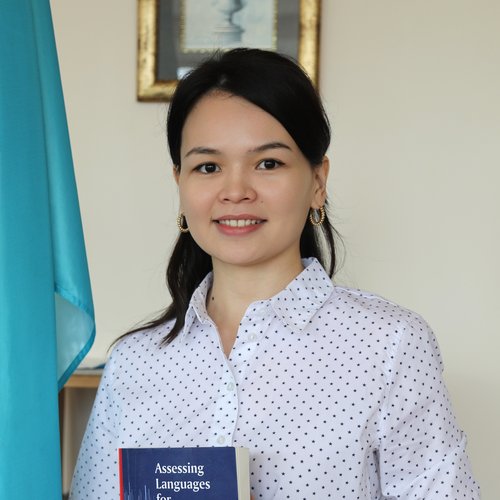
Nurzharkyn Samigolla
Before coming to Syracuse, Samigolla mentored teachers of English in Kazakhstan, helping them conduct participatory research in their own classrooms. That experience, she says, underscored the power of community-centered inquiry and continues to shape how she thinks about publicly engaged scholarship.
Samigolla first learned about the PSC through Nordquist, whose course introduced her to U.S. models of public engagement and community literacy work. She was especially inspired by examples of American learning centers and nonprofit organizations that merge education, literacy support and community needs. “In Kazakhstan, we did this kind of work, but it was usually outside the university,” she explains. “Here, it is part of the academic community, and that is exciting to me.”
Since joining the PSC, Samigolla has found that the workshops and cohort-based structures have broadened her perspectives on how scholars can ethically collaborate with the communities they engage with. She values the PSC not only for its practical training but also for the sense of belonging it offers. “It gives space to think, to question and to imagine new ways of doing research,” she says.
Samigolla hopes to integrate publicly engaged methods learned through this experience into her dissertation—potentially through comparative or case study work that connects Central Asian educational contexts with communities in the United States. She also sees the certificate as strengthening her professional path, both within academia and beyond. “Having a range of skills and experiences opens more possibilities,” says Samigolla. “The PSC shows that our engagement work matters—and that it is recognized.”
Building Career Pathways and Community Connections
The PSC delivers multiple benefits that extend beyond graduate school. "The competitiveness of today's job market means that students will be looking for additional credentials that speak to unique skills they possess relative to other job applicants," Breitbeck notes. "Employers care that their professionals are able to engage in the community through their work, and this certificate provides outstanding training in this area. Networking, communication, data analysis and critical thinking are also valuable skills highlighted in the certificate."
Wright emphasizes how the certificate strengthens Syracuse's appeal to prospective graduate students. "Many prospective grad students have existing commitments to certain communities, and they want to know if those commitments will be valued by the institution they're joining," he says. "Having a certificate indicates that SU welcomes those applicants and that their public scholarship will count for them professionally."
Nordquist highlights the tangible skills students develop. "They get to work with faculty mentors who are doing this kind of work, and they get to connect with community partners,” he says. “Students are energized by it because it connects their scholarly work to real-world issues and communities they care about. They develop skills in things like grant writing, project management, working with community partners, all of which are valuable whether they go into academic careers or careers outside of academia."
The program has also proven "generative in terms of creating connections between the University and community organizations," Nordquist adds. Students have worked with organizations including the Onondaga Historical Association, the Near Westside Initiative and refugee resettlement organizations, creating projects ranging from digital archives to educational programs to public writing initiatives. One student is creating a digital storytelling project with refugee communities, while another is developing curriculum for high school students about local history.
An Innovative Model for Graduate Education
The Public Scholarship Certificate recognizes the value of publicly engaged scholarship while providing the training, mentorship and recognition that students need to succeed. It prepares graduate students and postdocs to become scholar-advocates who can navigate both academic and public spheres with confidence and competence.
For Breitbeck, the most rewarding aspect has been "hearing about students' innovative solutions to major problems in the community, many of which I never would have considered previously. This collaboration truly makes us all better scholars and people," she says.
As universities increasingly recognize the importance of community engagement and public scholarship, programs like the PSC offer a roadmap for supporting graduate students and postdocs in this vital work. Through the Public Scholarship Certificate, Syracuse University is cultivating a new generation of scholars equipped not only to advance knowledge within their disciplines but also to apply that knowledge in service of communities and causes that matter.
Learn more about the Public Scholarship Certificate.
Published: Feb. 4, 2026
Media Contact: asnews@syr.edu