
Career-Ready with Rembrandt
Researching a work of art in a textbook or seeing one in a museum can be enlightening, but having a hands-on look at the real thing can be extraordinary. For eight seniors majoring in art history at the Syracuse University College of Arts and Sciences, it’s a dream come true as they gain practical career experience curating and writing wall text for “Undressed: The Nude in Dutch Art (1550-1800),” an exhibition at Syracuse University Art Museum open through May 9.
Undressed: The Nude in Dutch Art
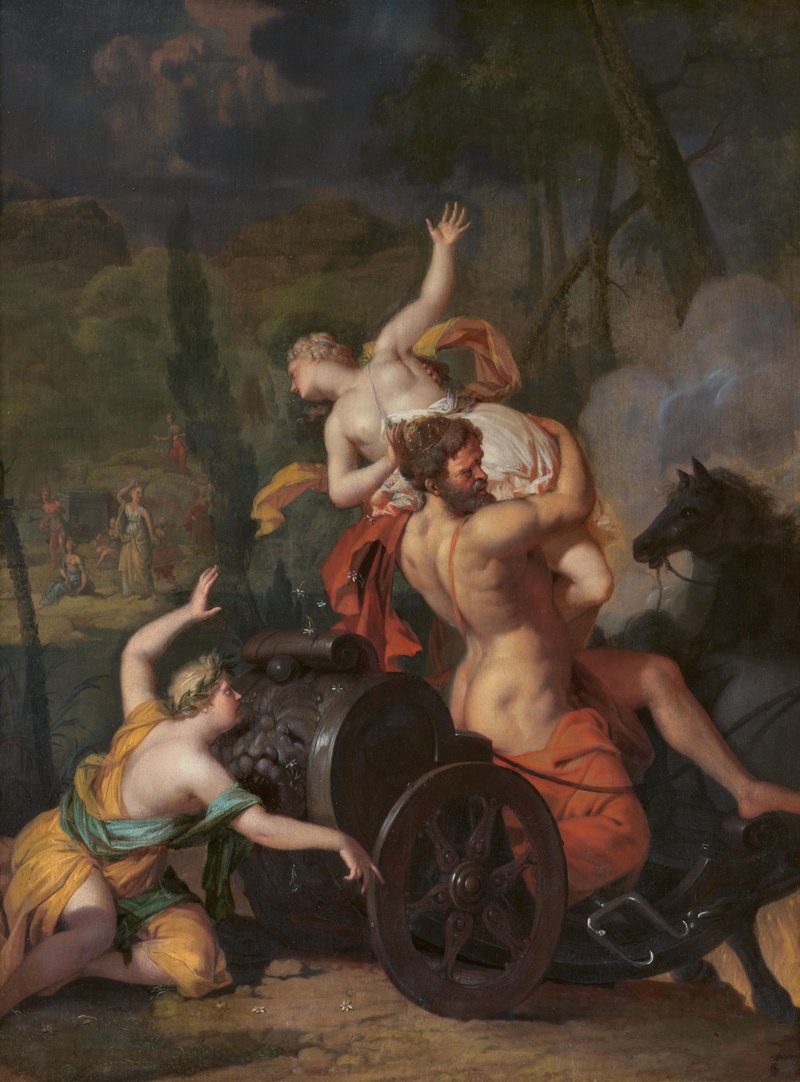
“Abduction of Persephone” by Pieter Van Veen
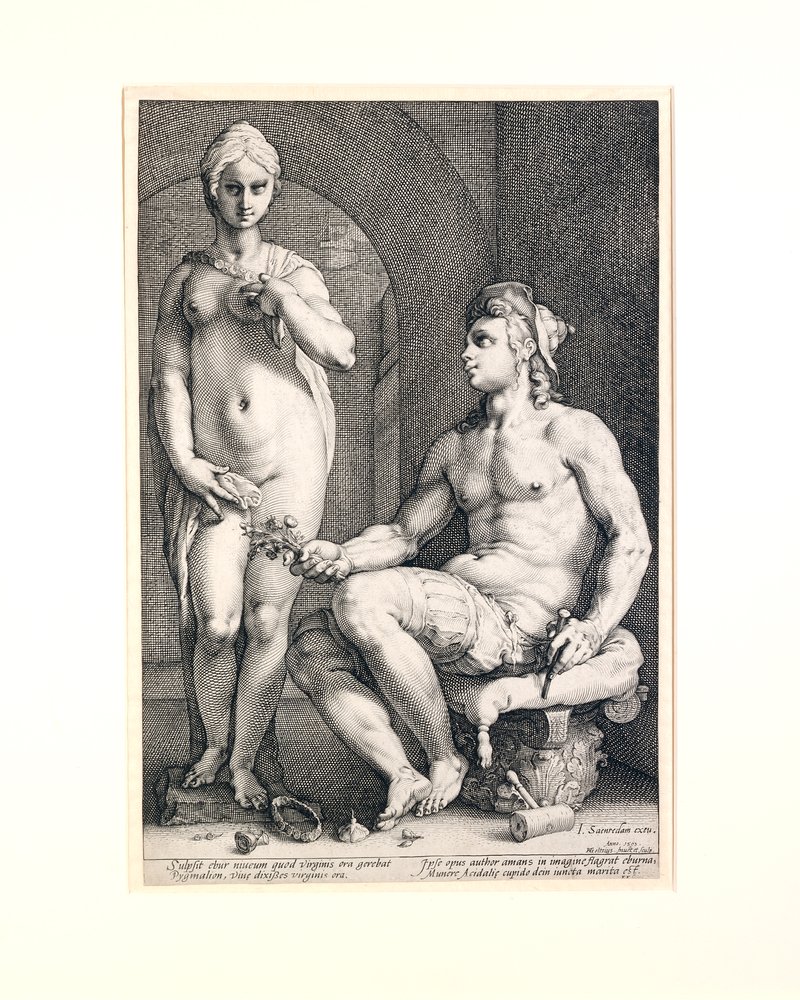
“Pygmalion and Galatea” by Hendrick Boltzius
“This was a rare opportunity for students to hold a 17th-century painting in their hands,” says Wayne Franits, Distinguished Professor and department chair, art and music histories. He shares his career-long expertise in 17th-century Dutch and Flemish art with the art history majors in HOA 498: Senior Seminar, Research and Professional Practice. in Fall 2025. He also coordinated the exhibition.

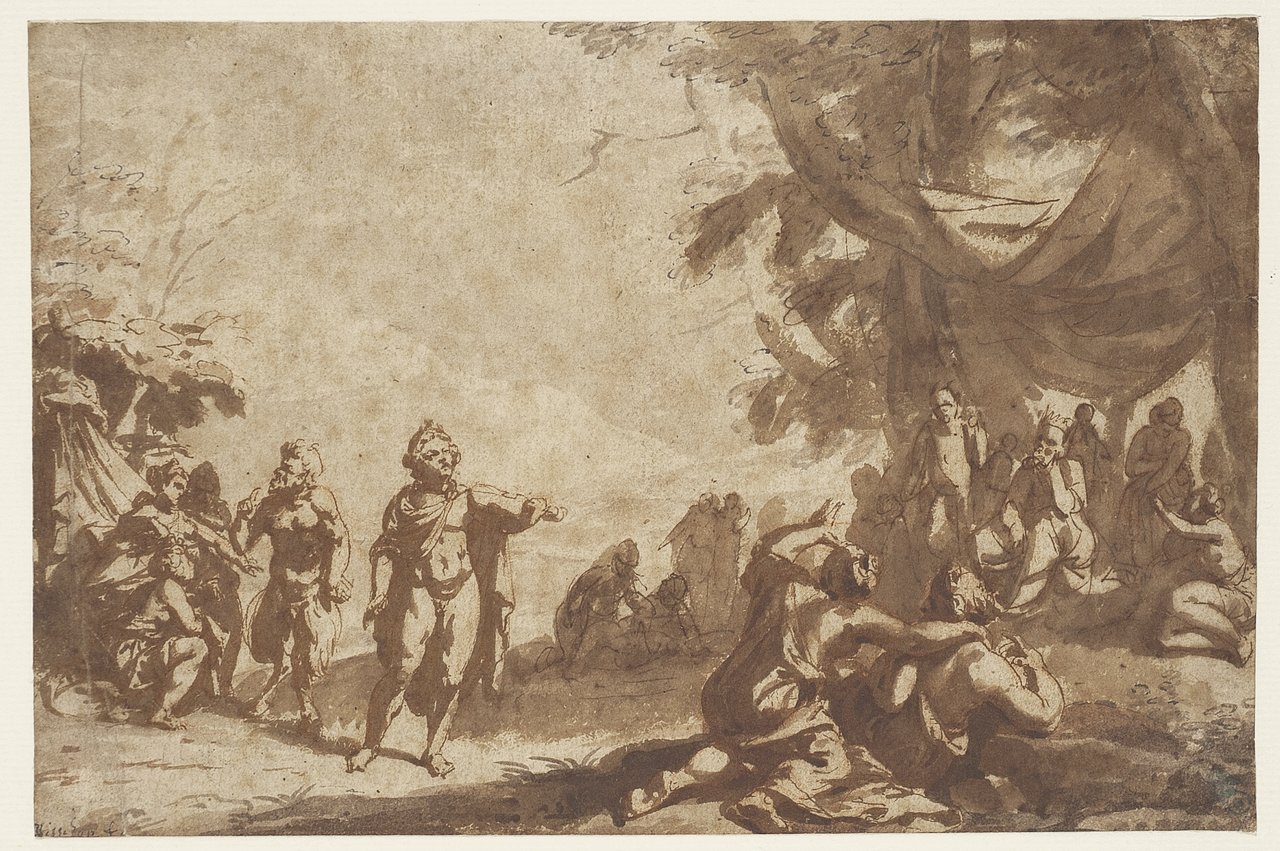
The 21 works in “Undressed” are on loan from a local private collection, as well as from the Herbert F. Johnson Museum of Art at Cornell University. These include “Abduction of Persephone” by Pieter Van Veen, “Pygmalion and Galatea” by Hendrick Boltzius and “The Judgement of Midas” by Jan de Bisschop. The collection represents the unique qualities of the Dutch Golden Age with a common theme portraying the nudity and semi-nudity created by Dutch artists during this period as artistically and contextually disruptive of traditional ideas in art.
The Dutch Golden Age: A Departure from the Italian Renaissance
Franits has spent his career focusing on 17th-century Dutch painting, created at a time following the Dutch Republic’s independence from Spain. It was a period of wealth, maritime trade, naval strength and economic prosperity, as well as a changing culture focusing on art beyond that found in Catholic churches or palaces, but shifting toward realistic, secular works commissioned for private homes of the prosperous classes. Well-known artists of this time included Rembrandt van Rijn, Johannes Vermeer, Frans Hals, Jan Steen and Jacob van Ruisdael.
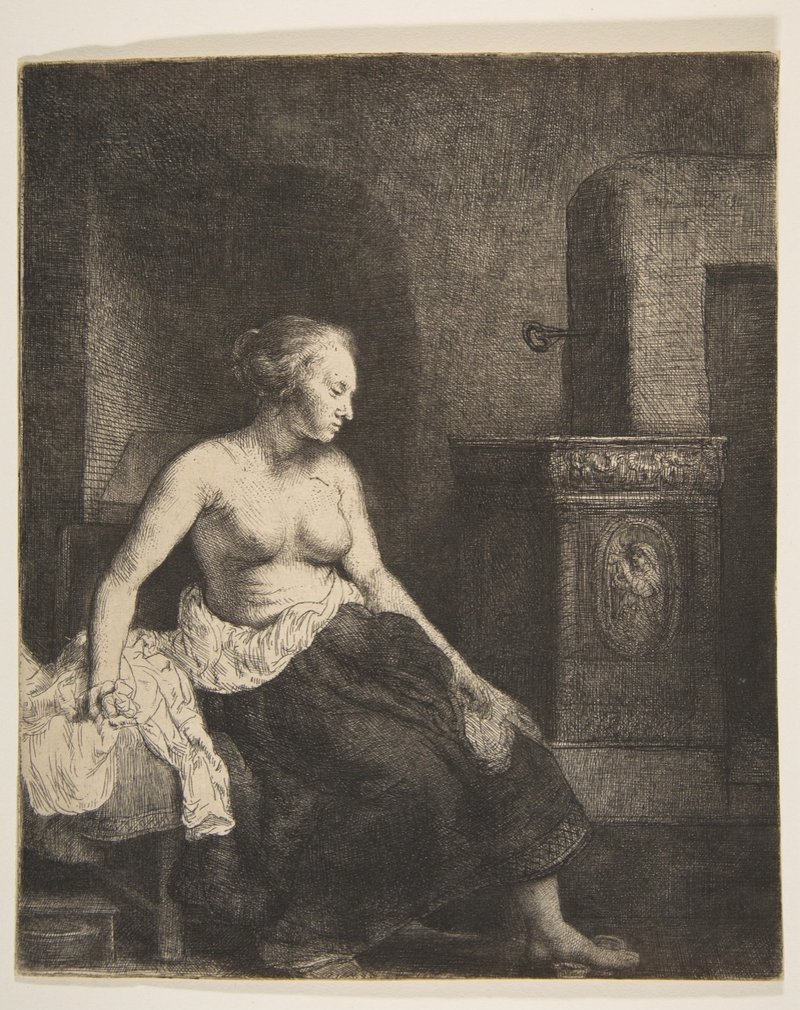
Artist: Rembrandt van Rijn
Title: Woman Seated Half-Dressed beside a Stove
Ca. 1658
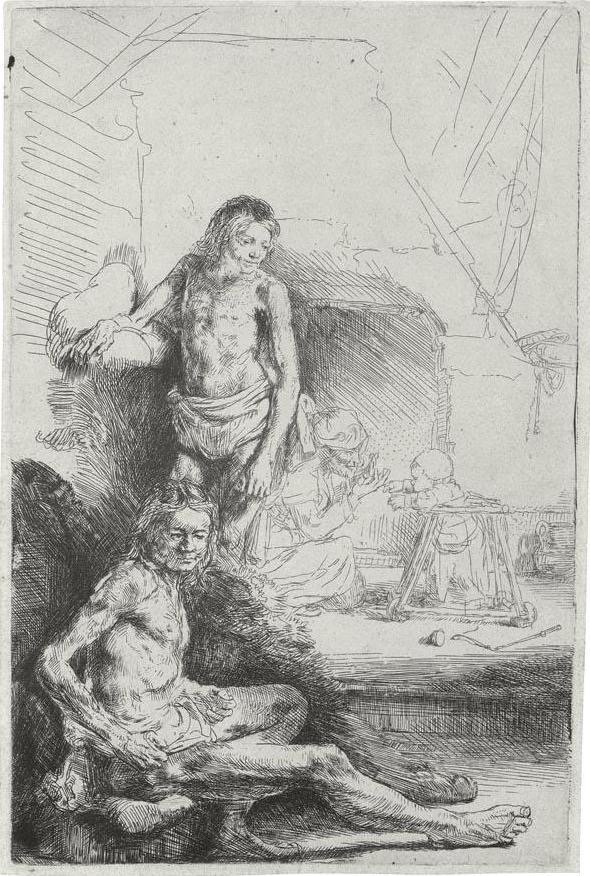
Artist: Rembrandt van Rijn
Title: Male Nudes Seated and Standing--Het Rolwagentje (The Walking Frame)
Ca. 1646
The Dutch Golden Age is known for its “genre scenes” portraying daily life, depictions of food, flowers, landscapes and seascapes; and portraits commissioned by the affluent classes. Paintings carried subtle social, religious and moral messages, including skulls (the inevitability of death), wilted flowers (fleeting beauty and youth) and parrots (the global reach of the Dutch Republic’s trade).
The era was a departure from the religious art of the Italian Renaissance, and Dutch nudes were of significance as they marked the rejection of the “perfect” body, in sharp contrast to Renaissance artists’ idealized form representing divine perfection. Dutch artists portrayed the female body with more accurate physical imperfections like wrinkles, saggy breasts and large hips.
The Calvinist culture of this time, however, made it difficult for Dutch artists to find female models to pose for them, often forcing them to resort to male models, spouses, women of lower-economic status, prostitutes or their own imagination.
The Artistic Genius And Individuality of Old Dutch Masters
Evangeline Berg ’26 is an art history major with a minor in museum studies from the College of Visual and Performing Arts.
She came to Syracuse University and found “a mix of highly motivated, creative artistic students, all involved in so many things,” Berg says, noting that she started the student-run gallery space 044 Comstock; and is part of the first group of MuSES (Museum Student Engagement Society).
In the fall of her junior year, she first became interested in the Old Dutch Masters while taking Franits’s course on Northern Baroque art.
“Today, anything can be art, but it’s cool that the 17th century Dutch artists were constrained by so many rules,” Berg explains. “I was fascinated to see how they attempted to prove their artistic genius and individuality while trying to ride with what was allowed by society at the time.”
Curating the exhibition was amazing for her, as she worked on two Rembrandt prints, “Women Seated Half-Dressed Beside a Stove” and “Male Nudes Seated and Standing-Het Rolwagentje (The Walking Frame).”
“The work was a compilation of my previous three years of art history education that put me in a place to conceptualize this exhibition and translate it, so it can be appreciated by everyone, including those not familiar with art history,” says Berg. “It took being very hands-on and using my passion for visual art, curatorial writing and critical thinking to help put ‘Undressed’ together.”
Berg hopes to eventually work in art or art-business industry in a gallery or museum but may first pursue graduate education.
Sharing an Invaluable Experience
An artist who enjoys working in watercolor and oil pastels, Caroline O’Rourke ’26 came to the College of Arts and Sciences as a psychology major, unaware that there was an art history major. But, during her first year, she took an art history course and was immediately enthralled, quickly deciding to double major in psychology and art history.
“Professor Franits is a wonderful mentor, and the Senior Seminar was invaluable. He was able to walk us through all of the professional development skills we’d need as art historians, and helped me become a very professional writer, as well as see how curation impacts the specific message that one art piece offers to the greater exhibition,” she says, noting that she coordinated the research and writing for “Diana and Callisto” by Cornelis van Poelenburgh and “Laocoön” by Cornelis van Dalen.
“Art history is a niche field, but my goal is to make it as accessible as possible to those who want to engage in the arts,” says O’Rourke, who intends to pursue a career in a museum as an educator or programmer. “Contributing to ‘Undressed’ at the Syracuse University Art Museum gives me such a sense of pride and community engagement.”
On April 2, four graduating seniors and Franits presented “art-break: Talk with the Curators of Undressed: The Nude in Dutch Art, circa 1550-1800,” at a special event at the museum to discuss the research and work that went in to putting together the exhibition.
For more information, visit the Syracuse University Art Museum website.
Published: April 1, 2026
Media Contact: asnews@syr.edu