
Rethinking Stroke Recovery
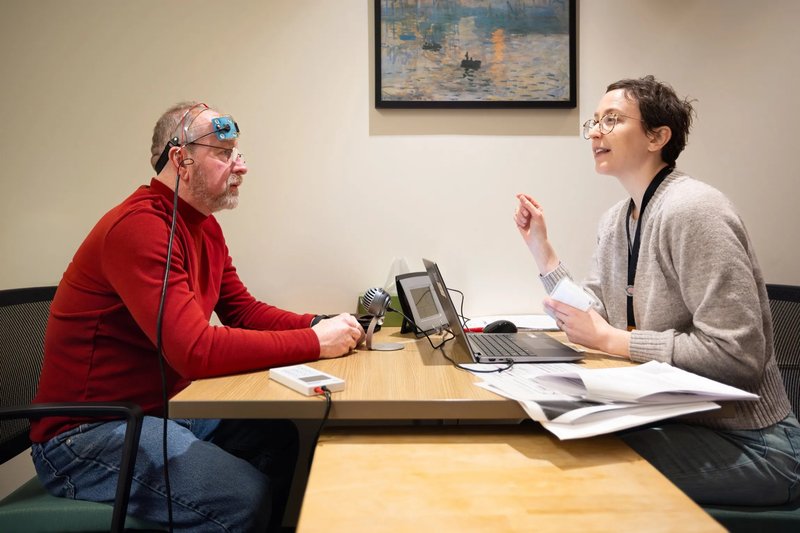
Ellyn Riley was in high school when her grandmother had a stroke. A writer, she had built a life around language—but afterward, struggled with the very thing that had defined her.
“Language wasn’t just a skill for her, it was how she thought and how she expressed who she was,” explains Riley, an associate professor in the Department of Communication Sciences and Disorders. “I didn’t have the vocabulary for it at the time, but what I was watching was aphasia—and the frustration it caused her has never left me,” Riley says.
Aphasia, a language disorder that affects about one-third of stroke survivors, impacts word finding, sentence formation and language comprehension.
Riley now leads the Syracuse University Aphasia Lab, one of the only research programs in the country focused not just on aphasia, but the fatigue that impedes recovery.
“Fatigue is one of the most debilitating consequences of stroke, yet it’s very often overlooked in rehabilitation,” Riley explains. “We’re talking about a pervasive lack of energy that affects both physical and cognitive functioning—not simply feeling tired at the end of a long day. People come to therapy already depleted, and we’re asking them to do cognitively demanding work.”
That disconnect has driven a new set of research questions: Where does this fatigue come from, what intensifies it, and what would it mean to treat it directly?
Published: June 30, 2026
Media Contact: asnews@syr.edu