
Researchers Examine the Invisible Hearing Struggle of Student Veterans
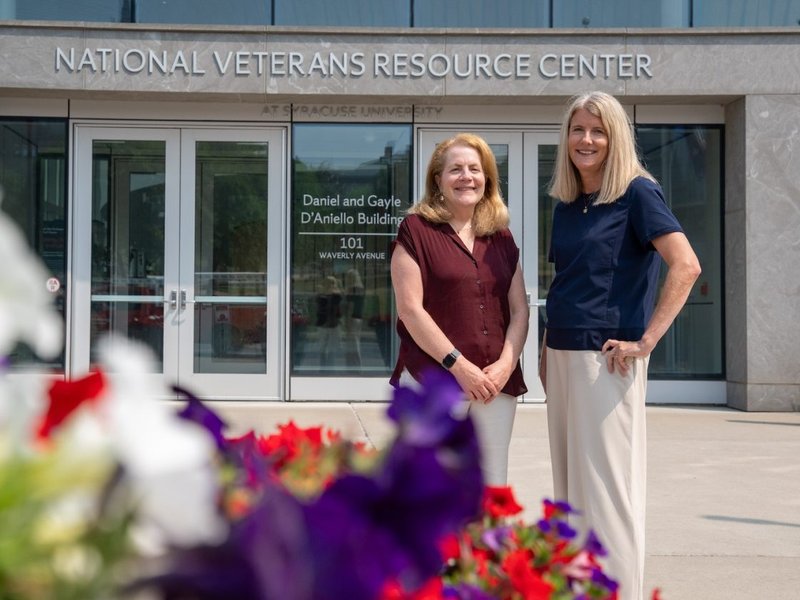
When researchers from the College of Arts and Sciences surveyed student veterans about tinnitus, 82% said they had it.
"We didn't know it was going to be more than twice those of traditional college students," says Karen Doherty, senior associate dean for faculty affairs and professor of communication sciences and disorders. "We were really surprised."
Doherty and Tammy Kordas, associate teaching professor in the same department, are both certified audiologists. When they looked for existing research on tinnitus among veterans on college campuses, they found almost nothing.
So they built their own study with doctoral students Marissa Merrifield and Joshua Deus and help from Ron Novack, a retired U.S. Army colonel who directs the Syracuse University Office of Military Veterans. They surveyed 97 student veterans. Among those who reported tinnitus, 40% rated it severe enough to affect their quality of life, compared to roughly 10% of the general population in the same age range.
For student veterans, that can mean working twice as hard to hear over classroom noise, or quietly recording lectures rather than asking for an accommodation. "Veterans may not come right out and tell someone they have this problem," Novack says.
Doherty and Kordas hope to bring classroom technology that could make lectures easier to follow over background noise. "There are a lot of people who have tinnitus and there are ways to treat it," Kordas says. "It may not go away completely, but the goal is to manage it and reduce how much it affects daily life."
Published: Aug. 4, 2026
Media Contact: asnews@syr.edu