
Summer Funding Supports Summer Research and Internships
Every year, the Coronat Scholarship Program allocates summer funding to support students who are furthering their research, pursuing internships or opting for other professional development opportunities domestically and abroad.
This summer, four students received $2,500 each to offset housing and travel costs, making their off-campus summer pursuits attainable.
Trisha Balani '27
State and Local Advisory Intern, KPMG
Majors: Policy Studies and Information Management and Technology
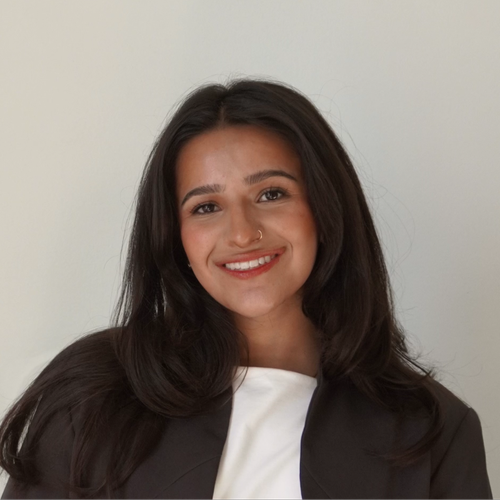
Last summer, Trisha was awarded $2,500 to support housing costs in New York City, where she moved to intern with the State and Local Advisory Practice at KPMG.
Trisha describes how she spent the summer at KPMG working on a project for a NYC government agency. She writes: “Being in government consulting gave me the unique opportunity to work for the local government (temp employee ID and all!) while having access to the resources of a large private firm. I saw firsthand what it takes to problem-solve in a high-risk landscape and build long-term trust with government clients while navigating conflicting interests.”
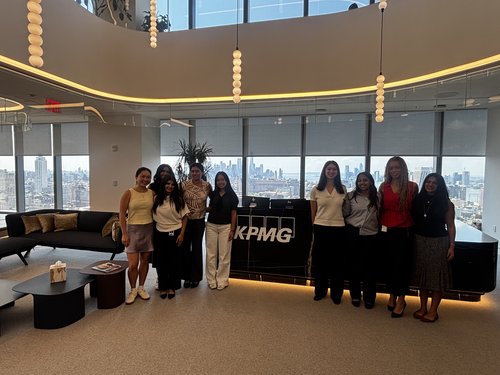
Reflecting on the summer and what the support from Coronat means to her, she says that the most impactful part of her summer was not only gaining an understanding of, but contributing to, a long-term policy goal. She says that receiving Coronat summer funding directly supported her ability to succeed at KPMG. Without the financial stress of finding affordable living arrangements in Manhattan, she says: “I lived close to my office, performed at a higher level, and ultimately earned a return offer.”
Rishita Ghosh '28
Summer Undergraduate Research Fellowship, Daegu Gyeongbuk Institute of Science and Technology
Majors: Chemistry and Biomedical Engineering
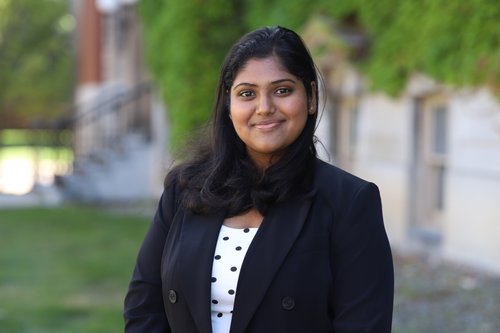
Rishita Ghosh spent her summer in Daegu, South Korea at the Daegu Gyeongbuk Institute of Science and Technology (DGIST) as a Summer Undergraduate Research Fellowship Intern (D-SURF). Rishita was awarded $2,500 to support essential expenses such as flights, housing and local transportation.
Describing her summer, Rishita writes: “I participated in the D-SURF research program at DGIST in South Korea, where I worked in the Neural Interfaces and Robotics Lab. My research focused on developing flexible neural interfaces for peripheral nerves, using resin-based 3D printing and microfabrication to explore different designs for soft, conformable devices.” In laymen’s terms, Rishita designed miniature devices that can be implanted into nerves, then receive and send signals to the nervous system.
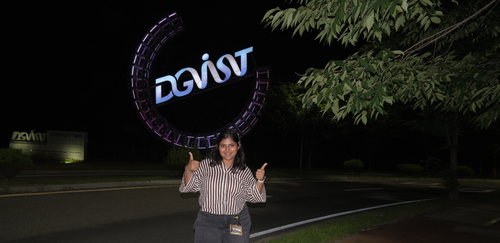
She continues, “The bigger picture of this research is developing technologies for bionics, advanced prosthetics, rehabilitation and neuromodulation. I also had the opportunity to observe animal surgeries involving the spinal cord and peripheral nerves, which gave me a better understanding of how these technologies are used and tested in research.” Her summer was spent building devices that connect with the nervous system.
“When I first came to Syracuse,” she writes, “I never imagined that my undergraduate experience would take me to research labs across different parts of the world. Being a Coronat Scholar has given me the support and freedom to explore my interests, try new things, and pursue opportunities that I might not have otherwise considered possible. As an international student, there can be additional financial and logistical challenges when pursuing opportunities abroad, so having access to summer funding really helped make this experience possible.”
Reflecting on her experience as a scholar, Rishita remarks that “One of the things I appreciate most about Coronat is that it encourages us to explore beyond the classroom and make the most of our time at Syracuse. Beyond the research, I got to experience a new culture, learn a little of the language, make new friends and see how people approach research in different parts of the world.”
Tyler Branigan '27
Grants Management Intern, New York City Economic Development Corporation
Majors: Economics; Policy Studies; and Environment, Sustainability and Policy
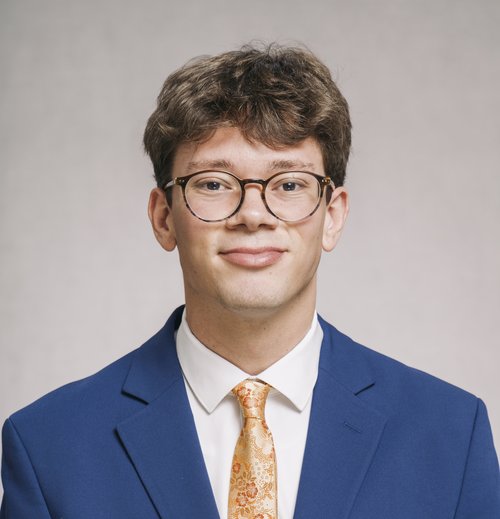
Tyler Branigan interned on the Grants Management Team at the New York City Economic Development Corporation (NYCEDC), and was awarded $2,500 to support subway fare and housing costs in Manhattan.
He writes: “When I accepted my internship offer in March, I realized how quickly I would have to move to feel prepared for such a competitive internship program. As a native Upstate New Yorker, moving to Manhattan was a journey I had seen many young adults from my small town make. I understood exactly how taxing it could be, and I feared my dream internship with NYCEDC was financially out of reach. However, the support of the Coronat Scholarship made a world of difference, considerably offsetting housing costs and allowing me to do my best work in the Financial District office.”
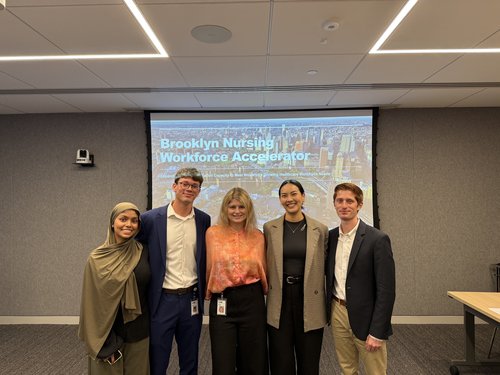
“I spent June through August working on the Grants Management Team at NYCEDC, identifying funding opportunities and performing management activities for projects in all five boroughs–something I can now list as a specialty on my resume. I put together quarterly reports, state and federal project requests, and streamlined data analysis on behalf of the team. The grants team had only six staff members, and managed a portfolio of several billion dollars, so I was working, and working hard, from day one. I am incredibly grateful for the lessons and mentorship I gained, and I’m excited for what comes next!”
Natalie Choi '27
Research Intern at the Nam Lab at Kyung Hee University Medical Center and CARE Scholar, Maternal Health & Clinical Epidemiology Research at Stanford University School of Medicine
Major: Biology
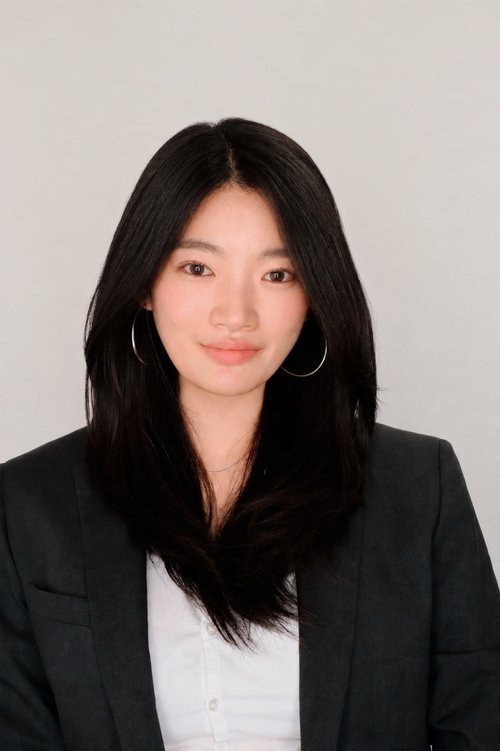
Natalie Choi spent her summer in Seoul, South Korea, where she continued her research internship at the Nam Lab at Kyung Hee University Medical Center. In tandem, she participated remotely in Stanford University's CARE Scholars program, conducting clinical epidemiology research focused on maternal health disparities among Asian American women. Natalie was allocated a $2,500 award toward travel to Seoul, travel for conferences and submission fees for research manuscripts.
In recounting her summer experiences, Natalie writes: “At the Nam Lab, I worked on a longitudinal biomaterials project developing chitosan-modified 3D-printed dental resin.” In other words, she was developing a better 3D-printed material for dental work, one that’s stronger and more body-friendly.
Natalie continues, “I served as the primary point of contact for collaborators across three institutions. I coordinated project timelines and helped troubleshoot experiments as we refined our formulation and printing protocols.”
Natalie’s work didn’t stop there. She simultaneously worked as a Stanford CARE Scholar, analyzing datasets to understand the risks of different childbirth options, for example, vaginal delivery versus C-section. Her work analyzed how categorizing subgroups of ethnicities within broader categories can obscure key differences between ethnic groups. This makes differences between ethnic groups harder to detect. Her work revealed that better data should reveal those differences and lead to better, more individualized patient care. Natalie presented her research at the Stanford Summer Research Symposium.

Reflecting on what her summer experiences mean for her next steps, Natalie says that her time at the Nam Lab taught her that being a mature researcher means centering on less visible conditions, providing holistic answers to scientific questions. She writes, “Working closely with collaborators across institutions, I learned to measure my preparedness less by how confidently I could explain a plan and more by whether I had anticipated where that plan might break. At Stanford CARE, I became increasingly attentive to how the data infrastructure can either hide or highlight findings, and how limitations in data collection and reporting shape our understanding of health disparities.”
Together, these experiences strengthened Natalie’s interest in clinical epidemiology. She hopes to build a career using data to accurately inform patient care, where patients' lived experiences continually inform and sharpen research.
Published: Nov. 17, 2026
Media Contact: asnews@syr.edu