
On-Campus Steam Vent Allows Students to Study the Extremes of Life
Editor’s Note: The following article was written by Cameron Murray, a research technician in biology professor Angela Oliverio’s lab.
One might expect that scientists must go looking for extremophiles at the bottom of the ocean, in boiling geothermal springs, or in the remote glacial reaches of the South Pole. For three researchers at Syracuse University, they only need to walk across campus.
A Man-Made Geyser
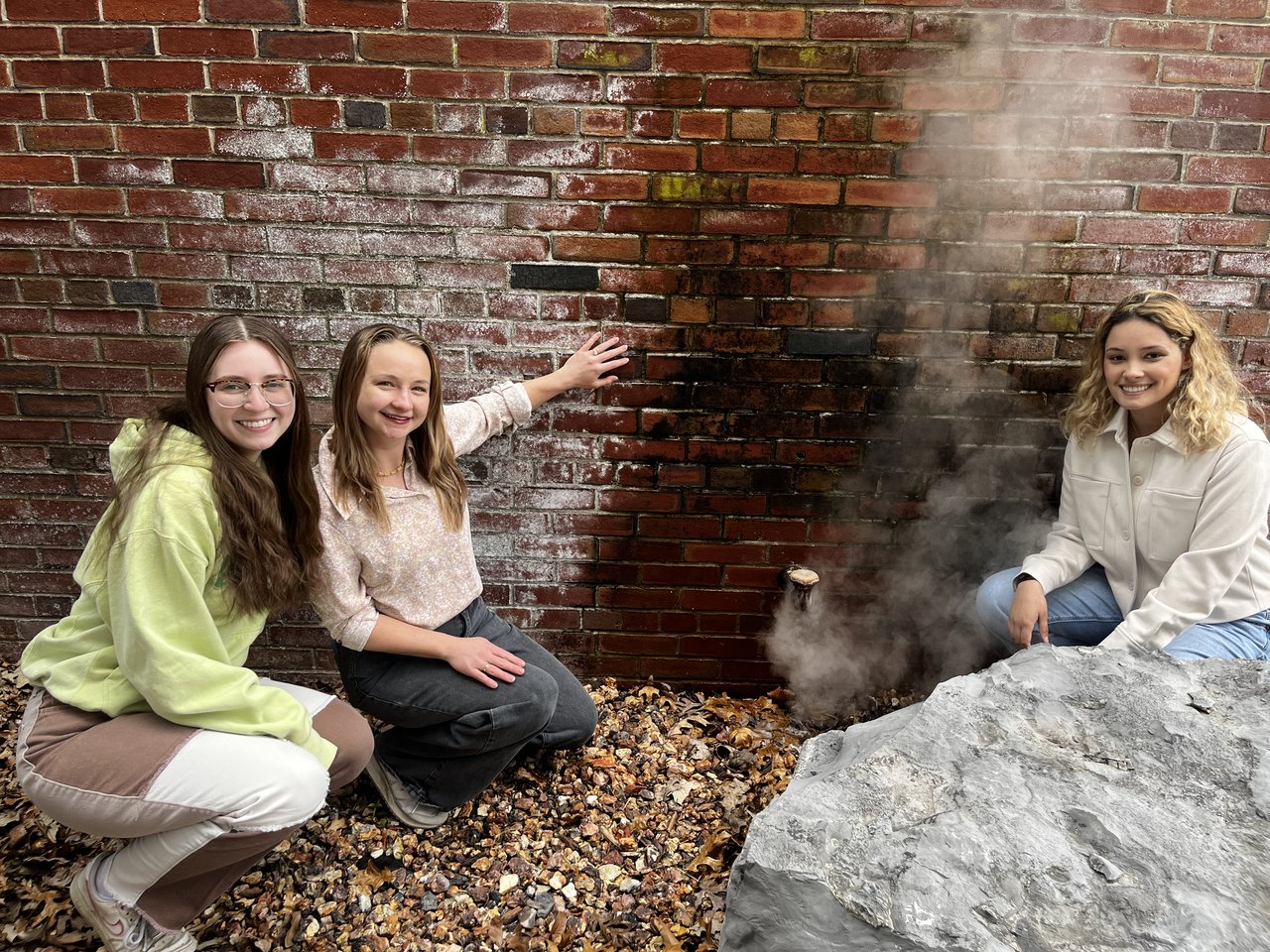
Researchers from the lab of Angela Oliverio, assistant professor of biology in Syracuse University’s College of Arts and Sciences (A&S), do indeed travel to Yellowstone and Lassen Volcanic National Park a few times a year to collect water samples from geothermal features to search for novel microorganisms in these extreme environments. However, these sampling trips are expensive and labor-intensive. In the summer of 2024, Julia Maresca, an associate professor in the chemistry department at neighboring SUNY ESF, contacted Oliverio with an intriguing opportunity.
“She told Angela that there was a geyser on campus that we had to check out,” recalls Rachel Shepherd, a Ph.D. candidate in the Oliverio lab. This so-called geyser was a small steam vent located on the side of Baker Laboratory at SUNY ESF. Depending on the direction of the wind, hot steam might carry into the air to hit the brick wall behind the steam vent or flow to the mixture of soil, dead leaves and rocks on the ground.
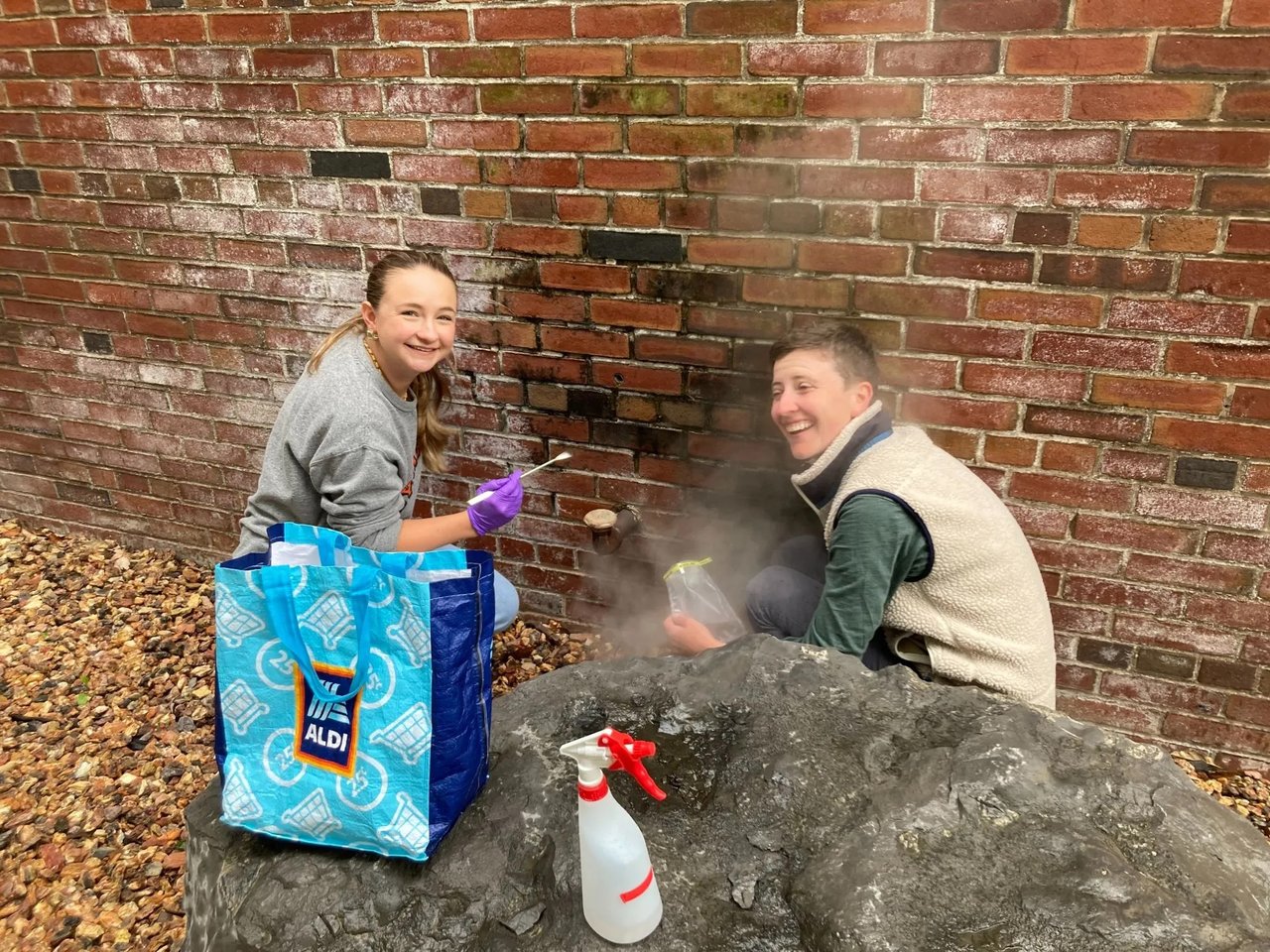
Upon collecting her first set of soil samples and algal scrapings from the SUNY ESF steam vent, Shepherd followed the same enrichment culturing protocol the lab uses with field samples, incubating samples at 50 degrees Celsius (112 degrees Fahrenheit), a temperature unsuitable for most living things and exceeding that of the hottest hot tubs.
“I did not expect, when I checked the flasks a few days later, that there were going to be squirmy little amoeba growing in there,” she says. Soon after, Shepherd was joined in her efforts by two Syracuse undergraduates, Melanie Paige Perez and Hannah Murphy. Together, the team extracted and sequenced DNA from their amoeba, finding a close match to Fumarolamoeba, a genus first discovered in a volcanic fumarole in Mexico and not previously known to inhabit built environments, inspiring the team to investigate further.
Scientists have studied heat-tolerant bacteria for decades, but thermophilic eukaryotes like Fumarolamoeba have been largely neglected. The discovery of new thermophiles could challenge preconceptions about the limits of eukaryotic life.
Investigating Fumarolamoeba
The team found the same amoeba in samples from other locations on the Syracuse and ESF campus, leaky steam pipes at Caltech and hot springs at Lassen Volcanic National Park. A fumarole is a naturally-occurring vent in the Earth’s surface that emits steam and gases, and a man-made steam vent provides a remarkably similar environment for heat-loving amoeba. “With the right conditions, we have uncovered Fumarolamoeba reliably from pretty much every sample,” says Shepherd. These findings suggest that thermophilic amoeba are more widespread in the built environment than previously recognized.
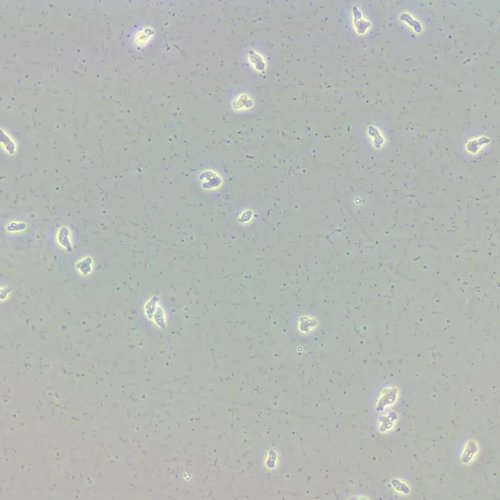
Microscope image of Fumarolamoeba cultured from the SUNY ESF steam vent.
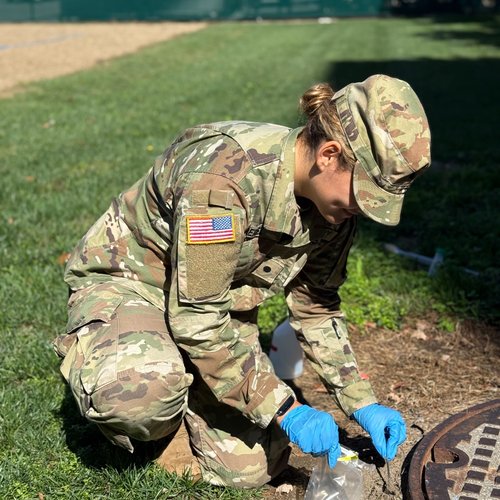
Melanie Paige Perez, who is also a member of the Army ROTC, collects soil samples near a manhole on the Syracuse University campus. The Fumarolamoeba team labeled cultures that came from these samples “SM” for “Soldier Melanie” in reference to her attire at the time of collection.
Murphy and Perez each developed their own independent research projects within the broader Fumarolamoeba study. Murphy, a Renée Crown University Honors student, focused on the ecology, evolution and biogeography of Fumarolamoeba: where it was found, how it related to other amoeba in the phylum Heterolobosea and what other microbes it was found alongside, making Fumarolamoeba the subject of her honors thesis and distinction project. Perez investigated the biology and physiology of Fumarolamoeba, determining the temperature range required for its growth and examining variation in its life cycle. She was awarded a SOURCE fellowship in summer 2025 and recognized by SOURCE with a Research Achievement Award this spring.
Collaboration and Camaraderie
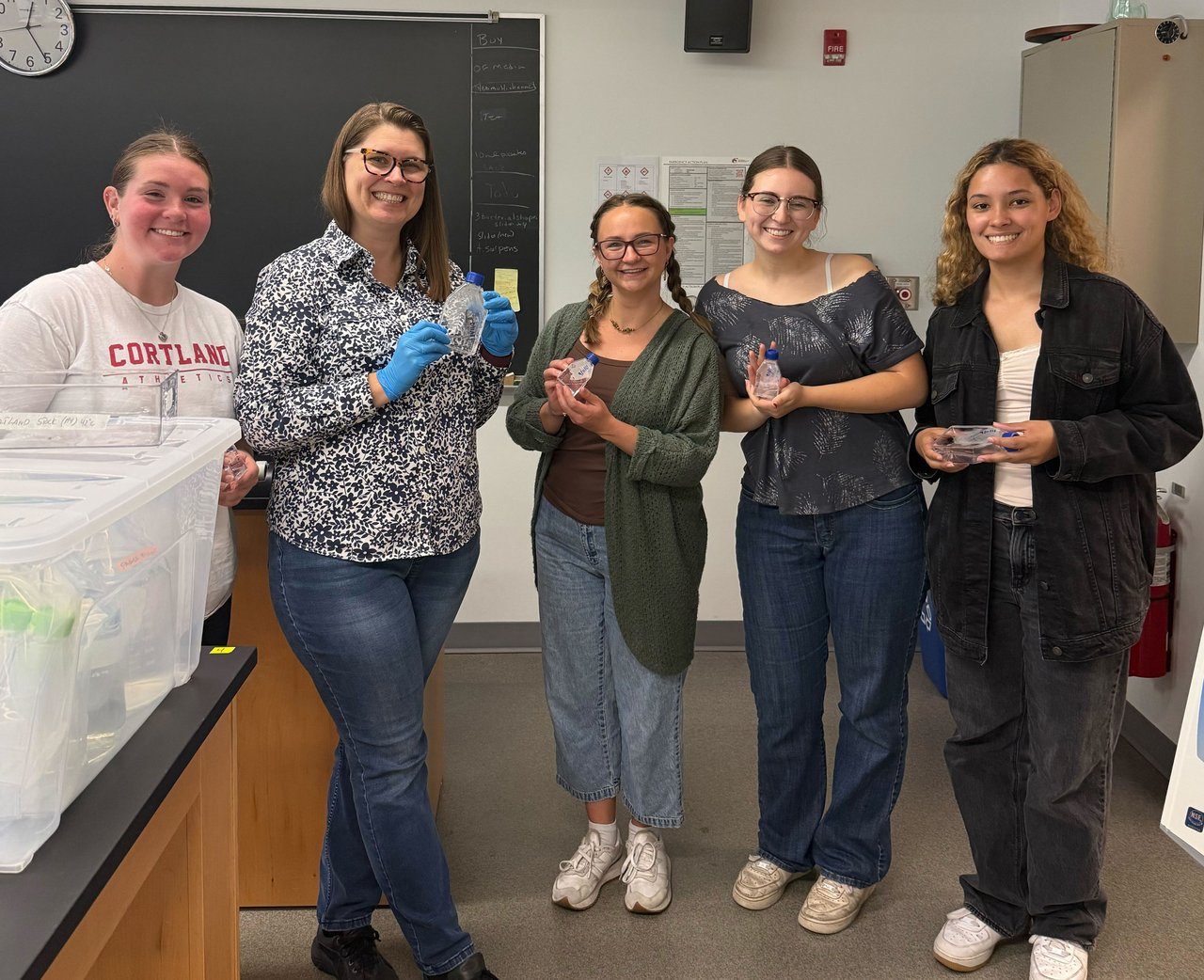
Murphy and Perez also presented their work at the annual NEMPET (Northeastern Microbiologists: Physiology, Ecology and Taxonomy) conference in 2025, where they initiated a collaboration with SUNY Cortland professor Christa Chatfield. Chatfield studies Legionella pneumophila, the bacterial pathogen responsible for Legionnaires' Disease, which can persist in man-made water systems despite pretreatment of the water with chlorine and other disinfectants.
Some free-living amoeba are known to harbor bacterial pathogens inside their cells, shielding them from environmental stressors in what is referred to as a “Trojan horse.” Murphy and Perez proposed that Legionella might be protected from water treatment by hitching a ride inside Fumarolamoeba cysts, a dormant form the amoeba takes in unfavorable conditions. If their hypothesis is supported, this could inform future prevention efforts.
Lessons Learned
For Shepherd, the success of the Fumarolamoeba project comes from valuing and supporting undergraduates in research. “Undergrads are not in the lab just to wash your dishes… they have such limited time. So to make it worth it, you need to be intentional about what you're going to have them do,” she says.
Shepherd continues, “I recognized the strengths in both of their abilities in the lab. Melanie has very good, steady hands for [single cell isolations]. And she has a lot more patience than me on the microscope. Hannah is really good at entering data and has a keen eye for picking out errors in spreadsheets and she has a lot of patience for going into these really vast databases and pulling out information that I get overwhelmed thinking about. They both have very different strengths in the lab, and using those to guide our directions was the main way we started tackling the project.”
Reflecting on her time in the lab, Murphy encourages undergraduates considering research to embrace the uncertainty inherent to science. “Be patient with yourself,” Murphy says, “It is normal to not know something that you were never taught how to do. Everyone around you wants the best for you and wants you to succeed, so be willing to ask questions and put yourself out there, because that truly is the best way to learn.”
Perez adds, “Once you start reading more papers and doing more lab work, you get a handle on things. It can be time consuming, doing lab work and reading papers, but you know it’s going towards something, so it makes it worth it.”
The Fumarolamoeba project will wrap up this summer in the Oliverio lab with a few final experiments and a research paper with all three scientists as coauthors. It is a reminder that great scientific discoveries can come from anywhere or anyone. Sometimes they are waiting just across campus, steps from the classroom, if we only take the time to look.
Conflict of interest statement: The writer of this article is a member of the same lab as the featured scientists but has not directly contributed to the relevant project.
Published: May 8, 2026
Media Contact: asnews@syr.edu