
How Plants Remember
Key Takeaways:
NIH Grant for Protein Study: Heather Meyer received a 5-year NIH grant to explore how intrinsically disordered proteins (IDPs) help plants and other living organisms sense and remember environmental changes.
IDPs’ Unique Role: These proteins change shape and form clusters, aiding in environmental sensing and memory, crucial for developmental processes like plant flowering.
Research and Applications: Meyer uses live cell-imaging and genetic engineering to study proteins like SUF4, with goals to engineer crops that adapt to climate changes.
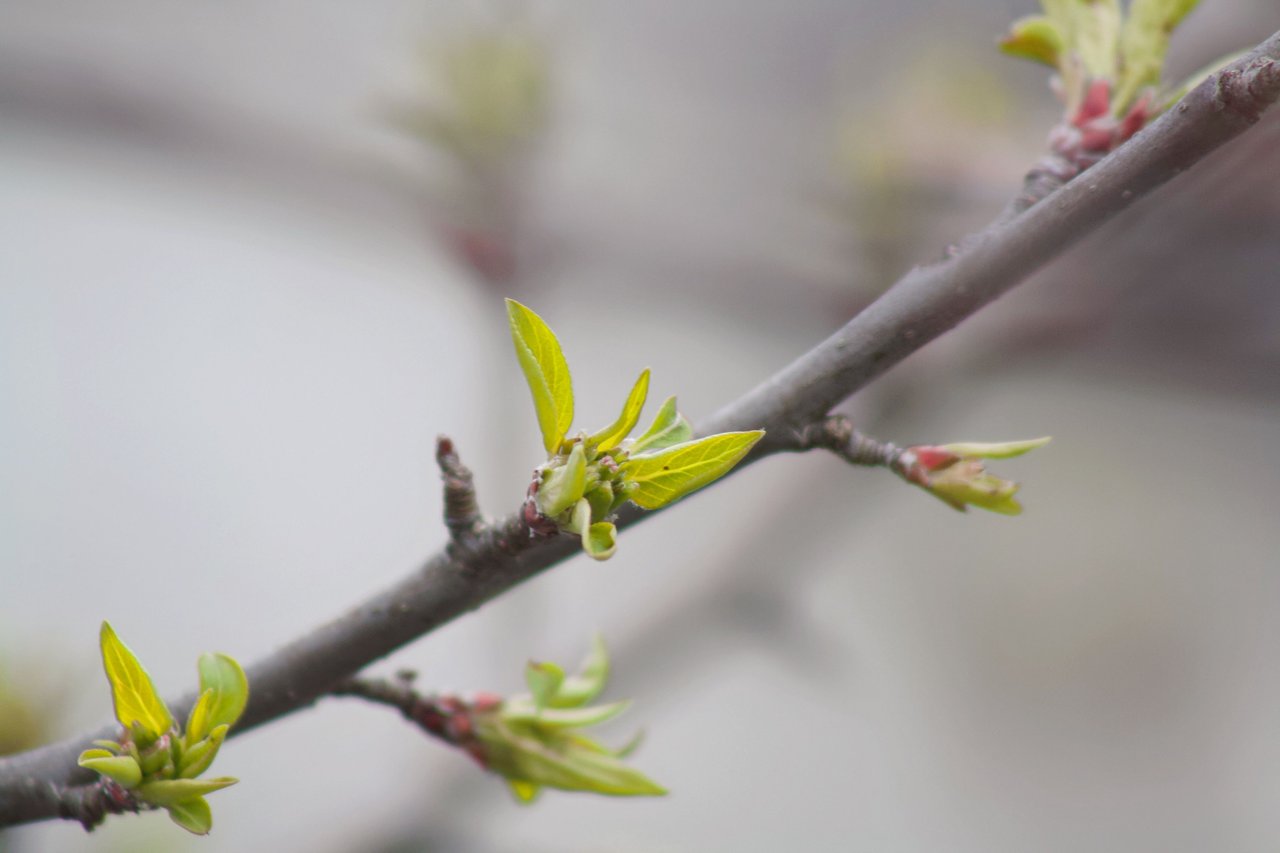
When winter fades in Upstate New York, most plants know when it’s safe to bud. For Heather Meyer, that spring flowering points to a deeper mystery. How do living things sense their surroundings and make lasting decisions about when to grow?
Meyer, an assistant professor in the Department of Biology in the College of Arts and Sciences (A&S), has received a five-year National Institutes of Health grant to study the complex tasks of a class of molecules called intrinsically disordered proteins, or IDPs. Unlike folded proteins, which generally maintain a defined three-dimensional shape, IDPs lack fixed structures. The floppy strands of IDPs can change in response to their surroundings, helping cells detect environmental changes and even retain a molecular “memory” of past conditions. By watching how IDPs behave inside plants, Meyer hopes to uncover basic rules for how life converts fleeting cues into long-term change.
Rethinking Disordered Proteins
“Until about 15 years ago, everyone thought that IDPs were sort of junk,” says Meyer. “They were believed to have no real function or consequence for a cell.” Part of the reason, she explains, was a longstanding assumption that a protein’s rigid structure dictates what it does.
Scientists now know IDPs belong at the center of major regulatory pathways. When they go awry through mutation or misfolding, they may contribute to neurodegenerative diseases, certain cancers and other disorders.
Meyer is investigating whether disordered proteins can reversibly condense, forming temporary clusters that change how genes switch on and off. That very flexibility, she suspects, may make them effective environmental sensors.
For example, vernalization is the process by which many plants endure winter cold before they can flower in spring. Vernalization is a safeguard. It keeps a plant from blooming during a warm spell only to be killed by a later frost. But it poses a puzzle.
“You have this new tissue that never experienced winter,” Meyer says. “How does that tissue keep genes that needed to be off during winter off?” Somewhere, the plant must store a memory of the cold, then draw on it to decide when to shift from growing leaves to making flowers.
How Plants Remember Winter's Cold
In one potential scenario, a protein controls a gene that suppresses flowering when active. Under the right conditions, the protein could change its behavior and lose the ability to keep that gene switched on. Once the gene falls silent, other cellular mechanisms could lock in that change, allowing the plant to transition to flowering and produce floral organs.
IDPs could be crucial to this transition. Because they adopt many shapes and bind many partners, they may be able to integrate multiple signals (temperature, salt stress and others) and lock in a new configuration once a threshold is crossed.
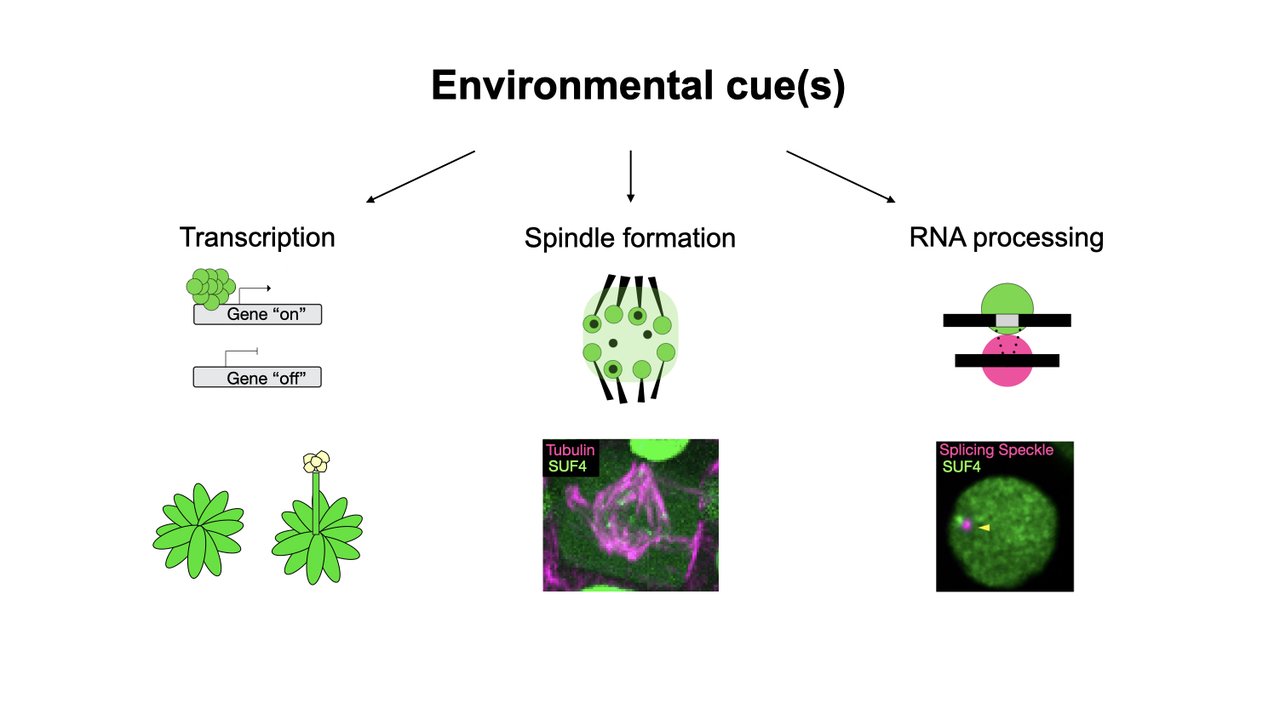
To test the idea, Meyer has focused on a protein called SUPPRESSOR OF FRIGIDA 4, also known as SUF4. Proteins related to SUF4 are found across eukaryotes, where they have been linked to distinct cellular processes, including regulating gene expression, processing RNA, and controlling cell division.
“How is SUF4 able to perform all of these different functions?” she says. It’s a mystery she hopes to unravel using plants.
The Curious Case of SUF4
How can one protein perform so many jobs? SUF4’s disordered nature and its ability to selectively cluster into droplet-like structures under different environmental or cellular conditions could be the key. While in droplet form, it might partner with molecules that keep certain genes and cellular processes active. But during a cold snap, those droplets could disassemble, shutting down these same processes.
But what keeps them from simply switching back on when temperatures rise? Meyer thinks that prolonged cold, like winter, could trigger an irreversible change in SUF4 or one of its interacting partners, effectively trapping SUF4 in an inactive state. “That could prevent SUF4 from reactivating those pathways when the weather warms back up,” she says, allowing the cell to retain a molecular memory of winter.
Meyer pairs live imaging with protein and genetic engineering.
“Our main research mode is live-cell imaging,” she says. “We can physically put the whole plant under the microscope, expose them to different environmental conditions, and watch how these proteins behave in real time.”
Her team also uses predictive modeling to identify amino acids likely to drive clustering. The researchers then use genetic engineering strategies to alter those amino acids in living plants and see how the changes affect the proteins’ behavior.
“If we can predictively tune these proteins, we should be able to engineer new environmental responses for our most ecological and economically important plants,” Meyer says, “such as crops that must flower despite volatile winters, or plants that must cope with heat and salty soil as the climate shifts.”
“We use plants as our model,” Meyer says, “but the basic biology of these proteins reaches far beyond them.”
Published: Sept. 23, 2026
Media Contact: asnews@syr.edu