
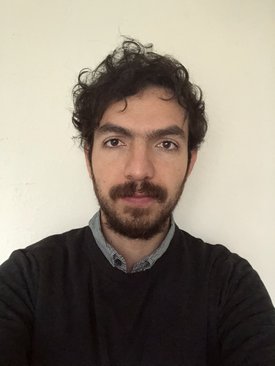
Carlos Andrés Ramírez Arenas
- Religion
Biographic Overview
Carlos Ramírez-Arenas is a doctoral candidate in Religion at Syracuse University completing his dissertation, "Trabajar es Orar: Time, Religion, and Modernization in Nineteenth-Century Colombia." Drawing on extensive archival research, his work articulates a genealogy of modern time that explores how institutions—reformatories, police, and factories—attempted to discipline and redeem populations through work and by modernizing how time was conceived and experienced in the nineteenth century. His dissertation challenges conventional narratives of modernity as secular and shows instead how religious practices and discourses remained deeply ingrained in—and facilitated—Colombia's project of modernization.
By connecting time's modernization to the concept of coloniality of time, Carlos's work expands Eurocentric frameworks in genealogy and critical theory, particularly engaging with authors like Michel Foucault, Max Weber, and Sara Ahmed, to demonstrate how modernization perpetuated colonial relations of power through religious means in postcolonial Latin American contexts. His work traces how contemporary ideas and sensibilities associated with time that seem neutral or unavoidable—the condemnation of idleness, the celebration of productivity, the commodification of time—have deep roots in colonial histories of racialization, gender, and modern labor regimes.
Carlos's research interests include critical phenomenology, Latin American decolonial theory, Latin American religious history, temporality, and the politics of time.