
Accomplished Scholars Join A&S
The College of Arts and Sciences (A&S) welcomes eight new faculty members who bring expertise spanning biophysics, developmental biology and marriage and family therapy.
Five of the new hires join the Department of Human Development and Family Science (HDFS), reflecting the College's expansion of health-related academic offerings. The new faculty strengthen its capacity to address complex societal and health challenges by leveraging the core pillars in the College’s new academic strategic plan.
"I'm delighted to welcome these scholars to the College," says A&S Dean Behzad Mortazavi. "Their work exemplifies our commitment to interdisciplinary collaboration and experiential learning—preparing students to tackle complex challenges while advancing knowledge that benefits people and planet."
Meet the new A&S professors
Rebecca Berard, assistant teaching professor, human development and family science
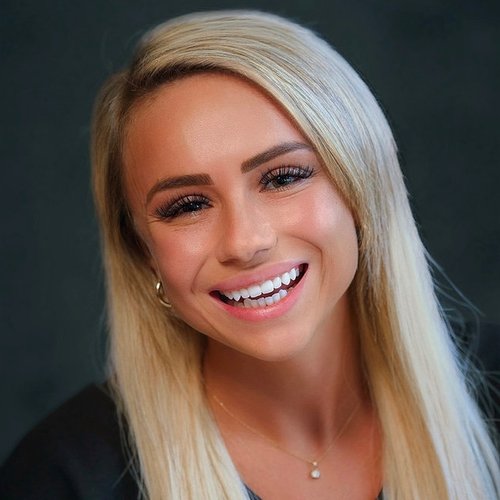
Berard
Education:
- M.A., marriage and family therapy, Syracuse University
- CAS, trauma-informed practice, Syracuse University
- B.A., psychology, University of Wisconsin
Instructional philosophy: I am a marriage and family therapist and AAMFT Approved Supervisor whose teaching and clinical work focus on couples, relational health and how culture, power and context shape family systems. I prepare future clinicians to understand how relational patterns intersect with social inequities. Through teaching, supervision and applied training, I emphasize systemic awareness that supports ethical, socially informed clinical practice. My instructional philosophy centers on training systemic thinkers who integrate theory and clinical skill while engaging deeply in "self of the therapist" work.
Alice Chanthasensak Smith, associate teaching professor, human development and family science
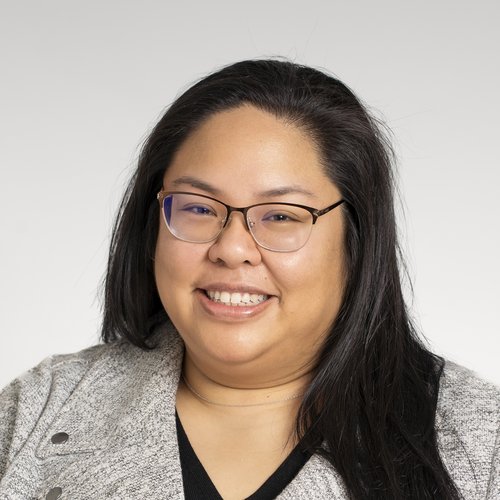
Chanthasensak Smith
Education:
- M.A., marriage and family therapy, Syracuse University
- CAS, trauma-informed practice, Syracuse University
- B.A., English, Le Moyne College
Instructional philosophy: I am a New York State licensed marriage and family therapist who focuses on trauma-informed and community-based behavioral health, specifically with couples and family systems. I teach practicum courses and directly supervise students in the Syracuse University Couple and Family Therapy Center, emphasizing a self-in-systems model, advocacy and best practice client care. I also serve as marriage and family therapy director of field relations, overseeing the internship process in both residential and online MFT programs where students gain clinical hours and hands-on learning. My goal is that students complete our program with clinical experience to immediately contribute to our field.
Sarah Dedrick, assistant teaching professor, human development and family science
Education:
- M.A., marriage and family therapy, Syracuse University
- CAS, child therapy, Syracuse University
Instructional philosophy: As a licensed marriage and family therapist, my work focuses on relational and systemic approaches to mental health, helping individuals, couples and families navigate conflict, deepen connection and align their relationships with their values. In my teaching and clinical supervision, I emphasize collaboration, critical reflection and real-world application, cultivating inclusive learning environments where students build clinical confidence, develop cultural humility and become thoughtful, ethically grounded practitioners. I serve as an AAMFT-Approved Supervisor, supporting the next generation of clinicians in culturally attuned, systemic therapy.
Leila Farhadi, research assistant professor, physics
Education:
- Ph.D., University of Massachusetts Amherst
- M.S., Sharif University of Technology
- B.S., Sharif University of Technology
Instructional philosophy: I am a biophysicist investigating the mechanisms and physical principles by which cells coordinate their internal architecture. My research focuses on the cytoskeleton, a complex network of filaments and proteins essential for functions such as cell division and differentiation. I use advanced microscopy techniques and laboratory methods to investigate how microscopic interactions give rise to cellular-scale order at the interface of condensed matter physics and cell biology. In the laboratory, I create a productive environment where students learn techniques, develop problem-solving skills and gain hands-on experience performing experiments and interpreting results. I value experiential learning and critical thinking in scientific discovery.
Minh-Tri Ho Thanh, research assistant professor, physics
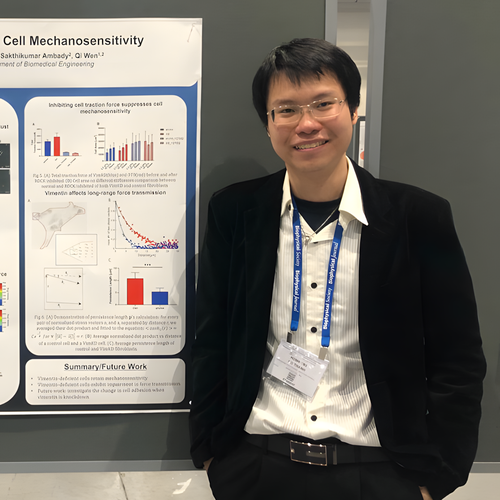
Ho Thanh
Education:
- Ph.D., physics, Worcester Polytechnic Institute
- B.S., physics, Worcester Polytechnic Institute
Instructional philosophy: My work as a biophysicist investigates the mechanical and molecular mechanisms of biomarkers implicated in migratory diseases such as fibrosis and cancer metastasis to develop effective diagnostic and therapeutic tools. My previous work as a postdoctoral researcher at Syracuse University included assessing the effects of vimentin cancer markers on cell migration using specialized laboratory devices and 3D cell culture systems. I also use computational modeling to investigate 3D organoid invasion and perform fluorescent imaging using cutting-edge microscopic techniques to understand the mechanisms and signaling pathways underlying organoid invasion. I am eager to foster collaborations across disciplines.
Tyler Sliker, associate teaching professor, human development and family science
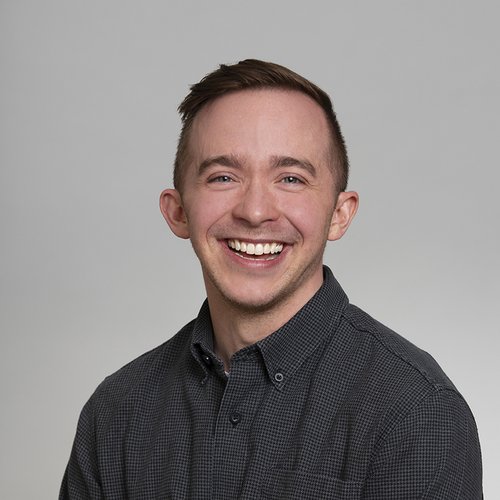
Sliker
Education:
- M.A., marriage and family therapy, Syracuse University
- B.A., psychology and philosophy, State University of New York at Potsdam
Instructional philosophy: As a licensed marriage and family therapist, my clinical work focuses on trauma treatment within the queer and trans community and with families. Trauma creates lasting impacts on individuals, relationships, families and communities—manifesting as depression, anxiety, social disconnection and substance struggles. My work facilitates healing at the relational level, improving individual and family well-being and ultimately helping to mitigate trauma's public health consequences. In the classroom, I create an experiential and collaborative environment where students become competent, ethical clinicians through hands-on clinical opportunities and real-world integration. I am an AAMFT Approved Supervisor and Clinical Fellow.
Jayson Smith, assistant professor, biology, affiliated with neuroscience
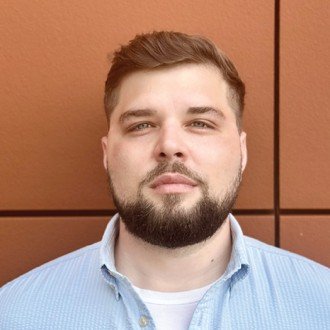
Smith
Education:
- Ph.D., genetics, Stony Brook University
- B.S., biology: biomedical sciences, Central Michigan University
Instructional philosophy: Most cell types in the body are continually renewed, but the neurons we are born with must survive and function for decades. How do they overcome this challenge? This question forms the core of my lab's research program. We use a hybrid approach combining the gene-discovery power of the nematode C. elegans with human stem cell-derived neurons, linking fundamental biological mechanisms to human health. Through this work, we uncover conserved molecular principles governing how neuronal identities and functions are established, maintained and ultimately fail, with relevance to both neurodevelopmental and neurodegenerative disorders.
Kristie Wise-Avrett, assistant teaching professor, human development and family science
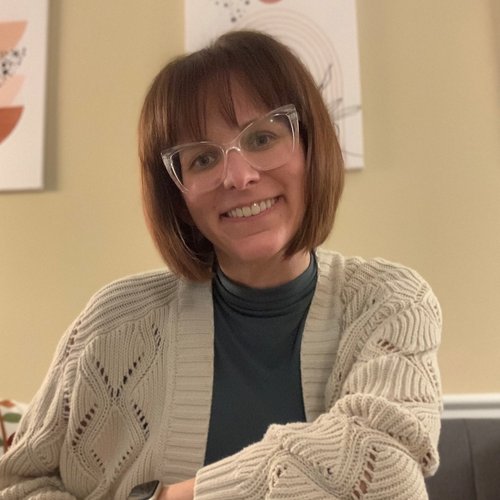
Wise-Avrett
Education:
- M.S., marriage and family therapy, Valdosta State University
- B.A., English, Valdosta State University
Instructional philosophy: I have experienced firsthand the powerful impact a positive supervisory experience can have on an emerging therapist's education and training. For more than 10 years, I have served in supervisory roles for clinicians in training, a responsibility I value deeply. My supervisory style is collaborative, intentionally balancing encouragement and challenge while remaining developmentally appropriate at each stage of a student's education. I strive to create an inclusive and safe learning environment where students examine their worldview and recognize how relationships shape lived experiences. Central to my approach is preparing students to become effective, self-aware therapists who think and practice systemically.
Published: Feb. 4, 2026
Media Contact: asnews@syr.edu